
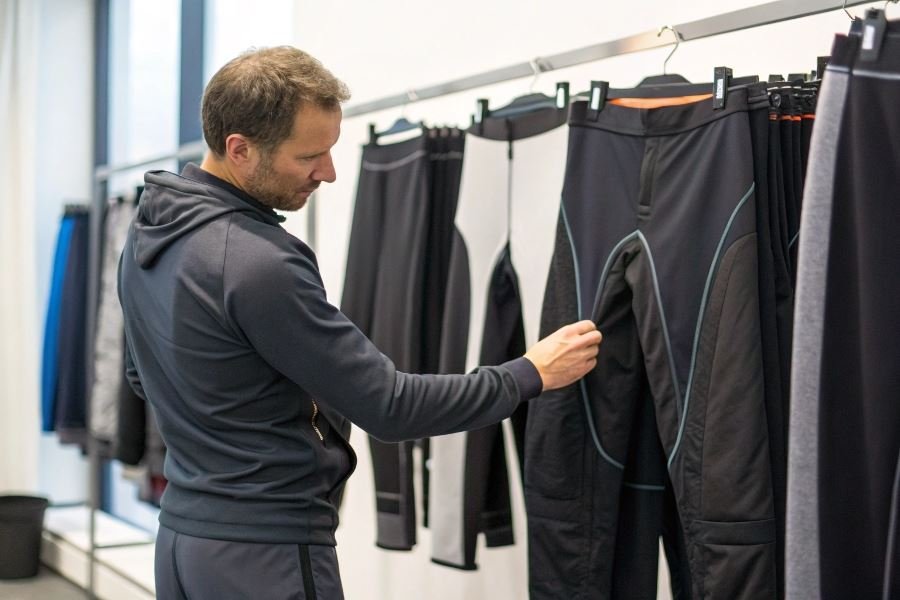
Ever watched an athlete constantly adjusting their pants during competition? That distraction can cost crucial seconds—or worse, performance quality. The right-fitting sports pants aren’t just about comfort; they’re about unleashing your full athletic potential.
Finding your ideal size in men’s athletic wear has become something of a modern treasure hunt. What fits perfectly in Nike might leave you swimming in Adidas or squeezed into Under Armour. This isn’t just annoying—it’s a genuine performance issue that athletes at every level face.
“The difference between good and great performance often comes down to the gear not getting in your way,” notes professional trainer Jake Mathews, who’s seen countless clients struggle with ill-fitting sportswear.
The sizing challenge stems from three key factors:
- Brand inconsistency: A medium in one brand might be a large in another
- Style variations: Training pants fit differently than running tights or basketball shorts
- Body diversity: Athletic builds vary dramatically, even among men with identical waist measurements
What makes this particularly frustrating is that most men don’t realize how dramatically proper fit affects their workout. Pants that are too tight restrict movement and blood flow, while overly loose pants create drag and distraction. The sweet spot—where your gear becomes virtually unnoticeable—is where peak performance happens.
The right sports pants should feel like a natural extension of your body, not an obstacle to overcome.
The Measurement Playbook for Perfect Sports Pants
Finding sports pants that fit like they were custom-made isn’t just about comfort—it’s about performance. When your gear moves with you instead of fighting against you, you unlock new levels in your athletic potential. Getting the right measurements before purchasing can make all the difference between pants that enhance your workout and those that distract from it.
The process of how to choose the size of men’s sports pants starts with understanding your unique body proportions. Unlike casual wear, athletic pants need to accommodate movement patterns specific to your activities while providing support where you need it most. Let’s break down the essential measurements that will guide you to your perfect fit.
Mastering the Waistline Game
The foundation of proper fit begins at the waist. For accurate measurement:
- Stand naturally with feet shoulder-width apart
- Wrap a flexible measuring tape around your natural waistline
- Insert one finger between the tape and your body for breathing room
- Note the measurement in inches
The natural waistline sits approximately one inch above your navel—not where you typically wear your pants.
Athletic builds often feature a more pronounced difference between waist and hip measurements. If you’re between sizes, consider the activity you’ll be performing. For high-intensity training, a slightly snugger waist prevents slippage during explosive movements.
Inseam Insights for Length Perfection
Your inseam determines where your pants will end relative to your ankles. This measurement varies dramatically based on your sport:
| Activity Type | Recommended Inseam Adjustment |
|---|---|
| Running | 1/2 inch shorter than standard |
| Basketball | Standard to 1 inch longer |
| Yoga/Pilates | 1-2 inches shorter than standard |
| Weightlifting | Standard measurement |
To measure your inseam correctly:
- Stand straight against a wall
- Place a book between your legs, pressed firmly to your crotch
- Mark where the top edge of the book meets the wall
- Measure from this mark to the floor
For sports requiring full range of motion, ensure there’s no fabric bunching at the ankles that could cause tripping or distraction.
Hip and Thigh Dimensions for Athletic Builds
The relationship between your hips, thighs, and waist creates your unique fit profile. Cyclists, runners, and football players often have more developed quadriceps and hamstrings that require additional room.
For accurate hip measurement:
- Stand with feet together
- Measure around the fullest part of your buttocks
- Keep the tape parallel to the floor
- Don’t pull the tape too tight—it should rest against your body
Thigh circumference matters particularly for sports with lateral movements. Measure at the widest point of your thigh while standing. Add half an inch to this measurement to ensure comfortable movement during activity.
Athletes with muscular builds should prioritize pants with stretch fabrics containing at least 10% elastane or spandex. These materials accommodate the dynamic shape changes that occur during movement while maintaining structural integrity.
Remember that different brands use different sizing standards. Always check the manufacturer’s size chart before purchasing, and when possible, try before you buy. Your perfect sports pants should feel like a natural extension of your body—present but never distracting from the athletic challenge ahead.
Mastering the Final Fit: Expert Tips for Men’s Sports Pants
Finding that perfect pair of sports pants isn’t just about the waist measurement—it’s about understanding how fabric, season, and activity all play crucial roles in your ultimate comfort. Let’s dive into the final considerations that separate merely adequate sportswear from gear that feels like it was custom-made for your active lifestyle.
Embracing the Stretch Factor
The elasticity of your sports pants can dramatically alter how they should fit. Modern performance fabrics have revolutionized how we approach sizing:
-
High-stretch fabrics like those containing 15-20% elastane allow for a more precise fit, as they’ll adapt to your movements without restriction. You can often size down slightly with these materials.
-
Traditional cotton blends with minimal stretch require more generous sizing to accommodate movement.
When trying on pants with significant stretch properties, perform a few deep squats and lunges. The material should move with you without creating pressure points or excessive sagging.
The best sports pants feel like nothing at all when you’re in motion—they become an extension of your body rather than a restriction.
Seasonal Sizing Strategies
Your body’s needs change with the temperature, and your pants sizing should reflect this reality:
| Season | Sizing Consideration | Example Adjustment |
|---|---|---|
| Summer | Account for heat expansion | Consider sizing down ¼ inch |
| Winter | Allow for base layers | Size up if planning to layer underneath |
| Spring/Fall | Focus on versatility | True-to-size with adjustable features |
Summer activities often lead to slight body swelling in the heat, while winter workouts might require thermal underwear beneath your sports pants. The savvy athlete plans accordingly, with many keeping seasonal variations in their wardrobe.
Activity-Specific Sizing Wisdom
Different movements demand different fits:
Running and Cardio: Opt for a slightly snugger fit that won’t bounce or shift during repetitive movements. The waistband should be secure without digging in.
Strength Training: Consider sizing up slightly for squats and deadlifts where hip mobility is crucial. Nothing ruins a personal record attempt like restricted movement.
Recovery Days: A more relaxed fit promotes circulation and comfort during lower-intensity activities or post-workout recovery.
Personal preference plays a significant role here—some athletes prefer compression-like fits for psychological benefits, while others need freedom from any sensation of constriction.
The Decision Matrix
When standing at the crossroads of sizing options, ask yourself:
- Will I be performing explosive movements that require maximum stretch?
- How much will my body temperature fluctuate during this activity?
- Do I prefer feeling secure compression or unrestricted movement?
The answers to these questions should guide your final decision. Remember that premium sports pants from brands like Nike or Under Armour often feature zoned construction with different stretch properties in different areas—another factor worth considering in your sizing journey.
Finding that perfect fit might take some experimentation, but the reward is performance wear that disappears from your consciousness during activity, letting you focus entirely on your performance rather than your pants.