
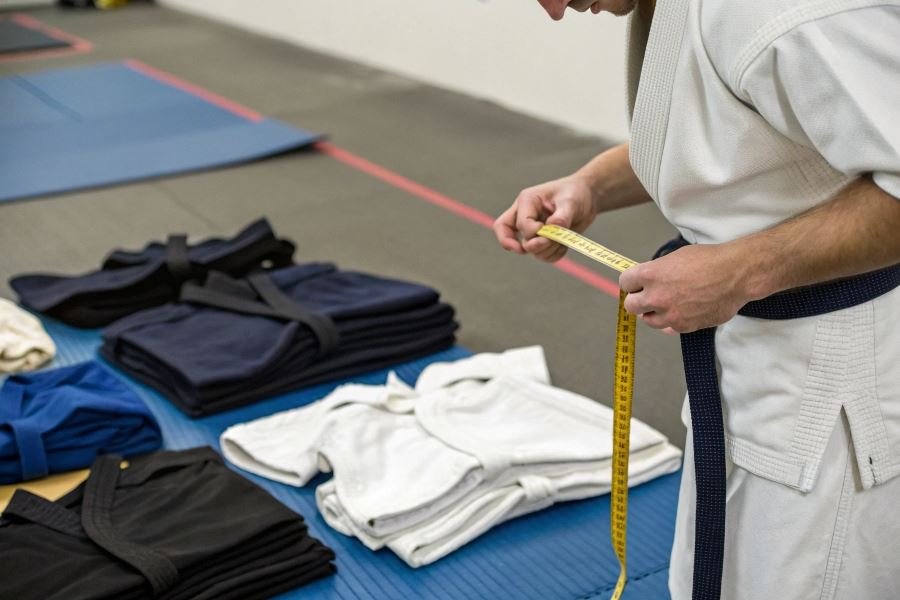
Standing on the mat for the first time, the weight of tradition and technique on your shoulders… and the wrong kimono threatening to unravel your focus. Don’t let that be you.
Choosing the right kimono isn’t just about looking the part—it’s about honoring your martial art’s heritage while maximizing your performance potential. Whether you’re stepping onto the judo mat, entering the karate dojo, or beginning your Brazilian Jiu-Jitsu journey, your uniform is more than cloth—it’s equipment that can either enhance or hinder your training.
Decoding the terminology
First, let’s clear up some confusion: that “kimono” you’re looking for might be called something else depending on your discipline:
- Gi: The universal term for martial arts uniforms
- Judogi: Specifically designed for judo with reinforced collars and knees
- Karategi: Lighter weight for karate’s striking movements
- BJJ Gi: Features tighter cuffs and reinforced stress points for grappling
Why your choice matters
The impact of proper kimono selection goes beyond aesthetics. A judogi designed for throwing techniques would restrict a karateka’s high kicks, while a lightweight karate uniform would quickly shred under judo’s gripping and throwing.
“The right gi becomes an extension of your body. The wrong one becomes your opponent.” – Common saying among martial arts instructors
Your uniform affects:
- Movement range: Too tight restricts techniques; too loose creates dangerous catching points
- Temperature regulation: Different weaves determine breathability
- Durability: Reinforcement in key areas prevents tears during intense training
- Confidence: When you look and feel like a martial artist, you train like one
The difference between struggling with your uniform and forgetting you’re wearing it can transform your training experience from frustrating to flowing.
Essential Factors for Choosing the Perfect Martial Arts Kimono
Stepping onto the mat with the right kimono can be the difference between a focused training session and constant adjustment frustration. When selecting your first martial arts uniform, the fabric, weight, and fit aren’t just preferences—they’re performance factors that directly impact your training experience.
For beginners navigating how to choose a kimono for martial arts, understanding the fundamental elements that separate a quality gi from a subpar one is crucial. The right kimono becomes your trusted partner in training, standing up to countless throws, grips, and washing cycles while maintaining its integrity and appearance.
Material Matters: The Fabric Foundation
Cotton kimonos reign supreme in traditional dojos, offering breathability and comfort that improves with each wash. Single-weave cotton provides excellent ventilation for high-intensity training, while double-weave constructions deliver enhanced durability at the cost of added weight and heat retention.
Canvas options (often pearl weave or gold weave) provide exceptional grip resistance—perfect for grapplers in Brazilian Jiu-Jitsu who need to prevent opponents from easily controlling their uniform during competition.
Synthetic blends have revolutionized the market with moisture-wicking properties that keep you drier during intense sessions. These modern fabrics often incorporate antimicrobial treatments that combat the notorious “gi funk” that develops over time.
The material you select should align with your training environment—lighter, breathable fabrics for hot climates or summer training, and more substantial materials for cooler conditions or competition preparation.
Weight Classifications Decoded
| Classification | Weight Range | Best For |
|---|---|---|
| Lightweight | 350-450g/m² | Speed, mobility, summer training |
| Middleweight | 450-550g/m² | Balanced performance, year-round use |
| Heavyweight | 550g/m²+ | Competition, durability, winter training |
Lightweight kimonos (A1L, A2L designations) offer exceptional mobility and cooling but may sacrifice some durability. These are ideal for practitioners who prioritize speed and agility over grip-fighting advantages.
Middleweight options represent the sweet spot for most practitioners, balancing durability with comfort. They typically withstand regular training while not weighing you down during extended sessions.
Heavyweight designs shine in competition settings where grip-fighting dominates. The substantial fabric resists tearing and provides structure that can actually assist with certain techniques, though at the cost of added weight and heat.
Sizing and Fit: Beyond the Letter Grade
Finding your perfect fit requires more than just following a size chart. Consider these critical factors:
- Shoulder width should allow full range of motion without excess material
- Sleeve length ideally reaches mid-forearm when arms are extended
- Pants length should hit just above the ankle when standing
- Shrinkage factor varies dramatically between brands and pre-shrunk options
Pre-shrunk kimonos from Fuji or Atama tend to maintain their dimensions better after washing, while traditional Japanese brands may require sizing up to accommodate significant shrinkage.
For athletic builds, look for “athletic cut” options that provide more room in the shoulders and thighs while maintaining a tapered waist. Slender practitioners often benefit from “slim fit” designs that reduce excess material that opponents could manipulate.
Remember that most quality kimonos will shrink 1-3% even when washed in cold water, so factor this into your purchasing decision. When in doubt, slightly too large is preferable to too small, as shrinkage can only go in one direction.
Making the Final Call: Your Perfect Martial Arts Kimono
Finding the right kimono isn’t just about picking any uniform off the rack—it’s about making an investment in your martial arts journey. Let’s cut through the confusion and help you make that final decision with confidence.
Balancing Budget and Quality
The price range for martial arts kimonos can be as wide as a championship mat—from $30 budget options to $300+ competition-grade uniforms. But here’s the truth: the most expensive isn’t always what you need.
For beginners, a mid-range kimono ($60-120) often provides the best value proposition. These uniforms typically offer:
- Reinforced stitching at stress points
- Pre-shrunk fabric (saving you sizing headaches)
- Comfortable weight that won’t restrict movement
If you’re training 2-3 times weekly, investing in a slightly higher-quality kimono actually saves money long-term. The durability factor means you won’t be replacing a budget uniform every few months.
The cheapest kimono is rarely the most economical. Factor in replacement costs when calculating your true investment.
Kimono Care Essentials
Different kimono types demand different maintenance approaches:
| Kimono Type | Washing Instructions | Drying Method | Special Care |
|---|---|---|---|
| Cotton | Cold water, gentle cycle | Air dry only | Expect 3-5% shrinkage |
| Ripstop | Cold/warm water | Air or low-heat dry | Resistant to tears |
| Competition | Cold water, no softener | Air dry in shade | Store on wide hangers |
Pro tip: Always wash your kimono immediately after training. Letting sweat set in breaks down fibers faster and can lead to permanent odors that no amount of washing will remove.
For white kimonos (especially in Brazilian Jiu-Jitsu), occasional oxygen-based bleach treatments help maintain that crisp appearance without compromising fabric integrity.
Top Starter Kimonos Worth Your Investment
For Judo Practitioners
The Fuji Single Weave Judo Gi stands out as the perfect entry point. At around $75, it offers exceptional durability with reinforced knees and shoulders—exactly where judokas need it most. The cotton blend provides enough stiffness for proper grip training without feeling like cardboard.
BJJ Beginners
The Tatami Nova hits the sweet spot at approximately $90. Its 550gsm pearl weave jacket and 230gsm ripstop pants handle the constant pulling and tugging of ground work. The pre-shrunk fabric means what you buy is what you get—no sizing surprises after the first wash.
Karate and Traditional Arts
Look no further than the Tokaido Kata for traditional martial arts. Starting around $110, this medium-weight canvas cotton uniform delivers the perfect “snap” sound during kata while maintaining enough flexibility for kumite. The reinforced drawstring system prevents the embarrassing mid-training uniform malfunction.
Remember that your first kimono is the foundation of your training experience. Choose one that makes you feel confident stepping onto the mat, fits your training style, and won’t fall apart when your techniques are still developing. Your perfect kimono is out there—now you know exactly how to find it.