
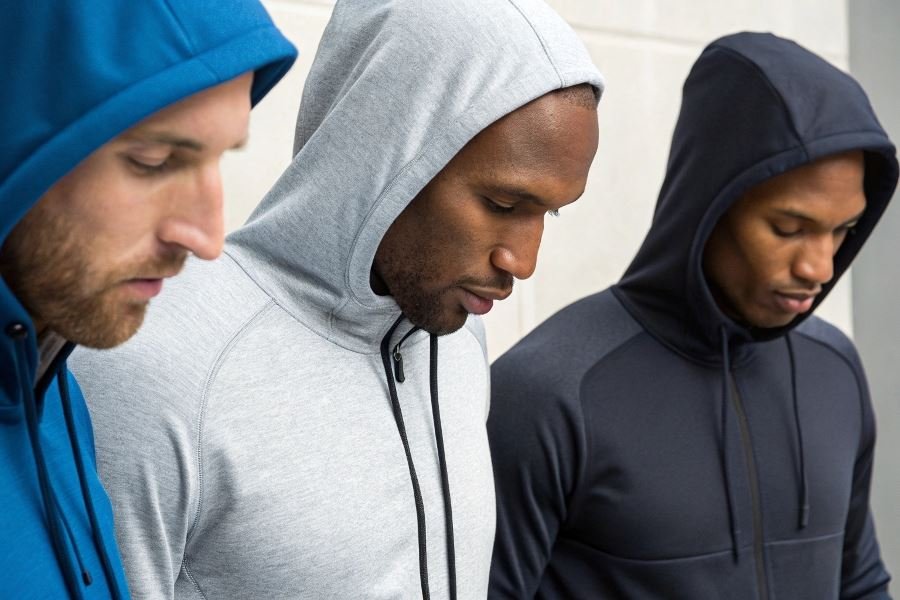
Ever watched an athlete constantly tugging at their sweater during a crucial game moment? That distraction can be the difference between victory and defeat. The right sports sweater doesn’t just look good—it performs with you.
When Tom Brady led that historic Super Bowl comeback in 2017, his perfectly fitted gear wasn’t distracting him from making those precision throws. That’s the power of proper athletic wear sizing. Your sports sweater should feel like a second skin, moving with you rather than against you.
The performance impact of proper fit
A correctly sized sports sweater does more than just look good—it actively enhances your performance. Too tight, and you’ll restrict movement and blood flow. Too loose, and excess fabric creates drag and catches on equipment. The sweet spot? A fit that allows full range of motion while maintaining thermal efficiency.
“The difference between good and great athletic performance often comes down to the details—and proper fitting gear is one of the most overlooked details.” — Sports physiologist Dr. James Conner
Why sports sweaters are sizing nightmares
Unlike standard clothing, sports sweaters present unique challenges:
- Brand inconsistency: A medium in Nike might be a large in Under Armour
- Activity-specific cuts: Hockey sweaters fit differently than running pullovers
- Material variables: Performance fabrics stretch and compress differently than cotton
- Layering considerations: Will you wear base layers underneath?
Measurement methods that actually work
Forget the old “just try it on” approach. Today’s athletes use systematic measurement techniques:
- Chest/bust measurement: The foundation of upper body sizing
- Shoulder width: Critical for unrestricted arm movement
- Sleeve length: Prevents riding up during activity
- Torso length: Ensures coverage during stretching and bending
Master these fundamentals, and you’ll never waste money on ill-fitting athletic wear again.
Essential Measurements for Perfect Sports Sweater Fit
Finding the right size for your sports sweater isn’t just about comfort—it’s about performance. When your athletic wear fits properly, you move better, perform stronger, and stay comfortable through every sprint, swing, or stretch. Let’s dive into the measurements that matter most.
Chest and Bust Measurement: Your Foundation
The chest measurement forms the cornerstone of determining the right size of a sports sweater for any athlete. Grab a flexible measuring tape and wrap it around the fullest part of your chest or bust, keeping the tape parallel to the floor. For accuracy, take this measurement while wearing a light shirt, not your bulky gear.
Pro tip: Take a deep breath and measure at your natural exhale. This gives you your true chest measurement without artificial expansion or contraction.
Many athletes make the mistake of choosing sweaters based solely on their regular clothing size. Athletic wear, however, follows different sizing principles that account for movement and performance needs.
Shoulder Width and Sleeve Length: Freedom to Move
Your shoulders need room to flex and extend without restriction. To measure shoulder width:
- Stand naturally with arms at your sides
- Measure from the outer edge of one shoulder to the other
- Ensure the tape runs across the top of your shoulder blades
For sleeve length, measure from the shoulder seam down to where you want the cuff to end—typically at the wrist bone for standard fits or slightly longer for thumb-hole designs.
Remember that drop shoulders in some athletic designs will affect how the measurement translates to fit.
Torso and Waist: The Comfort Zone
Athletic performance demands a sweater that stays in place during activity. Measure your torso length from the base of your neck to where you want the hem to sit. For waist circumference, measure at your natural waistline—typically the narrowest part of your torso.
| Measurement | How to Take It | Why It Matters |
|---|---|---|
| Chest/Bust | Around fullest part | Determines overall fit |
| Shoulders | Edge to edge across back | Affects arm mobility |
| Sleeve Length | Shoulder to wrist | Prevents riding up during movement |
| Torso Length | Neck to desired hem | Ensures coverage during activity |
| Waist | Around natural waistline | Affects how sweater hangs |
Navigating Size Charts and Brand Variations
Here’s where things get interesting—and sometimes frustrating. A medium in Nike might fit completely differently than a medium from Under Armour.
Brand variation reality check: European brands like Adidas often run slimmer than American brands. Asian manufacturers typically run smaller across all measurements.
When using size charts:
- Compare your measurements to the brand’s specific chart
- Pay attention to fit descriptions (athletic, slim, relaxed)
- Consider the material’s stretch factor
- Check user reviews for real-world sizing feedback
The difference between “athletic fit” and “relaxed fit” can mean inches of fabric, even in the same numerical size.
Remember that performance sweaters should allow for a full range of motion without excess fabric that could catch or create drag. The perfect sports sweater feels like a natural extension of your body—present enough to provide warmth and protection, but never restrictive enough to limit your athletic potential.
Mastering the Final Fit: Expert Tips for Sports Sweater Sizing
Finding that perfect sports sweater isn’t just about style—it’s about performance. After measuring and checking size charts, these final considerations will ensure your athletic wear works as hard as you do.
Layer Like a Pro
The layering strategy can make or break your sports sweater experience. When selecting your size, always consider what you’ll wear underneath:
- Base layer season: During colder months, you’ll likely wear thermal underlayers. Add approximately 1-2 inches to your measurements if you plan to layer consistently.
- Technical fabrics compress differently than cotton blends when layered. Synthetic performance materials typically require less size adjustment for layering than natural fibers.
Movement requirements vary dramatically by activity. For high-mobility sports like rock climbing or CrossFit, prioritize sweaters with:
The best sports sweaters allow full arm extension without riding up at the waist—the true test of proper athletic fit.
Test your range of motion before committing. Can you reach overhead without exposing your midsection? Can you cross your arms without feeling restriction across your back? These movement tests reveal more than any size chart.
Brand Sizing Decoded
Not all brands size equally. This inconsistency isn’t random—it reflects different design philosophies and target activities:
| Brand Type | Sizing Tendency | Best For |
|---|---|---|
| European Athletic Brands | Runs slim/fitted | Endurance sports, running |
| American Athletic Brands | More generous cut | Team sports, casual wear |
| Performance Technical Brands | Anatomical sizing | Mountain sports, extreme conditions |
Nike typically runs smaller than Under Armour, while Patagonia often features more generous sizing in their technical sweaters. Research brand-specific reviews before purchasing from unfamiliar manufacturers.
Many heritage sports brands maintain consistent sizing across product lines, while fashion-forward athletic wear may vary dramatically between collections. When trying a new brand, check their return policy—the gold standard being free returns with no questions asked.
Strategic Sizing Adjustments
Knowing when to size up or down can transform your sports sweater from adequate to exceptional:
Size Up When:
- Your activity involves explosive movements (basketball, HIIT)
- You’ll wear multiple layers underneath
- The material has minimal stretch (wool blends, heavyweight cotton)
- You prefer unrestricted movement over streamlined aesthetics
Size Down When:
- Aerodynamics matter (cycling, running)
- The fabric features significant stretch (4-way stretch materials)
- You’re between sizes and the activity requires precision
- The sweater will serve as a mid-layer under a jacket
For high-intensity cardio activities, a more fitted sweater prevents excess fabric from trapping heat and moisture. Conversely, for strength training, additional room across the shoulders and chest prevents restriction during compound movements.
Remember that different activities demand different fits. Your perfect running sweater might feel constrictive for yoga, while your comfortable hiking layer might be too loose for trail running. The right size isn’t universal—it’s activity-specific.