
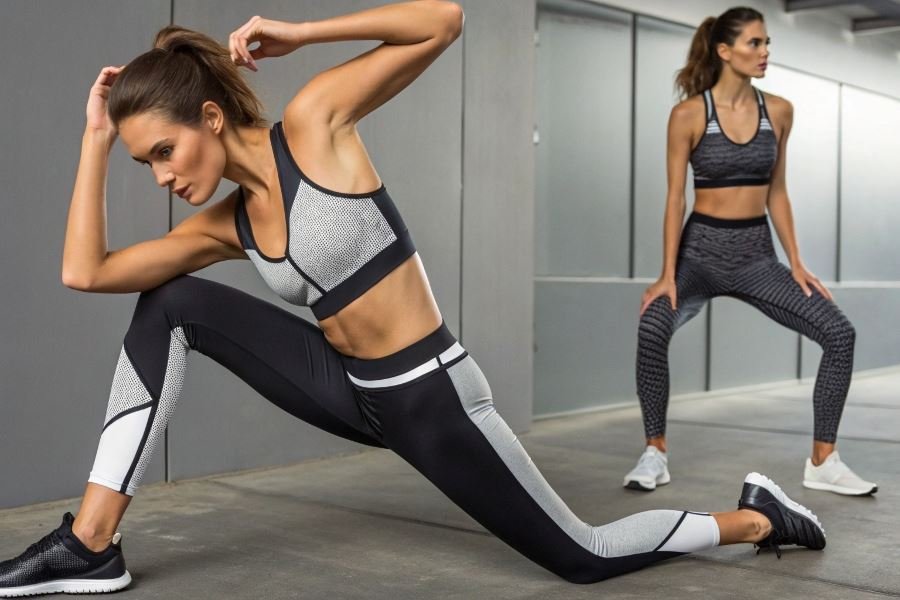
Remember when women’s sportswear meant cotton t-shirts that soaked through within minutes? Those days are thankfully behind us. The evolution of performance fabrics has completely transformed not just how female athletes look, but how they perform at every level of competition.
When Olympic sprinter Florence Griffith Joyner shattered world records in 1988, she did it wearing hand-cut, one-legged spandex bodysuits. Today’s elite athletes benefit from fabrics engineered at the molecular level, designed specifically for the female body’s unique movement patterns and thermoregulation needs.
The right material in women’s sports apparel isn’t just about comfort—it’s about competitive advantage. Studies show that advanced performance fabrics can reduce drag by up to 10%, potentially shaving crucial seconds off race times. But what makes a truly exceptional sports fabric? Three key factors stand out: moisture management, durability under stress, and body-responsive stretch.
“The material touching your skin during intense activity is as important as the shoes on your feet or the fuel in your body.” – Amanda Jenkins, Olympic triathlete
The difference between good and exceptional performance wear often comes down to microscopic details in fiber construction. The best materials adapt to your body’s changing needs throughout a workout—cooling when you’re hot, insulating when you’re cold, and moving precisely as you do without restriction.
As we explore the top three game-changing materials revolutionizing women’s athletic wear, you’ll discover why fabric technology has become the silent partner in every female athlete’s success story.
Material Science Meets Athletic Performance
When elite athletes step onto the field, their clothing becomes a critical piece of performance equipment. The fabric against your skin can make the difference between a personal best and a disappointing showing. The evolution of women’s athletic wear has accelerated dramatically, with fabric technology leading the charge in performance enhancement.
The science behind Top 3 materials for women’s sports suits reveals how far we’ve come from the cotton t-shirts of yesteryear. Today’s performance fabrics are engineered at the molecular level to work with your body during intense activity, not against it. Let’s dive into the materials that are revolutionizing how women train and compete.
Polyester-Elastane Blends: The Moisture Management Masters
Polyester-elastane blends have become the gold standard in athletic wear for good reason. These synthetic powerhouses combine polyester’s incredible moisture-wicking capabilities with elastane’s four-way stretch.
The science is impressive: polyester fibers are hydrophobic, actively pushing sweat away from your skin to the outer surface where it can evaporate. When blended with elastane (also known as Spandex or Lycra), you get a fabric that:
- Retains its shape even after hundreds of washes
- Provides compression without restriction
- Dries up to 40% faster than cotton blends
Modern polyester-elastane ratios typically fall between 80/20 and 90/10, with higher elastane content offering greater stretch for activities like yoga and Pilates.
Nylon Microfiber: Durability Meets Featherweight Performance
Nylon microfiber represents the next evolution in synthetic performance fabrics. With fibers significantly thinner than a human hair, this material creates a tight weave that delivers exceptional benefits:
The durability-to-weight ratio is unmatched in the athletic wear world. A high-quality nylon microfiber garment weighs mere ounces but can withstand years of high-intensity training.
| Property | Nylon Microfiber | Standard Polyester | Cotton |
|---|---|---|---|
| Tensile Strength | Excellent | Good | Fair |
| Weight | Ultra-light | Light | Medium |
| Abrasion Resistance | Superior | Good | Poor |
| Drying Time | 45-60 minutes | 60-90 minutes | 4+ hours |
Athletes in endurance sports particularly benefit from nylon microfiber’s ability to prevent chafing while maintaining excellent breathability. The material’s natural resistance to pilling means your running tights will look new even after logging hundreds of miles.
Technical Merino Wool: Nature’s Performance Miracle
For those seeking a natural alternative to synthetics, technical merino wool has emerged as the premium choice. This isn’t your grandmother’s itchy wool sweater—modern merino is ultra-fine, incredibly soft, and packed with performance benefits.
The temperature regulation is nothing short of remarkable. Merino wool fibers actively respond to body temperature, cooling you when you’re hot and insulating when you’re cold. This makes it ideal for outdoor activities with variable conditions.
Perhaps most impressive is merino’s natural antimicrobial properties. The fiber structure contains lanolin, which prevents bacteria growth even after multiple wearings. Translation: your merino sports bra won’t develop odor even after an intense training session.
The latest technical merino blends incorporate small amounts of synthetic fibers (typically 5-15%) to enhance durability and shape retention while maintaining wool’s natural benefits. Brands like Smartwool and Icebreaker have pioneered these performance blends.
Each of these materials represents the cutting edge of fabric technology, engineered specifically to enhance women’s athletic performance across every imaginable activity and environment.
Making the Perfect Choice: Your Ultimate Material Guide
Matching Materials to Your Workout Style
When selecting from our top three performance fabrics—polyester blends, nylon, and merino wool—your specific activity should be your compass. High-intensity interval training demands the moisture-wicking prowess of polyester blends that keep sweat from becoming a distraction. The fabric’s quick-drying properties mean you’ll stay comfortable through multiple sets.
For yogis and Pilates enthusiasts, nylon’s exceptional stretch creates a second-skin feel that moves with you through every pose. The material’s natural return means no baggy knees after deep stretches—maintaining both function and form.
Distance runners and hikers should consider merino wool’s temperature-regulating magic. This natural fiber keeps you warm during cool morning starts and cool during midday heat spikes. The material’s anti-odor properties are particularly valuable during extended outdoor sessions where freshness matters.
Performance Tip: Multi-sport athletes should build a wardrobe with all three materials, rotating them based on activity intensity, duration, and environmental conditions.
Extending the Life of Your Performance Gear
The investment in quality athletic wear deserves proper maintenance. Each material requires specific care to maintain its performance properties:
| Material | Washing Instructions | Drying Method | Special Care |
|---|---|---|---|
| Polyester Blends | Cold water, gentle cycle | Low heat or air dry | Avoid fabric softeners |
| Nylon | Cold water, mild detergent | Air dry only | Wash with similar colors |
| Merino Wool | Cold water, wool-specific detergent | Lay flat to dry | Never wring or twist |
Heat is the enemy of elasticity in performance fabrics. Air-drying preserves the stretch and recovery of your garments, particularly for nylon pieces. For polyester blends, avoid fabric softeners which can clog the microscopic pores that facilitate moisture wicking.
Merino wool requires gentler handling but rewards you with incredible durability when properly maintained. A quick hand wash with wool-specific detergent can extend the life of these premium pieces by years.
Tomorrow’s Performance Fabrics Taking Shape Today
The athletic wear industry isn’t standing still. Emerging innovations are focusing on sustainability without compromising performance. Recycled ocean plastic is being transformed into high-performance polyester that matches or exceeds the properties of virgin materials. These fabrics divert waste while delivering the moisture management athletes demand.
Bio-based nylons derived from castor oil rather than petroleum are reducing carbon footprints while maintaining the stretch properties that make nylon a go-to for form-fitting activewear. These materials represent a significant step toward reducing dependence on fossil fuels in athletic apparel.
Perhaps most exciting is the development of biodegradable performance fabrics that maintain their integrity during use but break down naturally at end-of-life. These innovations address the growing concern about microplastic pollution from synthetic athletic wear.
The future of women’s sports apparel lies at the intersection of performance, sustainability, and personalization. Smart fabrics that adapt to body temperature and moisture levels are moving from research labs to retail shelves, promising the next evolution in athletic comfort and performance.
Your perfect sports suit material ultimately depends on your unique activity profile, maintenance willingness, and personal values regarding sustainability. The good news? With polyester blends, nylon, and merino wool leading the way—and exciting innovations on the horizon—you’re empowered to make choices that enhance both your performance and your principles.