
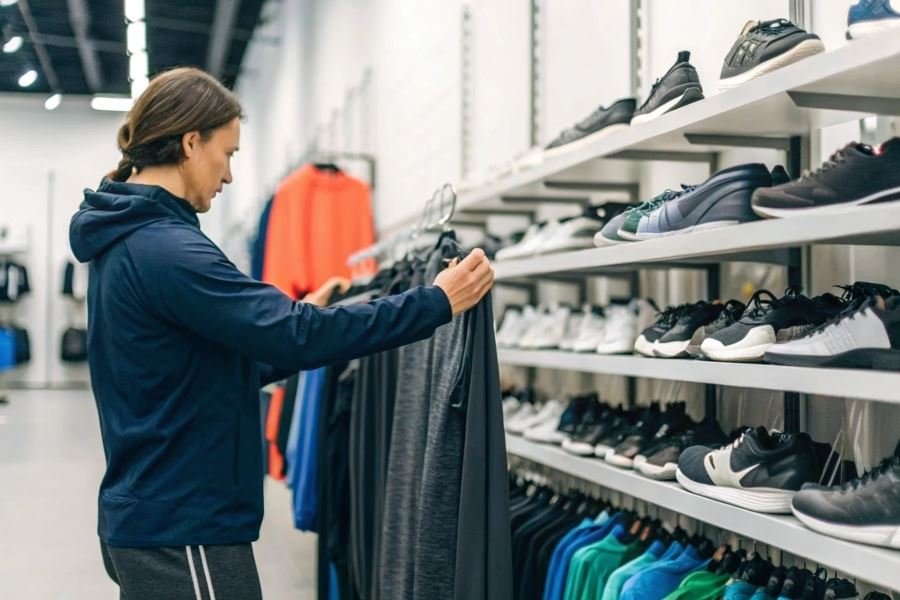
Remember when “women’s sportswear” meant shrinking men’s designs and adding pink? Those days are thankfully behind us.
Today’s functional athletic wear represents a revolution in how women train, compete, and move. The difference between basic activewear and truly functional sportswear isn’t just about looking good—it’s about engineering that works with a woman’s body during intense activity. When your gear performs, you perform better.
From restrictive to revolutionary
Women’s athletic wear has undergone a remarkable transformation. The restrictive corsets worn by female tennis players in the 1920s evolved into the groundbreaking split skirt introduced by tennis star Suzanne Lenglen, challenging norms while improving mobility. Fast forward to the technical fabrics of today that wick moisture, compress strategically, and adapt to body temperature.
Performance impact: Why your gear choices matter
The right sportswear doesn’t just feel good—it measurably affects performance. Studies show that properly fitted sports bras can improve running economy by reducing muscle activity needed to control breast movement. Meanwhile, compression technology has been shown to enhance blood circulation and reduce muscle fatigue during high-intensity workouts.
Essential elements to evaluate
When selecting functional sportswear, prioritize these key factors:
- Fabric technology: Look for moisture-wicking, four-way stretch materials
- Activity-specific design: Running requires different features than yoga or HIIT
- Anatomical considerations: Women-specific cuts that accommodate hips, chest, and typical movement patterns
- Durability vs. weight: The balance between lightweight feel and lasting performance
The best functional sportswear becomes invisible during activity—you forget it’s there because it moves perfectly with you.
The Science Behind Performance Gear
When it comes to functional women’s sportswear, the difference between good and exceptional often lies in details invisible to the untrained eye. The technical construction, material science, and anatomical considerations that go into top-tier athletic wear can transform your workout experience from merely adequate to genuinely empowering.
Understanding what to pay attention to when selecting functional women’s sportswear requires looking beyond aesthetics to the engineering beneath. The right gear doesn’t just look good—it actively supports performance through thoughtful design elements that respond to the unique demands of female athletes’ bodies in motion.
Technical Fabrics That Work Overtime
The foundation of any performance garment starts with its materials. Today’s technical fabrics are marvels of engineering that outperform traditional cotton in virtually every metric:
Moisture-wicking technology pulls sweat away from your skin through capillary action, transferring it to the outer surface where it can evaporate. Look for polyester blends with names like Dri-FIT or HeatGear that specify moisture management properties.
Breathability factors determine how efficiently air circulates through the fabric. The best materials feature micro-ventilation systems that maintain optimal body temperature without sacrificing coverage.
Compression elements provide graduated pressure that:
- Improves blood circulation
- Reduces muscle vibration
- Accelerates recovery time
- Enhances proprioception (body awareness)
The difference between standard and technical fabrics becomes most apparent during high-intensity activities when your body temperature rises rapidly.
Anatomical Design That Moves With You
Women’s bodies move differently than men’s, and exceptional sportswear acknowledges this through:
Strategic seam placement that prevents chafing in high-friction areas while allowing full range of motion. Flatlock seams lie flush against the skin, eliminating bulky friction points.
Ergonomic paneling that follows natural body contours, particularly important in sports bras where support needs vary across the garment.
Articulated joints in elbows, knees, and shoulders that pre-shape the fabric to match your body’s movement patterns, reducing resistance during activity.
Construction Quality That Stands The Test of Time
Durability in women’s sportswear comes down to construction techniques that withstand repeated stress:
| Construction Element | What To Look For | Why It Matters |
|---|---|---|
| Stitching | Double or triple-needle | Prevents seam failure during stretching |
| Reinforcement | Bar tacks at stress points | Distributes tension at vulnerable junctions |
| Fabric Weight | GSM (grams per square meter) | Higher numbers indicate denser, more durable fabric |
| Elasticity Recovery | Snap-back after stretching | Prevents bagging and shape distortion |
Gussets (diamond-shaped fabric inserts) at the crotch of leggings and shorts provide freedom of movement while eliminating the uncomfortable center seam. This seemingly small detail can make the difference between distraction-free performance and constant adjustment.
UV protection ratings become crucial for outdoor activities, with UPF 30+ being the minimum standard for adequate sun defense during extended exposure.
The best functional sportswear incorporates these elements seamlessly, creating garments that perform so naturally you forget you’re wearing them—exactly what you want when focusing on your athletic performance rather than your clothing.
Making Smart Choices for Lasting Sportswear Satisfaction
Balancing performance with personal style
Finding that sweet spot between technical performance and personal style isn’t just possible—it’s essential. The most successful sportswear choices happen when you honor both your athletic needs and aesthetic preferences. A moisture-wicking Nike running top might have all the technical specs, but if you’re constantly tugging at the neckline or distracted by the color, your performance suffers.
Performance should never be sacrificed for style alone, but the good news is you don’t have to choose. Brands like Lululemon and Athleta have mastered the art of creating pieces that perform flawlessly while looking fantastic. Their success proves that functional doesn’t mean frumpy.
The sportswear you reach for repeatedly combines technical excellence with the confidence boost that comes from feeling good in what you’re wearing.
Consider creating a personal ranking system: rate potential purchases on both performance features (moisture management, stretch, durability) and style elements (fit, color, versatility). Items scoring high in both categories represent your sweet spot.
Investment thinking pays dividends
When that $95 sports bra makes you wince, it’s time to think differently about sportswear economics. High-quality functional sportswear isn’t an expense—it’s an investment with measurable returns.
The cost-per-wear formula transforms how you evaluate sportswear:
| Item | Initial Cost | Expected Wears | Cost Per Wear |
|---|---|---|---|
| Premium Sports Bra | $95 | 200+ | $0.48 |
| Budget Sports Bra | $25 | 30 | $0.83 |
| Quality Leggings | $110 | 150+ | $0.73 |
| Discount Leggings | $35 | 25 | $1.40 |
This analysis reveals the hidden value in quality pieces. The premium sports bra from Brooks or Shock Absorber might cost more upfront but delivers superior support through hundreds of high-impact workouts—long after cheaper alternatives have stretched out or lost their elasticity.
Investment pieces typically feature:
- Higher-grade technical fabrics
- Reinforced stitching at stress points
- More thoughtful design elements
- Better temperature regulation
- Superior compression that maintains its effectiveness
Maintenance magic extends lifespan
Even the most advanced sportswear needs proper care to deliver on its performance promises. The right maintenance routine can double or triple the lifespan of your athletic gear.
Immediate post-workout care makes the biggest difference. Don’t let sweaty items fester in gym bags—this allows bacteria to multiply and break down technical fabrics. Instead, air dry items before adding them to your laundry basket.
Follow these maintenance best practices:
- Wash in cold water to preserve elasticity and technical coatings
- Skip fabric softeners which clog moisture-wicking properties
- Use sport-specific detergents like Hex Performance designed for technical fabrics
- Air dry whenever possible or use low heat settings
- Turn items inside out before washing to protect prints and outer surfaces
For compression wear from brands like Under Armour or 2XU, hand washing occasionally can significantly extend the compression effectiveness.
The most sustainable sportswear isn’t necessarily labeled “eco-friendly”—it’s the piece that performs year after year because you’ve invested wisely and maintained it properly. Your wallet, your athletic performance, and the planet all benefit when you make informed decisions about functional women’s sportswear.