
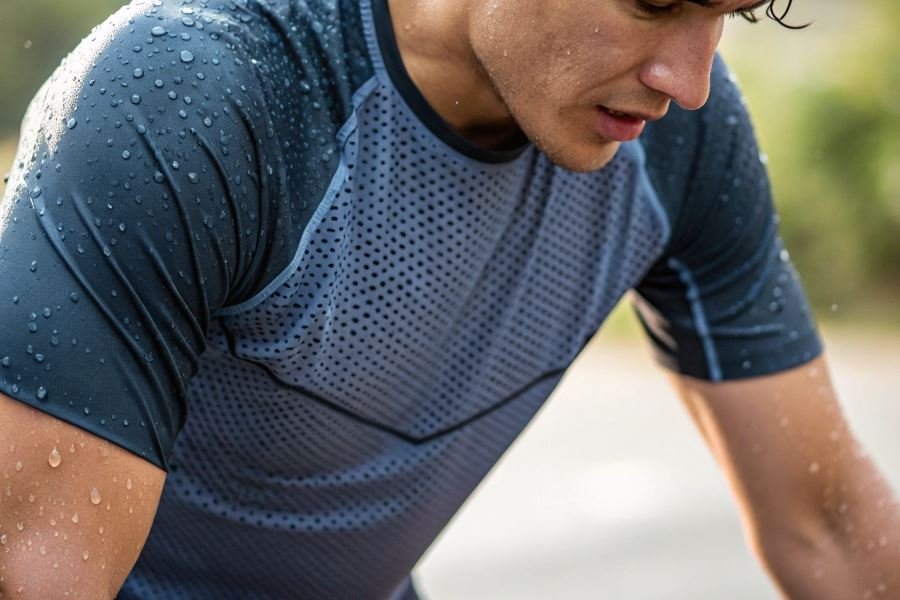
Ever grabbed what seemed like a bargain performance tee, only to have it fall apart after two workouts? You’re not alone. The counterfeit sportswear market has exploded, with fake athletic gear costing legitimate brands over $1.2 billion annually.
When you’re pushing through that final mile or powering through an intense training session, the last thing you need is a shirt that traps heat, chafes your skin, or disintegrates in the wash. Quality isn’t just about the logo—it’s about the technology engineered into every fiber that keeps you performing at your peak.
The difference between authentic and counterfeit sportswear goes far beyond aesthetics. Premium athletic shirts utilize advanced moisture-wicking fabrics that pull sweat away from your body, antimicrobial treatments that prevent odor-causing bacteria, and reinforced stitching that withstands repeated stretching and washing. Counterfeits? They might look similar at first glance but often use substandard materials that can irritate skin and contain harmful chemicals that legitimate manufacturers would never allow.
Three key authentication methods have emerged as your first line of defense:
- Detailed tag inspection – Authentic tags include specific product codes, consistent stitching, and QR verification
- Material assessment – Quality performance fabrics have a distinctive feel and stretch that counterfeits rarely replicate
- Price evaluation – If that “premium” shirt costs 80% less than retail, there’s likely a reason
Knowing these verification techniques doesn’t just protect your wallet—it safeguards your performance and health.
Material Matters: Spotting Authentic Sports Tees
When you’re pushing through that final mile or hitting a personal best, the last thing you need is a subpar shirt holding you back. The market is flooded with options, and knowing how to distinguish a quality sports t-shirt from a counterfeit can make all the difference in your performance and comfort. Let’s dive into what separates the champions from the pretenders when it comes to fabric, construction, and functionality.
Fabric That Performs Under Pressure
Quality athletic wear starts with exceptional materials. Premium sports shirts typically feature high-grade polyester blends (often 85-95% polyester with elastane or spandex) that offer durability while maintaining flexibility. When examining a shirt, rub the fabric between your fingers – authentic performance wear has a distinct smooth, almost silky feel while maintaining substance.
Composition clues: Check the label for specific technical fabrics like Nike’s Dri-FIT, Under Armour’s HeatGear, or Adidas’s AEROREADY. Counterfeits often list these technologies but fail to deliver the actual performance benefits. The fabric weight should feel substantial without being heavy – typically between 120-180 gsm (grams per square meter) for quality running shirts.
Pro tip: Hold the shirt up to light – quality performance fabrics have consistent thickness throughout, while counterfeits often show uneven density.
Construction That Goes The Distance
| Feature | Quality Indicator | Counterfeit Warning Sign |
|---|---|---|
| Seams | Flat-lock or welded | Rough, raised, or single-stitched |
| Stitches per inch | 8-12 SPI | Fewer than 6 SPI |
| Thread tension | Even, no puckering | Loose, uneven |
| Hems | Double-needle stitching | Single stitch, uneven edges |
The construction of a sports shirt reveals volumes about its authenticity. Premium athletic wear features strategic seam placement to prevent chafing during movement. Examine the shoulder and side seams – they should lie flat against the body with consistent, tight stitching.
Seam scrutiny: Authentic performance shirts often utilize flat-lock seams (which look like railroad tracks) or even seamless construction in high-friction areas. Pull gently at the seams – quality construction will hold firm without stretching or showing gaps between stitches.
Breathability That Doesn’t Quit
The true test of a quality sports shirt is how it performs when you’re working up a sweat. Moisture-wicking capabilities separate serious athletic wear from basic cotton tees or poor imitations.
To evaluate moisture management:
- Place a small drop of water on the inside of the fabric
- Watch how quickly it spreads and moves to the outer surface
- Quality shirts will disperse moisture within seconds
The breathability benchmark: Premium sports shirts incorporate micro-ventilation zones – often visible as tiny perforations or mesh panels strategically placed in high-heat areas like the back and underarms. These aren’t just design elements; they’re functional features that counterfeits typically mimic poorly.
“A quality shirt breathes with you, not against you.”
The elasticity recovery test also reveals authenticity – stretch a section of the fabric and release. Premium performance wear springs back immediately, while counterfeits often remain distorted or take time to recover.
When investing in athletic wear, remember that authentic performance shirts aren’t just about the brand name – they’re engineered garments designed to enhance your activity. The $40-70 price point for premium athletic tees reflects advanced materials and construction that deliver genuine performance benefits, not just logo bragging rights.
Brand Authentication: Your Shield Against Counterfeit Sports Gear
The Telltale Signs of Authentic Branding
When you’re dropping $80 on a performance tee from Nike or Under Armour, you deserve the real deal. Authentic logos aren’t just slapped onto fabric—they’re precision-engineered elements with consistent coloring, sharp edges, and proper placement. Counterfeiters often miss subtle details: the Nike swoosh might be slightly too thick, or the Adidas trefoil might have uneven leaves.
Tags tell stories. Authentic brands use specific materials for their tags—usually with multiple layers of information including size, materials, care instructions, and country of manufacture. Premium brands like Lululemon include unique product codes that can be verified online. Many performance shirts from New Balance feature sewn-in tags with raised lettering you can feel with your fingertips.
Brand-specific security features have become increasingly sophisticated. Adidas uses specialized thread patterns in certain stitching, while Puma incorporates micro-printing on interior labels that’s nearly impossible to duplicate without industrial equipment.
Digital Verification in the Palm of Your Hand
The authentication game changed dramatically when brands began implementing digital verification. Most premium athletic wear now includes:
- QR codes linked to verification databases
- NFC chips embedded in tags (especially in higher-end items)
- Serial numbers that can be checked against manufacturer records
The technology is your friend. When scanning a QR code on an authentic Asics shirt, you’ll be directed to their official verification page—not a suspicious third-party site. Counterfeit codes either don’t scan or lead to generic pages with poor translation.
Holograms have evolved beyond simple stickers. Modern authentication holograms on brands like Reebok and Columbia change appearance when viewed from different angles and contain micro-text visible only under magnification.
Authentication tip: Download the brand’s official app before shopping. Many companies like Nike and Adidas have built-in authentication tools that can verify products instantly.
Packaging That Protects and Proves
Packaging Tells the Truth
Authentic sportswear arrives with purpose-designed packaging that counterfeiters struggle to replicate perfectly:
| Authentic Packaging | Counterfeit Red Flags |
|---|---|
| Consistent font weight and spacing | Blurry text or inconsistent spacing |
| High-quality, branded tissue paper | Generic or thin paper materials |
| Precise color matching to brand standards | Slightly off color tones |
| Uniform stitching on tags and labels | Irregular stitching patterns |
| Crisp, clean hang tags | Flimsy or poorly cut tags |
Documentation matters. Legitimate performance shirts from brands like Brooks and Saucony include warranty information with specific details about the product’s performance guarantees. Counterfeiters typically provide vague or generic warranty information—if any at all.
Labels should include standardized information required by law, including fiber content percentages (not rounded numbers), registration numbers, and proper care symbols. Premium technical fabrics like those used by The North Face will have detailed care instructions specific to their proprietary materials.
The devil is in the details. Even the way a shirt is folded can be a clue—many premium brands train staff on specific folding techniques that maintain the garment’s performance properties during shipping and display.
By mastering these authentication methods, you’re not just protecting your wallet—you’re ensuring the performance, durability, and safety standards that make quality athletic wear worth every penny.