
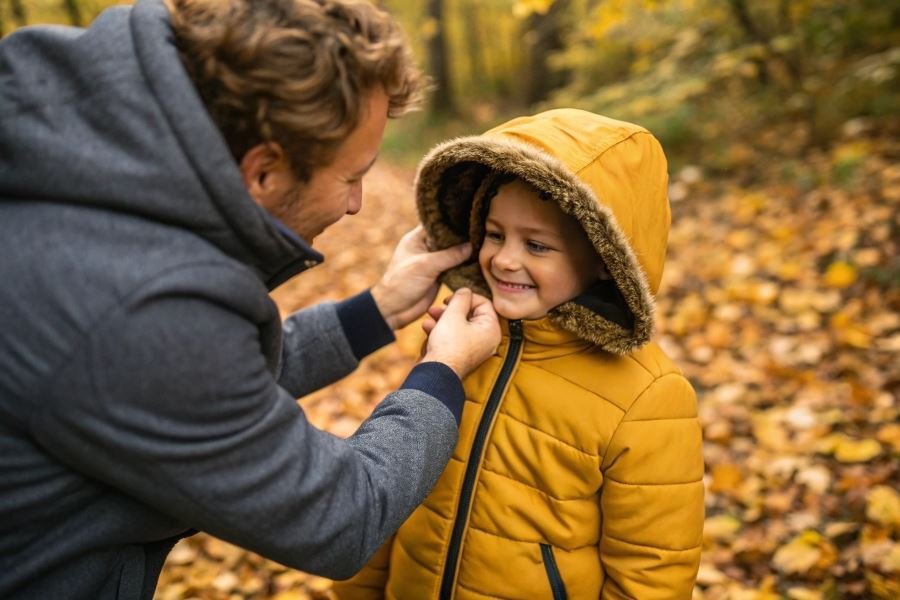
Ever watched a child sprint through snow without a care while you’re bundled in three layers? Their natural energy creates heat, but the right insulation makes all the difference between outdoor joy and a miserable, shivering experience. Let’s dive into what really matters when choosing insulation for your young adventurer.
The insulation in your child’s jacket isn’t just about warmth—it’s their primary defense against winter’s harsh elements. Quality insulation creates a crucial thermal barrier that traps body heat while allowing moisture to escape, preventing that cold, clammy feeling that sends kids running indoors.
Why proper insulation matters more for kids than adults:
- Children lose heat faster due to their higher surface-area-to-body-mass ratio
- Their bodies haven’t fully developed temperature regulation systems
- They’re often too distracted by fun to notice early signs of cold exposure
When selecting insulation, consider your child’s activity level. A jacket for waiting at bus stops needs different insulation than one for snowboarding. The best insulation balances warmth, breathability, and mobility—allowing kids to build snowmen without feeling restricted or overheating.
“The difference between adequate and excellent insulation isn’t just comfort—it’s safety. Proper insulation prevents hypothermia and frostbite while extending outdoor playtime.”
Remember: insulation performance directly impacts how long your child can safely enjoy winter activities. The right choice means fewer complaints, more adventures, and peace of mind for you.
Insulation Showdown: Choosing the Perfect Warmth for Kids on the Move
When winter winds howl and temperatures plummet, the right insulation becomes your child’s invisible shield against the elements. The market offers numerous options, each with distinct advantages that cater to different activity levels, weather conditions, and parental priorities. Determining what insulation is best for a children’s jacket depends on several factors including your local climate, how active your child is, and whether they tend to play in wet conditions.
Let’s dive into the three heavyweight champions of the insulation world and see how they stack up for the unique needs of children who never seem to slow down, even when the mercury drops.
Down Insulation: Nature’s Premium Warmth
Down insulation, harvested from the fluffy undercoating of ducks and geese, remains the gold standard for warmth-to-weight ratio. A quality down jacket feels almost weightless yet provides exceptional thermal efficiency.
Key advantages for active kids:
- Incredible warmth without bulk
- Highly compressible for easy packing
- Breathable and moisture-wicking
- Longest lifespan when properly cared for
However, down comes with considerations. When wet, traditional down clumps and loses its insulating properties—not ideal for snow angels or impromptu snowball fights. Modern hydrophobic down treatments from brands like Columbia and The North Face have improved water resistance, but synthetic options still outperform in sustained wet conditions.
Down quality is measured in fill power (600-900), with higher numbers indicating better insulation. For most children, 650-700 fill power provides excellent warmth without unnecessary expense.
Synthetic Insulation: The Reliable Performer
Synthetic insulation, made from polyester fibers engineered to mimic down’s loft, has become increasingly sophisticated. Materials like PrimaLoft and Thinsulate offer impressive performance even when soaking wet.
Why synthetics shine for kids:
- Maintains warmth when wet
- Dries quickly after exposure to moisture
- Generally more affordable than premium down
- Easier to clean (most are machine-washable)
- Hypoallergenic options available
The durability factor cannot be overstated for children’s outerwear. Synthetic jackets withstand rough-and-tumble play, frequent washing, and the inevitable juice box spills without significant performance degradation.
Wool Insulation: The Sustainable Regulator
Wool has made a remarkable comeback in performance outerwear, with modern processing techniques eliminating the itchiness associated with traditional wool garments. Merino wool insulation offers unique benefits that make it worth consideration.
Wool’s winning qualities:
- Natural temperature regulation—warm in cold, cool in mild conditions
- Retains some insulating properties when damp
- Naturally odor-resistant (perfect for active kids)
- Renewable and biodegradable
- Fire-resistant without chemical treatments
Brands like Smartwool and Icebreaker have pioneered wool technologies that compete with synthetic performance while offering environmental benefits. The temperature regulation aspect is particularly valuable for children who rapidly transition between intense activity and rest periods.
When selecting insulation for your child’s winter jacket, consider their activity level, local climate conditions, and how likely they are to encounter wet weather. The perfect children’s jacket balances warmth, durability, and freedom of movement—allowing kids to focus on adventure rather than discomfort.
Making the Right Insulation Choice for Your Child’s Winter Adventures
Matching insulation to activity and climate
Finding the perfect insulation for your child’s jacket isn’t just about warmth—it’s about matching their lifestyle with your local weather patterns. Active kids who work up a sweat sledding or building snow forts need breathable insulation that won’t leave them damp and chilled. The North Face and Columbia have pioneered synthetic options that maintain warmth even when wet—crucial for snow play sessions that inevitably end with moisture.
For families in the Pacific Northwest’s damp winters, synthetic insulations like PrimaLoft offer superior performance in wet conditions. Meanwhile, those in Colorado’s dry mountain climate might find that down provides unbeatable warmth-to-weight ratio for those frigid but dry winter days.
The sweet spot often lies in understanding your child’s personal thermostat. Some kids run hot and need less insulation with better breathability, while others need maximum thermal efficiency to stay comfortable during outdoor activities.
Maintenance matters with insulation
The best insulation choice extends beyond performance to practical maintenance considerations. Let’s compare how different materials hold up to the inevitable spills, stains, and washing cycles:
| Insulation Type | Machine Washable | Drying Time | Durability | Special Care Notes |
|---|---|---|---|---|
| Down | Yes (gentle) | Long | High | Needs tennis balls when drying |
| Synthetic | Yes | Quick | Medium | Maintains loft after washing |
| Wool | Sometimes | Very long | High | May require reshaping |
| Fleece | Yes | Quick | Medium-Low | Pills over time |
Parents know that easy-care options often win out in busy households. Synthetic insulations from Thinsulate maintain their insulating properties even after multiple washes, while premium down requires more careful attention to maintain its loft and warmth.
Remember that proper care extends the life of any insulated jacket. Following manufacturer instructions isn’t just about maintaining warranties—it’s about ensuring your investment lasts through multiple growth spurts or hand-me-downs.
Balancing performance with practicality
When making your final decision, consider this trifecta of factors:
- Performance needs: Will your child be standing at bus stops or scaling snow-covered playgrounds?
- Sustainability concerns: Recycled synthetic options from Patagonia offer eco-friendly alternatives to traditional insulations
- Budget realities: Higher price often correlates with durability and performance, but mid-range options have dramatically improved
The market has evolved significantly since the bulky jackets of the past. Today’s options include hybrid insulations that combine the benefits of multiple materials—like Columbia’s Omni-Heat technology that pairs synthetic insulation with heat-reflective linings.
The best insulation isn’t always the most expensive or technically advanced—it’s the one that keeps your child comfortable during their specific outdoor activities in your particular climate.
For budget-conscious families, consider that a well-designed $80 jacket with the right insulation for your needs often outperforms a poorly chosen $200 option. Focus on finding the sweet spot where performance meets practicality for your family’s unique situation.
By matching insulation type to your child’s activity level, considering maintenance requirements, and balancing performance with practical concerns, you’ll find an insulation solution that keeps adventures going all winter long.