
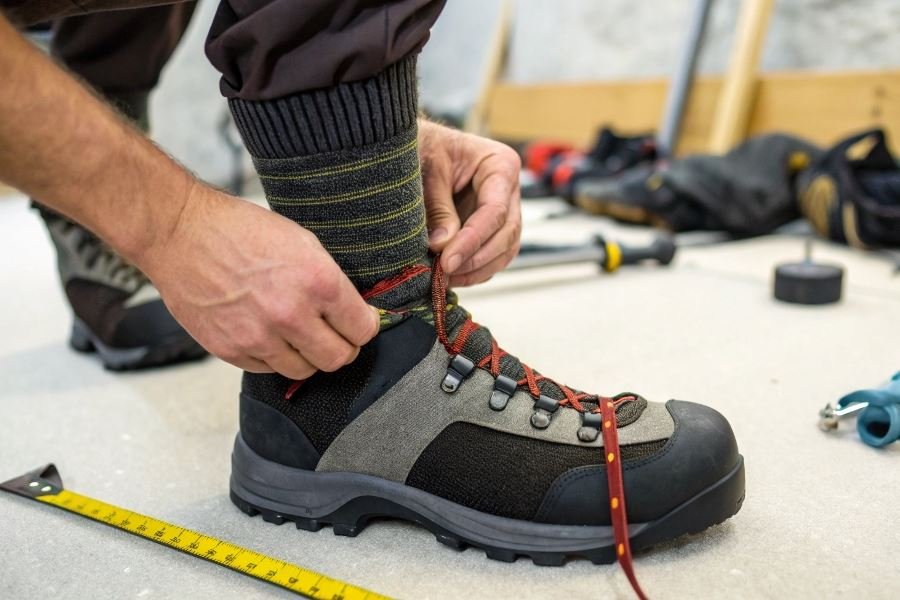
Ever stood at the base of a climbing wall, heart racing with anticipation, only to be betrayed by your footwear? That slipping sensation isn’t just discouraging—it can be downright dangerous. The right climbing boots aren’t just gear; they’re your foundation on the wall.
When you’re starting your climbing journey, proper footwear becomes your silent partner in every ascent. Unlike regular athletic shoes, climbing boots are engineered specifically for the vertical world, with sticky rubber soles that grip tiny edges and pointed toes that can find purchase in the smallest cracks. The difference between appropriate climbing footwear and regular sneakers can mean the difference between confidently reaching the top and a frustrating, potentially hazardous experience.
Safety isn’t optional
The relationship between your feet and the rock is sacred in climbing. Proper climbing boots provide:
- Enhanced grip on various surfaces
- Precise foot placement for technical moves
- Protection against rock abrasions and impacts
Matching boots to your climbing style
Not all climbing is created equal, and neither are climbing boots:
| Climbing Type | Boot Characteristics | Best For |
|---|---|---|
| Bouldering | Aggressive downturn, tight fit | Short, powerful problems |
| Sport Climbing | Moderate downturn, balanced comfort | Longer routes with technical sections |
| Trad Climbing | Flatter profile, all-day comfort | Multi-pitch adventures |
Speaking the language: Essential terminology
When shopping for your first pair, you’ll encounter terms like “downturn,” “asymmetry,” and “rand.” These aren’t just marketing jargon—they’re crucial features that affect performance. A boot’s downturn refers to its curved shape, with more aggressive downturns excelling on overhanging terrain. The rand is the rubber that wraps around the shoe, providing friction for toe hooks and protection for the upper material.
Understanding these fundamentals will transform your climbing experience from the ground up.
Essential Factors for Climbing Boot Selection
Finding the perfect climbing boots can make or break your experience on the wall. The right pair becomes an extension of your feet, while the wrong choice can leave you frustrated and potentially nursing injuries. Let’s dive into what truly matters when selecting your first pair of climbing shoes.
Finding Your Perfect Fit
The cornerstone of selecting climbing boots for beginners lies in proper sizing. Unlike regular athletic footwear, climbing shoes should fit snugly—almost uncomfortably tight at first. When learning how to choose climbing boots for beginners, remember that most climbers size down from their street shoes by 0.5-1.5 sizes.
The toe test is crucial: your toes should be flat but touching the front of the shoe without painful curling. Stand on a small edge with just your toe—if the shoe feels secure without excruciating pain, you’re on the right track.
Never compromise comfort for performance when starting out. A moderately tight fit allows for longer climbing sessions while you build technique and foot strength.
| Street Shoe Size | Recommended Climbing Shoe Size | Fit Description |
|---|---|---|
| US 9 | US 8-8.5 | Performance fit |
| US 9 | US 8.5-9 | Comfort fit |
| US 9 | US 7.5-8 | Aggressive fit (advanced) |
Material and Construction Quality
The materials in your climbing shoes directly impact durability, comfort, and performance. Most beginner shoes feature:
- Leather uppers: Stretch up to a full size, offering excellent comfort after breaking in
- Synthetic materials: Minimal stretch, maintaining their original shape longer
- Lined shoes: A middle ground with moderate stretch
Pay special attention to the rubber compound on the sole. Brands like Vibram and Stealth offer varying levels of stickiness and durability. Beginners benefit from slightly thicker rubber (4-5mm) that provides longevity while you’re developing technique.
The rand—rubber that wraps around the shoe—should be free from bubbles or separation from the upper material.
Stiffness and Support for Your Climbing Style
Boot stiffness dramatically affects your climbing experience and should align with your intended climbing style:
Stiffer Shoes (Recommended for Beginners)
- Support your feet while strength develops
- Excel on vertical walls and small edges
- Reduce foot fatigue during longer sessions
- Allow for comfortable standing on smaller holds
Softer Shoes
- Provide better sensitivity and feedback
- Excel on steep terrain and volume-style holds
- Require stronger foot muscles to use effectively
Match your shoe to your climbing environment. If you’ll primarily climb at an indoor gym with varied terrain, a moderately stiff, neutral shoe like the La Sportiva Tarantulace or Scarpa Origin offers versatility without breaking the bank.
Remember that your first pair of climbing shoes is about learning technique, not pushing extreme grades. Focus on comfort and support that will keep you climbing longer, rather than aggressive downturn that might enhance performance but cut your sessions short due to pain.
The perfect beginner shoe strikes a balance between comfort and functionality, allowing you to focus on developing crucial climbing skills rather than fighting with your footwear.
Sealing the Deal on Your First Climbing Boots
Finding the perfect climbing boots as a beginner doesn’t have to feel like scaling El Capitan without a harness. After understanding fit requirements and technical features, it’s time to make that final, confident decision on which boots will accompany you on your vertical adventures.
Beginner-Friendly Brands That Deliver
The market offers countless options, but three brands consistently earn enthusiastic thumbs-up from climbing instructors and novices alike:
-
La Sportiva Tarantulace – The gold standard for beginners. These boots offer a neutral, comfortable fit with just enough downturn to help you progress. The hook-and-loop closure system makes adjustments quick, while the unlined leather upper molds to your foot over time.
-
Scarpa Origin – Engineered specifically for newcomers, the Origin features a flat profile and padded tongue that forgives technical mistakes. The Vision rubber outsole provides reliable grip without being too aggressive or sensitive.
-
Black Diamond Momentum – These boots shine with their knit upper technology that breathes exceptionally well while maintaining structure. The neutral last and medium-stiff midsole create an ideal learning platform.
| Brand | Model | Price Range | Best For |
|---|---|---|---|
| La Sportiva | Tarantulace | $85-100 | All-around climbing, slightly narrow feet |
| Scarpa | Origin | $95-115 | Comfort-focused climbers, wider feet |
| Black Diamond | Momentum | $90-110 | Hot conditions, gym climbing |
Balancing Your Budget Without Compromising Performance
Climbing doesn’t require remortgaging your home. Entry-level boots typically range from $80-120, offering tremendous value compared to advanced models that can exceed $200.
The true value equation isn’t just about price—it’s about cost per climb.
A $100 pair that lasts through 100 climbing sessions costs just $1 per use. Consider these value-maximizing factors:
- Resole potential: Boots with replaceable soles (like the Tarantulace) extend lifespan dramatically
- Versatility premium: Paying $15-20 more for boots that work both indoors and outdoors often proves economical
- Rental offset: Quality boots pay for themselves after 8-10 sessions compared to rental fees
The cheapest boots are rarely the most economical. Look for durability markers like double stitching at stress points and reinforced rubber rands.
Breaking In Without Breaking Down
Your relationship with climbing boots begins, not ends, at purchase. Proper break-in prevents both discomfort and premature wear:
- Start gradually: Wear new boots for 30-45 minute sessions initially, gradually increasing duration
- Indoor first: Break in boots at the gym before taking them outdoors where retreat options are limited
- Strategic stretching: For leather models, wear them with slightly damp socks around the house to accelerate molding
Warning signs of improper fit during break-in include:
- Persistent numbness after removing boots
- Sharp pain (rather than general discomfort)
- Blisters forming in the same spot repeatedly
Remember that climbing boots should feel snug but not excruciating. The “perfect pain” myth has sent many promising climbers back to hiking boots. Your toes should be flat or slightly curled, never painfully scrunched.
With the right boots properly broken in, you’re not just ready to climb—you’re ready to progress with confidence, knowing your footwear will support your journey from plastic holds to real rock.