
Ever wondered why pro cyclists obsess over their shoes as much as their bikes? The secret to cycling prowess might be right at your feet.
When you’re pushing through mile 80 of a century ride or sprinting to the finish line, every watt of power matters. That’s where specialized road cycling shoes enter the picture—not as mere footwear, but as crucial performance equipment. Choosing the right cycling shoes for your road bike isn’t just about comfort (though that’s important); it’s about transforming your riding experience through superior power transfer and efficiency.
The performance connection
Unlike running shoes designed to absorb impact, road cycling shoes serve the opposite purpose—they’re engineered to be remarkably stiff. This rigidity isn’t a design flaw but a deliberate feature that prevents energy loss during pedaling. With each downstroke, a quality cycling shoe transfers up to 30% more power to your pedals compared to regular athletic footwear.
The anatomy of efficiency
What truly separates road cycling shoes from their casual counterparts is their specialized construction:
- Carbon fiber soles: Premium models feature ultra-rigid carbon soles that maximize power transfer while weighing mere grams
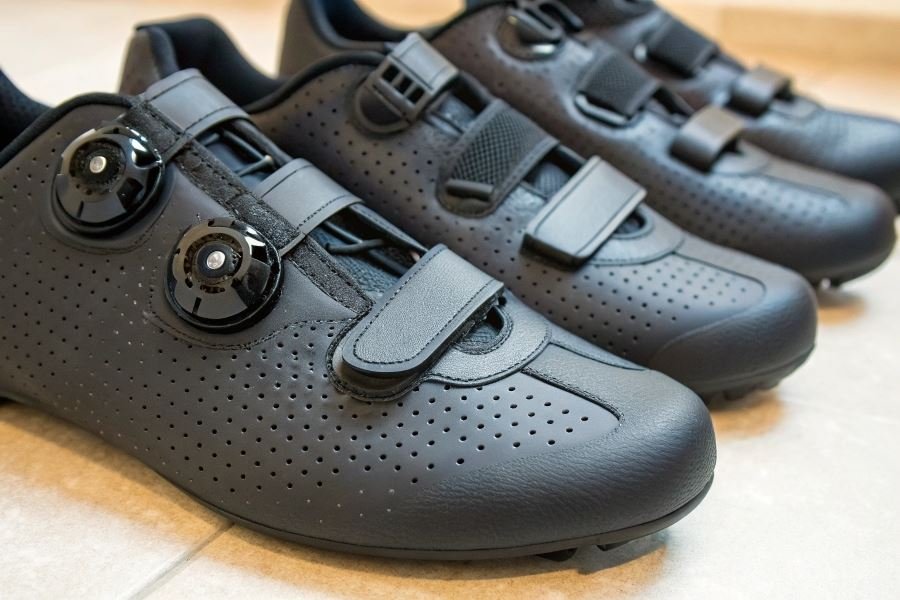
- Precision closure systems: Whether BOA dials, ratchets, or velcro straps, these mechanisms ensure a glove-like fit that eliminates power-robbing foot movement
- Cleat compatibility: The direct connection to your pedals through cleats creates a mechanical advantage that casual shoes simply cannot match
When your feet are properly supported and securely connected to your bike, you’ll experience noticeably improved endurance, reduced fatigue, and the exhilarating feeling of getting more speed from the same effort.
Essential Factors for Road Cycling Shoe Selection
When pedal meets power, your cycling shoes become the critical connection point. Selecting the right road cycling shoes isn’t just about style—it’s about performance, comfort, and efficiency. Let’s dive into what truly matters when making this crucial gear decision.
Understanding how to choose cycling shoes for a road bike requires focusing on three key elements that separate average shoes from performance powerhouses. The closure system, sole construction, and cleat compatibility will dramatically impact your riding experience. Each component plays a distinct role in transforming your pedal stroke into forward momentum.
Closure Systems: Securing Your Performance
The way your shoes tighten around your feet affects both comfort and power transfer. Three primary systems dominate the market:
BOA Dial Systems deliver micro-adjustable precision with a twist. These lightweight dials pull thin steel cables that distribute pressure evenly across your foot. Mid-ride adjustments require just a simple turn—tighter or looser in seconds without dismounting.
Velcro straps offer simplicity and reliability. While not as precisely adjustable as BOA systems, they provide secure closure at a lower price point and with less mechanical complexity. Many performance shoes use a hybrid approach with velcro at the toe and BOA dials at the upper foot.
Traditional laces have made a surprising comeback in professional cycling. Brands like Giro have reintroduced laced models that provide unmatched customization across the entire foot. The downside? Mid-ride adjustments are nearly impossible.
Sole Materials and Stiffness: The Power Foundation
The sole of your cycling shoe determines how efficiently your power transfers to the pedals. Manufacturers typically rate stiffness on a proprietary scale (usually 1-10 or 1-13).
| Material | Stiffness Range | Best For | Price Point |
|---|---|---|---|
| Carbon Fiber | 8-13 | Racing, serious riders | $180-400+ |
| Carbon-Composite | 6-9 | Enthusiasts, long rides | $120-200 |
| Nylon/Fiberglass | 4-7 | Recreational, budget | $70-150 |
Full carbon soles provide uncompromising stiffness and minimal weight. Every watt you generate transfers directly to forward motion rather than being absorbed by flex. The tradeoff? Walking becomes awkward, and they command premium prices.
Carbon-composite constructions balance performance and comfort, offering substantial stiffness with slightly more forgiveness. These represent the sweet spot for most dedicated road cyclists who aren’t competing professionally.
Cleat Compatibility: The Connection Point
Your shoes must match your pedal system—this non-negotiable compatibility determines your entire interface with the bike.
Three-bolt systems (Look, Shimano SPD-SL, Time) dominate road cycling with their wide platforms that distribute pressure across the foot. The Shimano SPD-SL system offers excellent stability and power transfer with its wide cleat design.
Two-bolt systems (Shimano SPD, Crankbrothers) are more common in mountain biking but appear on some road shoes for cyclists who prioritize walkability or dual-purpose use.
Speedplay systems require a four-bolt pattern or adapter plates. Their distinctive lollipop-shaped pedals offer exceptional adjustability for knee-sensitive riders.
Remember that your cleat position fine-tuning is equally important as the system you choose. Even minor adjustments can significantly impact comfort on longer rides and potentially prevent injury through proper biomechanical alignment.
The perfect road cycling shoe combines these elements in a package that fits your specific foot shape, riding style, and budget. When these factors align, every pedal stroke becomes more efficient, comfortable, and powerful.
Finding Your Perfect Road Cycling Shoe Fit
The difference between a good ride and a great one often comes down to what’s on your feet. Road cycling shoes aren’t just accessories—they’re power transfer instruments that connect you to your bike. Let’s dive into the art and science of finding that perfect fit.
Mastering the Measurement Game
Forget everything you know about regular shoe sizing when stepping into the world of cycling footwear. Road cycling shoes demand precision that your everyday sneakers simply don’t require.
Evening measurements matter. Your feet naturally swell throughout the day, so measure in the evening when they’re at their largest—similar to when they’ll expand during a long ride. Use a Brannock device (the metal measuring tool at shoe stores) or trace your foot on paper and measure the longest and widest points.
Most cycling brands use European sizing, which runs differently than US standards:
| US Size | EU Size | Length (mm) |
|---|---|---|
| 8 | 41 | ~255 |
| 9 | 42.5 | ~265 |
| 10 | 44 | ~275 |
| 11 | 45 | ~285 |
Always check the specific brand’s sizing chart—Shimano tends to run narrow while Specialized often runs true to size.
When trying shoes, wear the same socks you’ll ride in and test them standing. Your toes should have about 5mm of space at the front, but the shoe should feel snug across the midfoot with no heel lift when walking.
Width Wisdom and Arch Architecture
Not all feet are created equal, and thankfully, neither are cycling shoes. Width considerations can make or break your comfort on long rides.
Wide feet deserve respect. Brands like Lake Cycling and Bont offer dedicated wide models that prevent the dreaded “hot foot” sensation that comes from compressed nerves.
Arch support is equally crucial. Your foot’s natural arch acts as a suspension system:
- High arches: Need additional support to prevent collapse during power transfer
- Flat feet: Require stability to prevent overpronation and knee tracking issues
- Normal arches: Benefit from moderate support for long-distance comfort
Aftermarket insoles from Superfeet or G8 Performance can transform an average-fitting shoe into your perfect match. Their customizable arch support systems allow fine-tuning that stock insoles simply can’t provide.
Seasonal Strategies and Ventilation Victories
Your feet’s needs change with the seasons, and your shoe selection should follow suit.
Summer riding demands maximum ventilation. Look for shoes with mesh panels and perforated uppers that allow heat to escape. The Fizik Infinito R1 features strategic ventilation zones that prevent the sauna effect during climbing efforts.
Winter warriors need different solutions. Consider sizing up by half a size to accommodate thicker socks. Some riders prefer dedicated winter shoes with weatherproof membranes, while others opt for standard shoes with toe covers or overshoes.
Ventilation isn’t just about comfort—it’s about performance. Overheated feet swell, causing numbness and reduced power output. The best shoes balance airflow with structural support:
- Microfiber uppers: Offer breathability while maintaining shape
- Mesh panels: Provide targeted cooling where feet heat up most
- Perforated tongues: Allow heat to escape from the top of the foot
Remember that proper fit isn’t static. Your feet change throughout rides, seasons, and even years. What worked perfectly last summer might need adjustment this year.
The perfect cycling shoe fit is where performance meets comfort—where you forget about your feet entirely and focus solely on the road ahead.