
Did you know that by age 18, the average person has walked enough steps to circle the Earth four times? Now imagine doing all that walking with improperly supported feet from childhood. The foundation for healthy adult feet begins with proper footwear during those crucial developmental years.
Orthopedic sneakers for children aren’t just specialized shoes—they’re developmental tools designed to support proper foot formation while allowing natural movement. Unlike standard footwear, these sneakers feature structured arch support, deeper heel cups, and reinforced counters that guide growing feet into proper alignment. They’re engineered to distribute pressure evenly across the foot, preventing abnormal wear patterns that could lead to long-term issues.
When specialized support becomes necessary
Children’s feet face unique challenges as they develop. Common conditions that might require orthopedic intervention include:
- Flat feet (pes planus): When arches don’t develop properly, causing the entire sole to contact the ground
- Intoeing (pigeon toes): When feet turn inward during walking
- Pronation: Excessive inward rolling of the foot
- Clubfoot: A congenital condition requiring early intervention
“The first six years of foot development establish patterns that can last a lifetime. Proper support during this window isn’t just about comfort—it’s about setting the biomechanical foundation for future mobility.”
Recognizing the signs
Your child might need orthopedic sneakers if you notice:
- Unusual wear patterns on current shoes (especially on one side)
- Complaints of foot, ankle, or leg pain after normal activity
- Frequent tripping or balance issues
- Reluctance to participate in physical activities
- Visible foot abnormalities or asymmetry
Early intervention with proper footwear can prevent minor issues from becoming major problems, allowing your child to build confidence through comfortable, supported movement.
Medical Indications for Orthopedic Footwear in Children
When your child takes those first wobbly steps, you’re watching more than a milestone—you’re observing the foundation of their musculoskeletal development. For some children, standard sneakers simply don’t provide the support their developing feet need. Pediatric foot conditions can significantly impact a child’s development, affecting everything from their walking pattern to their spinal alignment.
Understanding when orthopedic sneakers for children are necessary requires recognizing the signs that indicate potential foot problems. These specialized shoes aren’t just modified versions of regular footwear—they’re medical devices designed to correct specific issues while supporting proper foot development. Many parents struggle to identify when their child’s walking pattern indicates a need for intervention versus a normal developmental phase.
Common Pediatric Foot Conditions
Children’s feet are remarkably complex structures undergoing rapid development. Several conditions may necessitate orthopedic intervention:
Pediatric Flatfoot: While many children have flat arches until age 3-4 as part of normal development, persistent flatfoot beyond this age may require supportive footwear. Flexible flatfoot (arches that appear when standing on tiptoes) often resolves naturally, while rigid flatfoot typically requires intervention.
Clubfoot: This congenital condition affects approximately 1 in 1,000 newborns and involves the foot turning inward and downward. Treatment typically begins with casting in infancy, but specialized orthopedic footwear plays a crucial role in maintaining correction during the toddler and early childhood years.
Toe Walking: When children persistently walk on their toes beyond age 2, orthopedic footwear with heel cups and firm ankle support can help encourage proper heel-to-toe gait patterns.
Other conditions requiring specialized footwear include:
- In-toeing or out-toeing (feet that turn inward or outward when walking)
- Leg length discrepancies
- Juvenile arthritis affecting foot joints
- Hypermobility syndromes
Correcting Gait and Posture
The impact of proper footwear extends far beyond the feet themselves. Orthopedic sneakers play a multifaceted role in a child’s overall development:
| Benefit | How Orthopedic Sneakers Help |
|---|---|
| Gait Correction | Strategic support redirects foot placement during walking |
| Posture Improvement | Proper foot alignment creates foundation for spinal alignment |
| Pain Reduction | Cushioning and support minimize discomfort during activity |
| Muscle Development | Encourages proper muscle engagement during movement |
Children with uncorrected foot issues often develop compensatory movements that can lead to knee, hip, and back problems later in life. The right orthopedic footwear intervenes early, preventing these cascading effects.
When to Seek Professional Assessment
Warning signs that warrant a pediatric podiatrist or orthopedist consultation:
- Persistent pain in feet, ankles, knees, or hips
- Unusual wear patterns on shoes (excessive wear on one side)
- Frequent tripping or falling beyond typical developmental stages
- Reluctance to participate in physical activities
- Complaints of fatigue during walking or running
- Visible foot deformities or asymmetry
A comprehensive evaluation typically includes gait analysis, where specialists observe how your child walks and runs. Advanced clinics may use pressure mapping technology to identify specific areas requiring support. Based on these assessments, specialists can recommend precisely the right orthopedic footwear for your child’s unique needs.
Remember that early intervention yields the best results. With proper support during critical developmental years, many children can avoid long-term complications and enjoy active, pain-free lives.
Selecting the Perfect Orthopedic Sneakers for Your Child
When it comes to your child’s foot development, the right footwear isn’t just about style—it’s about setting the foundation for healthy growth. Orthopedic sneakers serve a crucial purpose for many children, providing the support and structure developing feet need. Let’s dive into what makes these specialized shoes worth considering and how to find the perfect pair.
Must-have features in quality orthopedic footwear
The difference between standard sneakers and true orthopedic options isn’t just marketing—it’s medicine. Quality orthopedic sneakers for children incorporate several non-negotiable features:
Firm heel counter – This reinforced back portion cradles the heel, preventing excessive pronation (inward rolling) or supination (outward rolling). When shopping, perform the “squeeze test” by pressing the heel area—it should resist compression.
Adequate arch support – Children with flat feet or developing arches need proper support to encourage natural foot positioning. Look for visible contours in the footbed rather than flat insoles.
Flexible yet supportive soles – The ideal sole bends at the ball of the foot but resists twisting in the middle. This combination supports natural walking motion while stabilizing the midfoot.
The materials matter just as much as the design. Breathable uppers prevent moisture buildup, while antimicrobial treatments can reduce odor—a welcome feature for active kids!
| Feature | Purpose | What to Look For |
|---|---|---|
| Heel counter | Stabilizes rear foot | Firm, non-compressible material |
| Arch support | Promotes proper alignment | Visible contour, not flat |
| Toe box | Allows natural toe spread | Wide, rounded shape |
| Closure system | Secure fit, adjustability | Velcro or laces with lock system |
| Sole | Shock absorption, stability | Flexible at toe, rigid at midfoot |
Fitting for success
Finding the right size isn’t just about length—it’s about creating a relationship between foot and shoe that supports development without restriction.
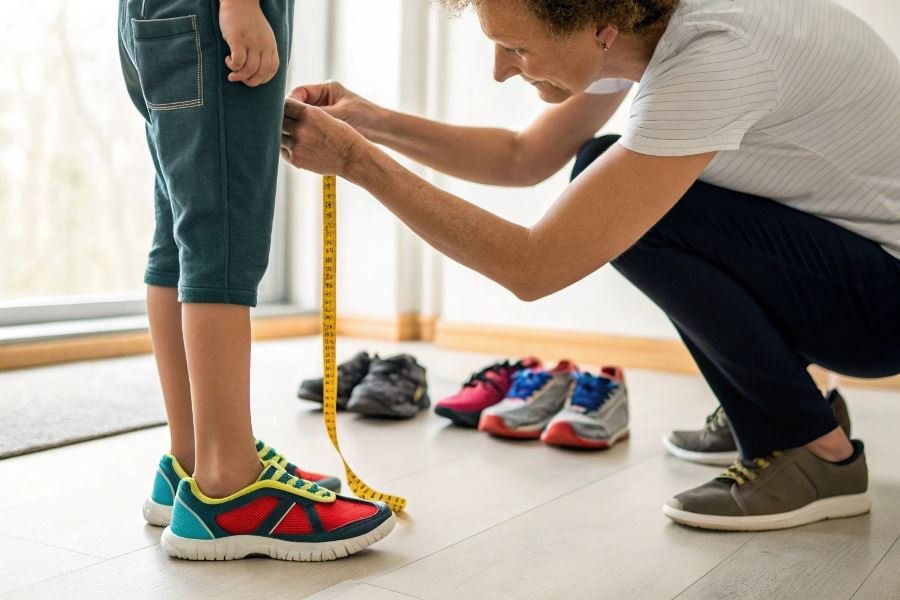
The thumb rule still applies – Allow approximately half an inch (1.3 cm) between the longest toe and shoe end. This space accommodates growth and natural foot expansion during activity.
Width matters as much as length – Orthopedic needs often include width considerations. Look for shoes that come in multiple width options from brands like New Balance or Stride Rite.
Measure at day’s end – Feet naturally swell throughout the day, so afternoon fittings provide the most accurate size assessment.
Reassess size every 3-4 months for children under 3 years, and every 4-6 months for older children. Growth spurts wait for no parent!
Balancing function with fun
The most supportive shoe in the world won’t help if your child refuses to wear it. Modern orthopedic sneaker designs have come light-years from the clunky, clinical-looking options of the past.
Look for customizable elements – Removable insoles allow for personalization of support while maintaining the shoe’s external appearance. Brands like Plae offer interchangeable tabs for style customization.
Consider weight carefully – Orthopedic doesn’t have to mean heavy. Newer materials provide support without the bulk, making activity easier and more enjoyable.
Involve your child in selection – Within the doctor-approved options, let your child have input on color or design. This ownership increases compliance dramatically.
The best orthopedic sneaker is the one that balances medical necessity with the reality of childhood—active, messy, and deserving of both protection and joy.
Remember that orthopedic sneakers are an investment in your child’s future mobility. Quality pairs from reputable manufacturers like Orthofeet or Hoka might carry higher price tags, but their durability and proper support make them worth every dollar when truly needed for your child’s foot health.