
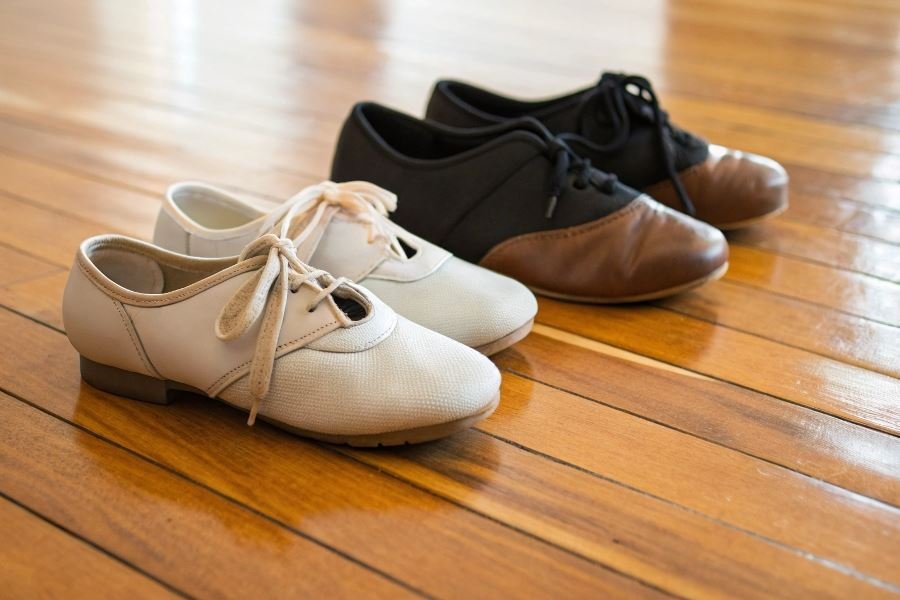
Ever watched a child’s face light up during their first successful pirouette? That magical moment depends more on proper footwear than you might think. Behind every graceful leap and smooth slide lies a critical foundation: correctly fitted jazz shoes.
Jazz shoes aren’t just miniature versions of adult dance footwear—they’re specialized tools designed for developing feet and emerging technique. When selecting jazz shoes for your young dancer, you’re not just buying footwear; you’re investing in their technical development, comfort, and safety on the dance floor.
Unlike regular sneakers or school shoes, jazz shoes feature specific design elements crucial for proper dance execution: split soles for flexibility, thin rubber patches for controlled slides, and snug-fitting leather or canvas uppers that move with the foot. The right size allows these features to function as intended, while improper sizing can hamper development or even lead to injuries.
Finding that perfect fit involves more than just measuring foot length. Width, instep height, and growth potential all play important roles in the selection process. A comprehensive size chart serves as your roadmap, translating your child’s unique foot measurements into the ideal jazz shoe size—accounting for different manufacturers’ sizing variations and the specialized nature of dance footwear.
“The difference between a good jazz shoe and a great one isn’t just quality—it’s how perfectly it fits the individual dancer’s foot.” – Professional dance instructor
Finding the Perfect Fit: Child’s Jazz Shoe Sizing Guide
Measuring Your Child’s Feet Like a Pro
Getting accurate measurements is the foundation of finding jazz shoes that perform as brilliantly as your young dancer. The difference between a perfect fit and a painful distraction can be as little as a few millimeters! Start by having your child stand on a piece of paper with their weight evenly distributed. Trace around each foot with a pencil held perfectly vertical—any angle will distort the measurement. Measure the length from heel to longest toe (which isn’t always the big toe!) and the width at the widest part of the foot.
For growing dancers, understanding what size of jazz shoes to choose for a child requires more than just a size chart—it demands precision and knowledge of how these specialized shoes should fit. Always measure in the afternoon when feet are naturally at their largest, and have your child wear the socks or tights they’ll use during dance class.
Pro tip: Measure both feet separately! About 60% of people have one foot slightly larger than the other. Always fit to the larger foot.
Navigating Brand Differences in Jazz Shoe Sizing
Jazz shoe sizing isn’t standardized across manufacturers, making the sizing journey more complex than it appears. Let’s break down how major brands differ:
| Brand | Sizing Tendency | Fit Characteristics |
|---|---|---|
| Bloch | Runs small | Narrow through midfoot |
| Capezio | True to size | Wider toe box |
| So Danca | Runs large | Generous width |
| Sansha | Runs small | Snug heel cup |
When interpreting size charts, look beyond the numbers. Some brands provide additional measurements like arch length and instep height. The construction matters too—split-sole jazz shoes typically require a snugger fit than full-sole versions, as they’re designed to hug the foot’s contours.
International Size Conversion Made Simple
Dance is universal, but sizing systems aren’t! Here’s your translation guide for international jazz shoe sizing:
| US Child | UK | EU | CM (Japan) | Foot Length (inches) |
|---|---|---|---|---|
| 10 | 9 | 27 | 16.5 | 6.25 |
| 11 | 10 | 28 | 17.1 | 6.5 |
| 12 | 11 | 30 | 17.8 | 6.75 |
| 13 | 12 | 31 | 18.4 | 7 |
| 1 | 13 | 32 | 19.1 | 7.25 |
| 2 | 1 | 33 | 19.7 | 7.5 |
| 3 | 2 | 34 | 20.3 | 7.75 |
Remember: European sizes progress in smaller increments, offering more precise sizing options. Japanese sizing (CM) directly corresponds to foot length in centimeters, making it the most straightforward system if you have accurate measurements.
When converting between systems, always double-check against your actual measurements. A US size 13 child might translate to EU 31 in one brand but EU 32 in another. The physical measurement never lies!
For online purchases, look for retailers that provide brand-specific conversion charts. Some dance specialty stores like Discount Dance Supply offer detailed fitting guides that account for brand variations.
Final fitting advice: Proper jazz shoes should fit like a second skin—snug but never pinching, with just enough room for growth (about 1/4 inch maximum). The perfect fit ensures your young dancer can focus on technique rather than uncomfortable footwear!
Mastering the Art of Jazz Shoe Sizing for Growing Feet
When it comes to jazz shoes for your young dancer, size isn’t just a number—it’s the foundation of proper technique, comfort, and injury prevention. As someone who’s watched countless recitals where kids either shuffle uncomfortably or dance with confidence, I can tell you that proper sizing makes all the difference. Let’s dive into the practical aspects of selecting jazz shoes that will support your child’s dancing journey!
Planning for growth without compromising fit
The growth spurt dilemma is real! Children’s feet can grow up to half a size every 2-3 months during peak growth periods. However, buying jazz shoes two sizes too big is a recipe for disaster—despite the temptation to “get more mileage” out of your purchase.
The perfect jazz shoe should have approximately 0.5 inches (1.27 cm) of growing room beyond the longest toe—enough space for development without sacrificing technical execution.
For optimal growth accommodation:
- Measure your child’s feet every 3-4 months during active growth phases
- Consider split-sole designs that offer more flexibility for growing feet
- Look for brands with “growth guarantee” programs like Bloch or Capezio that offer discounts on replacement shoes
Remember that proper arch support during formative years helps develop correct muscle memory. A shoe that’s too large forces young dancers to grip with their toes, potentially leading to technique issues that can take years to correct.
Avoiding the common sizing pitfalls
The dance world is littered with sizing misconceptions that can lead to poor performance and potential injury. Here are the most common mistakes to avoid:
Mistake #1: Using street shoe size as gospel
Jazz shoes typically run 1-2 sizes smaller than street shoes. Always refer to the manufacturer’s specific sizing chart rather than assuming.
Mistake #2: Ignoring width measurements
Length isn’t everything! A narrow foot in a wide shoe creates dangerous sliding, while a wide foot in a narrow shoe causes painful compression.
Mistake #3: One-and-done measuring
Feet swell throughout the day, so measurements taken in the morning may not reflect true size needs for afternoon or evening classes.
| Time of Day | Foot Size Variation |
|---|---|
| Morning | Smallest |
| Afternoon | Medium expansion |
| Evening | Maximum expansion |
Mistake #4: Forgetting about socks
If your child wears socks with jazz shoes, bring the exact pair they’ll use when measuring or fitting.
Style-specific sizing adjustments
Different jazz shoe styles and materials demand different sizing approaches:
Leather jazz shoes require sizing down by 0.5-1 size as they stretch significantly with wear. The initial fit should feel snug but not painful, with the leather molding to the foot over 2-3 weeks of regular use.
Synthetic/canvas options have minimal stretch factor, so size closer to true measurement with just enough room for growth. These shoes won’t “break in” substantially.
Split-sole designs should fit more precisely than full-sole versions, as they rely on foot articulation. Too much extra space compromises the shoe’s ability to showcase proper technique.
Slip-on styles need to be slightly snugger than lace-up versions to prevent heel slippage during turns and jumps. The heel should feel secure without pinching.
For advanced movements like pirouettes and leaps, proper sizing becomes even more critical. When your child begins working on these technical elements, consider consulting with their instructor about potential sizing adjustments that might better support their development.
Remember: the perfect jazz shoe disappears from the dancer’s awareness, allowing them to focus entirely on their artistry rather than foot discomfort. That’s the ultimate goal of proper sizing!