
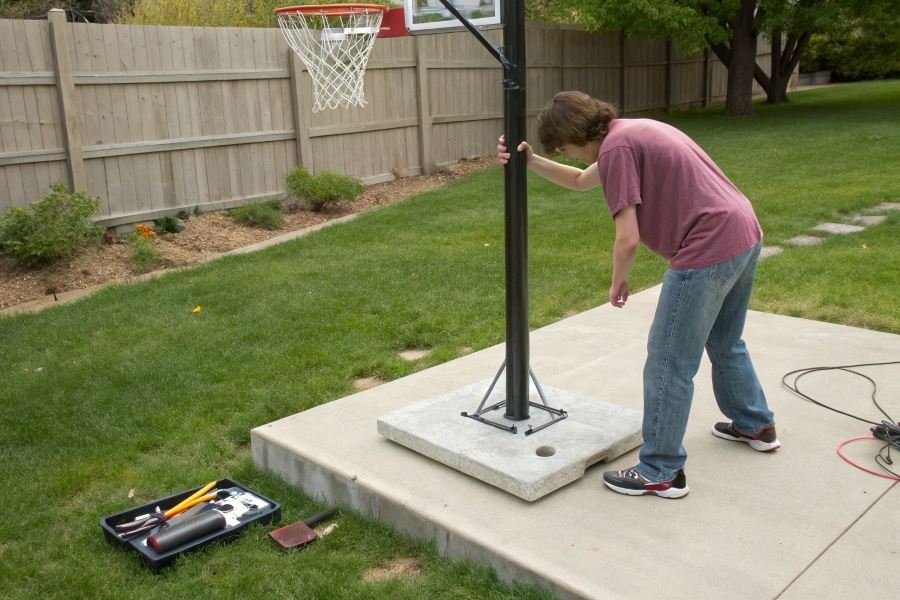
Ever stood in a sporting goods store, staring at basketball hoops and wondering which one would transform your driveway into the next Madison Square Garden? You’re not alone. The choice between mobile and stationary basketball systems can feel as high-pressure as a championship free throw.
Basketball hoops have evolved dramatically since James Naismith hung that first peach basket in 1891. Today’s market offers everything from professional-grade in-ground systems anchored by 400 pounds of concrete to portable units you can wheel around your property. The portable hoop market has exploded in popularity, with sales increasing nearly 35% since 2020, though traditional in-ground systems remain the gold standard for serious players.
When deciding between mobility and permanence, three factors reign supreme: installation commitment, playing experience, and your available space. In-ground hoops deliver unmatched stability and authentic play but require permanent installation. Portable systems offer flexibility but may sacrifice some performance aspects.
Your specific situation ultimately determines which type shines brightest. A family with young children might benefit from a portable system that adjusts as kids grow and can be moved for neighborhood gatherings. Meanwhile, a dedicated player seeking pro-level practice might find only an in-ground system delivers the backboard stability and rim response needed for developing consistent shooting form.
“The right basketball hoop isn’t about what’s objectively ‘best’ – it’s about what best serves your unique playing needs, space constraints, and long-term goals.”
Consider your playing style, available space, and commitment level before making this investment. The perfect hoop transforms not just your game, but your entire relationship with the sport.
The Ultimate Showdown: Mobile vs Stationary Basketball Hoops
Rock-solid stability or freedom to move?
When it comes to bringing the basketball court experience to your driveway or backyard, the choice between mobile and stationary hoops can make or break your game. Mobile vs stationary basketball hoops: which is better depends entirely on your specific needs, available space, and how seriously you take your jump shots. Let’s break down this matchup across all the critical factors that matter to ballers who want the perfect home setup.
Performance where it counts
Stationary hoops dominate the stability conversation—it’s not even close. Cemented in-ground systems offer professional-level performance with minimal vibration and backboard movement, even after the most aggressive dunks. The Spalding in-ground systems provide stability that’s nearly identical to what you’d find in competitive arenas.
Mobile systems have made impressive strides, with high-end models from Lifetime featuring weighted bases holding up to 40 gallons of water or sand. However, even these powerhouses experience some movement during intense play. For serious players practicing bank shots, that slight wobble can affect shot development.
Space and setup realities
| Hoop Type | Installation Time | Required Space | Permanence |
|---|---|---|---|
| Mobile | 2-3 hours | Flexible | Temporary |
| Stationary | 1-2 days | Fixed | Permanent |
Stationary hoops demand commitment—both to location and installation effort. You’ll need to dig a hole approximately 48 inches deep, mix concrete, and potentially deal with local permits. The payoff? A professional-grade system that becomes part of your property.
Mobile systems shine for those with limited space options or rental properties. They can be wheeled away for storage, shared between locations, or repositioned to accommodate other activities in multi-purpose spaces.
Built to last or built to adapt?
Weather resistance varies dramatically between these options. Premium stationary hoops from Goalrilla feature powder-coated poles and all-weather nets designed to withstand years of exposure. Their structural integrity typically supports 10+ years of continuous outdoor use.
Mobile systems generally offer 3-5 years of reliable performance before showing significant wear. The plastic components in base units can degrade from UV exposure, and the mechanisms for height adjustment face more stress from frequent movement.
Investment considerations
The price spectrum tells an interesting story:
- Entry-level mobile hoops: $100-300
- Mid-range mobile systems: $300-700
- Premium mobile units: $700-1,500
- Basic stationary systems: $500-800
- Competition-grade stationary hoops: $1,200-2,500
While stationary hoops represent a larger initial investment, their longevity often delivers better value over time. Mobile systems require more frequent replacement but offer flexibility that might justify the recurring cost for some situations.
Adjustment and adaptability
Mobile hoops excel with quick-adjust mechanisms that accommodate players of different heights. Most Silverback mobile systems offer one-hand height adjustments from 7.5 to 10 feet in 6-inch increments.
Stationary systems have caught up in the adjustment department, with many now featuring internal mechanisms that allow height changes without tools. However, they can’t match the mobile systems’ ability to be completely relocated or stored during off-seasons or severe weather events.
The verdict? For dedicated players with permanent space, stationary hoops deliver unmatched performance. For families with growing players, limited space, or multiple use requirements, mobile systems offer versatility that’s worth the stability trade-off. Your perfect hoop depends entirely on how you plan to use it—choose accordingly and elevate your game!
Making the Final Call: Mobile vs Stationary Basketball Hoops
When it comes down to decision time, choosing between mobile and stationary basketball hoops isn’t just about preference—it’s about matching your specific needs with the right equipment. After breaking down the features, let’s cut through the noise and help you make a choice you won’t regret.
The ultimate pros and cons showdown
Mobile hoops deliver on flexibility but come with trade-offs that stationary systems avoid. Here’s the definitive comparison:
| Feature | Mobile Hoops | Stationary Hoops |
|---|---|---|
| Stability | Moderate (even with sand/water base) | Exceptional (concrete-anchored) |
| Adjustability | Often height-adjustable | Limited adjustability once installed |
| Portability | Can be moved when needed | Permanent installation |
| Backboard quality | Typically smaller (44″-54″) | Often larger, professional-grade (54″-72″) |
| Durability | 3-7 years average lifespan | 15+ years with proper maintenance |
| Setup complexity | Moderate assembly, no installation | Complex installation requiring concrete |
| Cost range | 200−1,500 | 800−3,000+ (including installation) |
The stability difference is undeniable—stationary hoops simply don’t wobble or tip during aggressive play. However, mobile systems from brands like Spalding and Lifetime have dramatically improved their base designs in recent years.
Finding your perfect match
Your specific situation should drive your decision:
For driveway casual play:
Mobile hoops shine here. They allow you to reclaim your driveway when needed and can be adjusted as children grow. The Silverback NXT offers exceptional stability for a portable system and takes just 90 minutes to assemble.
For competitive practice:
Serious players need serious equipment. Stationary hoops from Goalrilla provide the professional-grade rebounding and stability that closely mimics gym conditions. The investment pays off in authentic practice experience.
For family use:
Consider a high-quality mobile system with height adjustment. This accommodates everyone from your 6-year-old to your teenager. Look for systems with at least a 54″ backboard and breakaway rims to handle enthusiastic dunking attempts.
The hoop you choose today will shape thousands of shots tomorrow. Make the decision count.
Beyond the purchase: thinking long-term
The true cost of ownership extends beyond the initial price tag. Stationary hoops typically represent better investment value despite higher upfront costs. With minimal maintenance, they’ll deliver consistent performance for 15+ years, compared to 3-7 years for most portable systems.
Consider these long-term factors:
- Property value impact: Permanent, professional-looking hoops can actually enhance your property’s appeal to the right buyers
- Maintenance requirements: Mobile systems have more moving parts that can wear out or break
- Replacement costs: Factor in potentially replacing a mobile hoop 2-3 times over the lifespan of one stationary system
- Weather resilience: Stationary hoops withstand extreme weather conditions better than their portable counterparts
The verdict? If you have the space and don’t plan to move soon, stationary hoops deliver superior performance and value over time. For everyone else, today’s premium mobile hoops offer an impressive compromise that would have been unthinkable just a decade ago.
Your perfect basketball hoop matches not just today’s needs, but tomorrow’s aspirations—choose accordingly.