
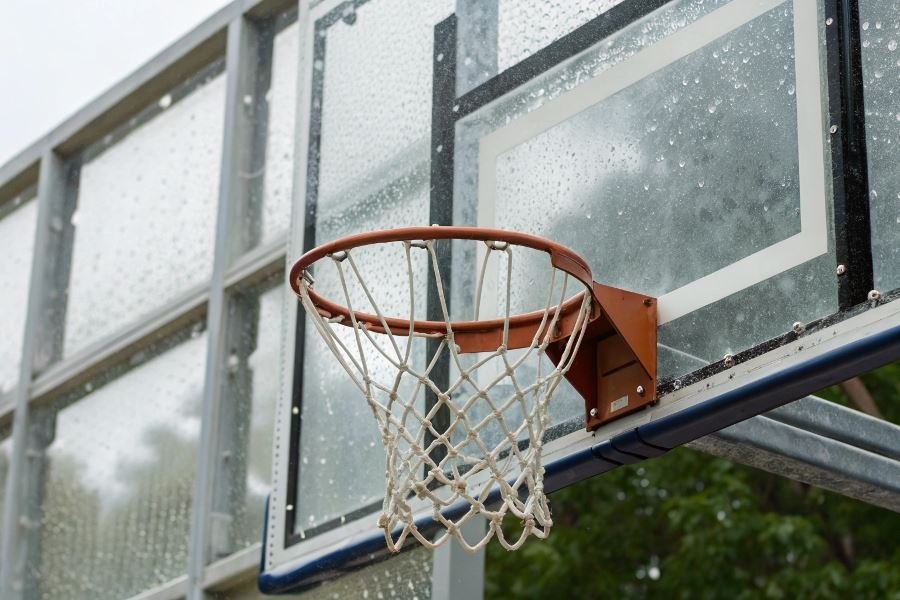
Ever wonder why NBA players can sink shots with such precision? The secret might be hanging right above the court.
When LeBron James practices his signature fadeaway or Steph Curry perfects his three-point shot, they’re not using the same basketball hoops you might find at your local park. Professional training demands equipment that matches the intensity and precision of elite-level play. The basketball hoop—often overlooked in conversations about training gear—actually serves as the cornerstone of effective skill development.
Quality that demands perfection
Professional-grade basketball hoops differ dramatically from recreational models in three critical areas: construction quality, response consistency, and regulation precision. While recreational hoops might feature plastic backboards and spring-loaded rims that forgive errant shots, professional systems utilize tempered glass backboards that provide true ball response and rims designed to flex only under specific pressure thresholds.
“The feedback from a professional hoop is honest. It doesn’t lie to you about your shot mechanics.” – NBA shooting coach
The performance connection
The impact of training on professional-caliber equipment cannot be overstated. Players who consistently practice on high-quality hoops develop:
- Refined spatial awareness – Understanding exactly how much force each shot requires
- Consistent muscle memory – Building shooting patterns that translate directly to game situations
- Confidence under pressure – Knowing their practice environment mirrors competitive conditions
When athletes train on inferior equipment, they unconsciously develop compensatory techniques that can actually hinder performance when they step onto regulation courts. The muscle memory developed on professional hoops creates a seamless transition between practice and competition—ultimately separating good players from great ones.
The Engineering Behind Pro-Level Basketball Hoops
Rim Specifications That Define Excellence
When elite players step onto the court, they demand equipment that matches their intensity. Professional-grade basketball hoops feature rims precisely measuring 18 inches in interior diameter, constructed from high-tensile steel that withstands thousands of thunderous dunks. The breakaway mechanisms on these rims aren’t just a luxury—they’re essential safety features that absorb between 80-180 pounds of force, preventing injuries and extending backboard life.
The evolution of basketball hoops for professional training has accelerated dramatically since the NBA universally adopted breakaway rims in the early 1980s. Today’s top-tier systems utilize either spring-loaded or positive-lock mechanisms, with the latter providing the consistent tension preferred by shooting specialists working on their touch around the rim.
Rim height verification is non-negotiable in professional settings—exactly 10 feet from floor to rim, with mounting systems that prevent height drift even after aggressive play. Elite facilities often incorporate height-adjustment systems allowing players to train at variable heights, though regulation height remains the gold standard for game-specific preparation.
Backboard Excellence: Material Matters
| Backboard Material | Rebound Performance | Durability | Professional Use Case |
|---|---|---|---|
| Tempered Glass | Superior | High | Competition standard |
| Acrylic | Good | Very High | High-volume training |
| Polycarbonate | Acceptable | Excellent | Outdoor facilities |
Professional backboards maintain strict regulation dimensions of 72 inches wide by 42 inches tall, with the transparent tempered glass versions featuring a thickness of ½ inch to ⅝ inch. This seemingly minor specification dramatically affects rebound consistency—critical when players are developing muscle memory for bank shots.
The rebound performance of a backboard directly influences shot development. Glass backboards provide approximately 60% energy return, creating that crisp, responsive bounce that players expect in game situations. This consistency allows shooters to develop precise spatial awareness and timing when using the backboard as a shooting aid.
The rectangular white target box (18 inches wide by 12 inches tall) isn’t just for aesthetics—it serves as a crucial aiming point for bank shots. Professional training systems ensure this marking is precisely positioned and clearly visible under all lighting conditions.
Structural Integrity Under Pressure
The foundation of any professional basketball system is its structural stability. Support poles for professional hoops typically feature 6-8 inch diameter steel construction, often with square rather than round profiles to minimize vibration during play.
Overhang distance creates critical training space beneath the basket. Professional systems provide between 4-6 feet of clearance from the support structure to the backboard, allowing players to develop baseline moves without collision risk. This specification alone separates true professional equipment from recreational alternatives.
The anchoring system must withstand not just downward force but the significant horizontal and rotational forces generated during dunks and aggressive rebounds. Professional-grade systems utilize concrete footings extending 48-54 inches below ground in colder climates to prevent frost heave from compromising stability.
For indoor facilities, wall-mounted and ceiling-suspended systems eliminate the need for floor supports entirely, providing unobstructed training space. These systems incorporate specialized vibration dampening technology that absorbs energy without transferring it to the building structure.
The most advanced professional training facilities now incorporate force measurement sensors within their basketball systems, providing coaches with data on players’ jumping force, hang time, and landing impact—transforming the humble basketball hoop into a sophisticated training tool that delivers actionable performance metrics.
Elite Hoops: Top Professional Basketball Systems for Serious Athletes
Basketball isn’t just a game—it’s a science. And just like any laboratory, your training environment needs equipment that can handle the intensity of professional-level play. Let’s break down the absolute best professional-grade basketball hoops that separate the weekend warriors from the next-level athletes.
Commercial-grade in-ground systems that dominate facilities
When training facilities invest in basketball infrastructure, they don’t mess around. Commercial-grade in-ground systems are the gold standard for serious basketball development.
The Spalding Arena View H-frame system stands as the benchmark with its tempered glass backboard and pro-style breakaway rim that can handle 230+ pound dunkers without flinching. What makes these systems exceptional is their stability—the 6″ square pole anchored in concrete provides zero wobble even after thousands of dunks.
Another standout is the Porter Athletic Torq-Flex system, featuring a 72″ regulation backboard and a counterbalance mechanism that allows height adjustments from 6’ to 10’ without tools. These systems typically run 3, 500−5,000 but deliver unmatched durability with 20+ year lifespans.
Key advantage: These systems provide the most authentic game-like experience with zero compromise on stability or rebound performance.
Portable professional systems with competition-level features
Not every training space can accommodate permanent installations, which is where portable professional systems shine. These aren’t your driveway portable hoops—they’re engineering marvels designed for serious training.
The Goalrilla CV series features a 60″ tempered glass backboard and a 5-year warranty, with a 300-pound ballast system that eliminates movement during intense play. What separates professional portables from consumer models is the counterbalance systems—allowing one-hand height adjustments without sacrificing stability.
The Lifetime Mammoth system deserves mention with its 54″ steel-framed tempered glass backboard and 5-year warranty. At 1, 200−2,500, these systems represent significant investments but deliver professional-grade performance without permanent installation.
Professional portable systems have evolved dramatically in the past decade, now offering rebound performance nearly indistinguishable from in-ground systems.
Wall-mounted systems for specialized training environments
For facilities with space constraints or specific training needs, wall-mounted systems deliver professional performance in compact spaces.
The First Team Powerhouse wall-mount features a 72″ regulation tempered glass backboard with 4’ extension, allowing proper court play while maximizing space efficiency. These systems typically include breakaway rims rated for dunking and can be mounted at regulation height or adjusted for specialized training.
| System Type | Price Range | Installation Complexity | Ideal Training Environment |
|---|---|---|---|
| In-Ground | 3, 500−5,000 | High (concrete required) | Dedicated courts, schools, training centers |
| Portable Pro | 1, 200−2,500 | Low (assembly only) | Multi-purpose facilities, rentable spaces |
| Wall-Mounted | 900−2,200 | Medium (structural mounting) | Gyms, half-courts, specialized training areas |
The Gared Pro-Mold side-folding wall system deserves special recognition for facilities needing to maximize multi-use spaces. With its 48″ extension and fold-away design, it allows basketball training in spaces that serve multiple purposes.
Bottom line: Whether you’re building a dedicated training facility or maximizing limited space, professional-grade hoops aren’t just equipment—they’re training partners that can elevate performance through consistent, game-authentic feedback and durability that matches your commitment to the sport.