
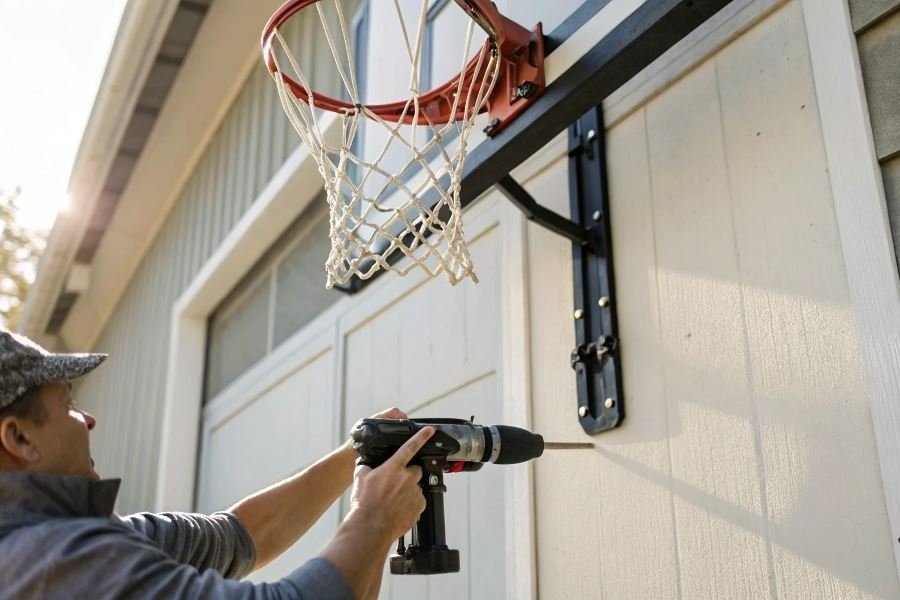
The satisfying swish of the net. The rhythmic bounce of the ball on concrete. The triumphant celebration after sinking that game-winning shot. These moments aren’t just reserved for professional courts anymore—they’re happening in driveways and backyards across America.
Home basketball setups have exploded in popularity, with sales increasing by over 40% since 2020. Whether you’re looking to perfect your jump shot or create lasting family memories, the first crucial decision you’ll face is deceptively complex: portable or stationary hoop?
The backyard basketball revolution
Basketball at home isn’t just a pandemic-era trend—it’s become a fixture of American residential life. The accessibility of quality equipment has democratized the game, allowing enthusiasts of all ages to practice whenever inspiration strikes. Modern systems offer professional-grade features that were once exclusive to gyms and schools.
Portable vs. stationary: The fundamental differences
Portable systems offer flexibility and convenience:
- Adjustable heights (typically 7.5’ to 10’)
- Water or sand-filled bases for stability
- Mobility to reposition or store seasonally
- Generally lower price points (200−1,500)
Stationary hoops deliver performance and permanence:
- Professional-level stability with minimal vibration
- Concrete-anchored installation
- Superior durability against weather and intense play
- Higher investment (400−2,000+ plus installation)
Decision factors that actually matter
Your ideal choice hinges on several practical considerations:
- Space commitment: Can you dedicate a permanent spot to basketball, or do you need flexibility?
- Playing intensity: Casual shooters have different needs than competitive players who perform aggressive dunks.
- Climate challenges: Areas with severe winters or high winds demand different solutions.
- Installation reality: Are you prepared for the concrete work required for in-ground systems?
- Long-term vision: Will this hoop serve growing children, serious athletes, or multi-generational players?
The perfect basketball hoop isn’t universal—it’s the one that transforms your specific space into the court of your dreams.
Performance Showdown: Portable vs Stationary Hoops
Stability That Makes or Breaks Your Game
When you’re driving to the basket for that game-winning layup, the last thing you want is your hoop swaying like a palm tree in a hurricane. The stability difference between portable and stationary basketball hoops is night and day. Stationary in-ground systems offer rock-solid performance with virtually zero wobble, even after the most aggressive dunks. Their concrete-anchored base creates a professional-level playing experience that serious players crave.
Portable systems have made impressive advances in recent years, but physics remains undefeated. When deciding between portable vs stationary basketball hoops, which is better often comes down to how much that slight backboard movement bothers you. Premium portable models from Spalding and Lifetime now feature wider bases and can hold up to 40 gallons of water or sand, significantly reducing movement—but they’ll never completely eliminate it.
Gameplay comparison at a glance:
| Feature | Portable Hoops | Stationary Hoops |
|---|---|---|
| Backboard stability | Moderate (some movement) | Excellent (minimal to no movement) |
| Rebound performance | Good to very good | Excellent |
| Rim spring action | Varies by model | Professional-grade |
| Height adjustability | Usually 7.5’ to 10’ | Fixed or limited adjustment |
Installation and Space Requirements
Stationary hoops demand commitment—both to their location and installation process. The typical in-ground system requires digging a hole approximately 48 inches deep and 18 inches wide, then filling it with about 500 pounds of concrete. You’ll need to allow 48-72 hours for proper curing before mounting the pole and backboard assembly.
The space considerations extend beyond just the installation footprint. You’ll need adequate playing space (ideally at least 30’ x 30’) and should consider proximity to windows, vehicles, and property lines.
Portable systems shine in their flexibility:
- Setup time: 2-3 hours with basic tools
- No concrete required: Fill the base with water or sand
- Repositionable: Can be moved to accommodate other activities
- Storage options: Many models can be partially disassembled for off-season storage
Weather Warriors: Durability Analysis
Basketball hoops live outdoors year-round in most cases, facing everything from scorching summer heat to freezing winter storms. This environmental gauntlet separates the champions from the pretenders.
Stationary hoops typically offer superior weather resistance with:
- Powder-coated steel poles that resist rust for 15+ years
- Tempered glass or high-density polyethylene backboards that won’t yellow or crack
- Professional-grade hardware designed for permanent outdoor installation
Portable systems have traditionally lagged in durability, but manufacturers have responded with innovations:
“Today’s premium portable hoops use UV-protected materials and rust-resistant components that can withstand a decade of outdoor use when properly maintained.”
The durability gap has narrowed significantly with high-end portable models from Goalrilla and Silverback offering 5-year warranties that rival their in-ground counterparts.
For regions with extreme weather, consider that portable systems can be moved to sheltered areas during severe storms—an advantage that stationary hoops can’t match. However, this requires foresight and effort that many owners eventually neglect.
The ultimate choice between portable and stationary systems often comes down to balancing performance desires with practical limitations of your space, budget, and lifestyle needs.
Making the Right Hoop Choice for Your Basketball Dreams
When Portable Hoops Shine Brightest
Portable basketball hoops dominate certain scenarios with their versatility. If you’re renting your home or anticipate moving within the next few years, portability becomes your MVP. These systems typically feature a base that fills with water or sand, wheels for mobility, and adjustable height mechanisms.
Families with children of different ages benefit tremendously from portable systems. Most quality portable hoops from brands like Spalding or Lifetime offer height adjustments from 7.5 feet to the regulation 10 feet, allowing young players to develop proper shooting form before graduating to full height.
Limited space? Portable hoops win again. Many driveways aren’t perfectly situated for permanent installation, and portable systems let you optimize court positioning based on available space, sun position, or even to accommodate vehicles when basketball isn’t in session.
Portable hoop advantages at a glance:
- Relocatable for optimal playing conditions
- No permanent property modifications required
- Height adjustability for growing players
- Can be stored during harsh weather
- Typically requires no permits or HOA approvals
When Stationary Hoops Dominate the Court
Stationary hoops deliver unmatched stability and performance for serious players. The rock-solid foundation eliminates wobble during aggressive play, providing a true-to-game experience that portable systems simply cannot match.
Durability becomes the standout feature with in-ground systems. While portable hoops might last 5-7 years with proper care, stationary systems from premium manufacturers like Goalrilla or Goalsetter often come with lifetime warranties on their poles and backboards.
For homes with dedicated court spaces, stationary hoops create that authentic gymnasium feel. The professional-grade backboards (typically 60″ or larger) and substantial overhang distance provide the rebound consistency that developing players need to perfect their bank shots.
Nothing says “serious basketball household” quite like a permanent hoop installation that stands ready for play year-round.
Cost Analysis and Long Term Value
Initial investment varies significantly between the two options:
| Hoop Type | Entry Level | Mid-Range | Premium |
|---|---|---|---|
| Portable | 100−250 | 300−500 | 600−1,200 |
| Stationary | 400−700 | 800−1,500 | 1, 600−3,500 |
While stationary hoops require a larger upfront investment, their value proposition improves dramatically over time. Portable systems often need replacement parts or complete replacement after several years of active use, especially in harsh weather regions.
Property value considerations also favor stationary hoops. Real estate professionals confirm that well-installed basketball courts with quality in-ground hoops can increase property appeal for family homes, potentially adding thousands to resale value.
The true cost calculation must include:
- Initial purchase price
- Installation expenses (DIY vs. professional)
- Maintenance requirements
- Expected lifespan
- Potential property value impact
Your decision ultimately hinges on your specific situation. Competitive players who plan to stay put will find tremendous value in stationary systems despite higher initial costs. Those needing flexibility or facing space constraints will appreciate portable options, even with their performance limitations.
The best basketball hoop isn’t necessarily the most expensive or feature-rich—it’s the one that gets used most often because it perfectly fits your space, skill level, and basketball aspirations.