
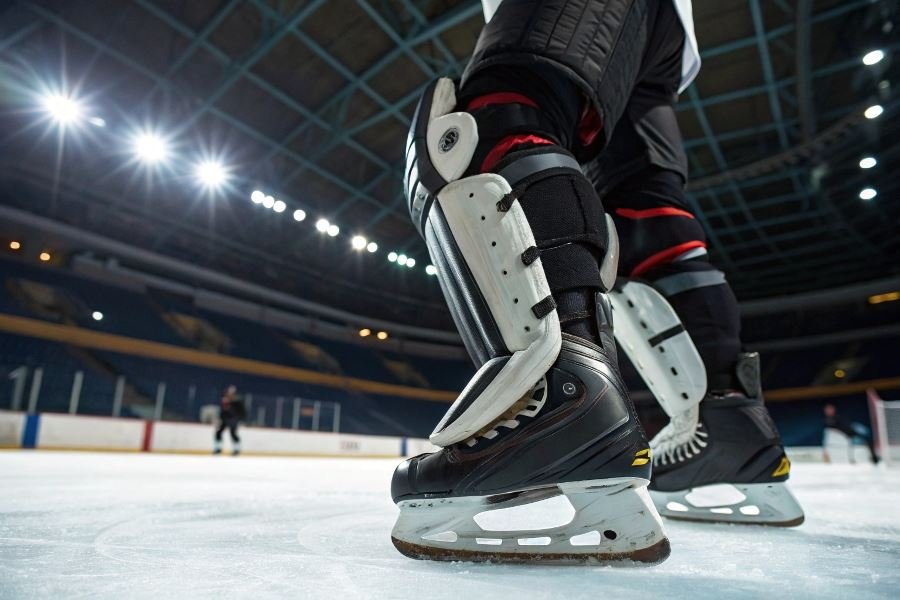
Ever taken a slap shot to the shin? If you have, you know that properly secured shin guards aren’t just equipment—they’re essential protection against career-threatening injuries. The difference between a bruise and a broken tibia often comes down to one overlooked detail: your straps.
Hockey players face flying pucks traveling at speeds exceeding 100 mph and razor-sharp skate blades that can slice through equipment in milliseconds. Your shin guards are only as effective as how well they stay in place during those critical moments of impact. Proper straps don’t just hold equipment—they preserve careers.
“I’ve seen too many players miss weeks of play because their guards shifted at the wrong moment. The right straps are cheap insurance against expensive medical bills.” — NHL equipment manager
The hockey equipment market offers three primary strap systems for shin guards:
- Traditional elastic straps – The classic option providing moderate security with good comfort
- Velcro systems – Offering quick adjustments and customizable tension
- Premium lock-down straps – Utilizing advanced materials for maximum stability during aggressive play
Each system presents distinct advantages depending on your playing style. Power forwards who battle in corners need different security than speedy wingers who rarely engage physically. The difference isn’t just comfort—it’s performance insurance.
When your mind isn’t worrying about shifting equipment, your focus remains where it belongs: on the game itself.
The Critical Elements of Hockey Shin Guard Straps
When it comes to hockey protection, the details make all the difference between comfort and catastrophe. Shin guard straps might seem like a minor component of your gear setup, but ask any player who’s had their guards shift mid-game—these humble fasteners are absolutely crucial.
The process of how to properly choose straps for hockey shin guards involves understanding three key factors: material quality, appropriate sizing, and secure attachment mechanisms. While many players simply use whatever straps came with their shin guards, customizing this element of your gear can dramatically improve both protection and performance on the ice.
Material Matters: The Foundation of Strap Performance
The material composition of shin guard straps directly impacts their functionality and lifespan. Top-tier options typically include:
- Elastic-based straps – Offer flexibility and comfort but may stretch out faster
- Nylon webbing – Provides superior durability with minimal stretch
- Neoprene-backed options – Deliver enhanced comfort against bare skin
Premium materials like those used in CCM and Bauer straps incorporate silicone grippers that prevent slippage during intense play. These materials typically add $5-15 to replacement strap costs but extend usability by 30-40% compared to basic options.
The difference between budget and premium straps becomes most apparent in the third period when fatigue sets in and equipment maintenance matters most.
Sizing Specifications That Actually Work
Finding the perfect dimensions for your shin guard straps isn’t just about comfort—it’s about maintaining proper protection throughout gameplay.
| Shin Guard Size | Recommended Strap Length | Ideal Width |
|---|---|---|
| Junior (8″-10″) | 12″-14″ | 1″ |
| Intermediate (11″-13″) | 14″-16″ | 1″-1.5″ |
| Senior (14″+) | 16″-20″ | 1.5″-2″ |
The width component is particularly critical—too narrow and the strap creates pressure points; too wide and it interferes with mobility. For players with larger calves, adding an extra 2″ to standard length measurements ensures proper circulation without compromising security.
Attachment Systems: Engineering That Holds
The mechanism that secures your straps to shin guards varies significantly across brands and models, with three dominant technologies leading the market:
Velcro Systems
These classic fasteners offer quick adjustability but collect ice shavings and debris over time, potentially reducing their grip strength after a season of heavy use.
Clip-Lock Mechanisms
Newer designs from Warrior Hockey feature mechanical clips that maintain consistent tension regardless of movement or sweat levels—ideal for defensemen who face constant physical battles.
Hybrid Attachment Points
Modern elite-level guards incorporate reinforced anchor points specifically designed to distribute pressure evenly across the strap, preventing the common “strap tear” issue that plagues budget models.
The reliability factor comes down to how these systems handle repeated stress. Quality straps maintain 90% of their original tension even after hundreds of flexes, while inferior options may lose significant holding power after just a few games.
By selecting appropriate materials, sizing, and attachment mechanisms for your specific playing style and shin guard model, you’ll ensure your protective equipment stays exactly where it belongs—between your legs and the puck.
Making the Final Call on Hockey Shin Guard Straps
When you’re flying down the ice at top speed, the last thing you need is your shin guards shifting out of position. The right straps aren’t just accessories—they’re essential protection components that deserve careful consideration. Let’s dive into making that final decision on your hockey shin guard straps with confidence.
Smart spending on straps that last
The price range for replacement hockey shin guard straps can vary dramatically—from $5 budget options to premium sets exceeding $30. But here’s the reality check: the cheapest options often use thin elastic that stretches out after just a few games, while premium straps from manufacturers like Bauer or CCM utilize reinforced elastic with silicone grip strips that maintain tension through multiple seasons.
Value isn’t always about the lowest price tag. Mid-range options ($15-20) typically offer the best balance between durability and cost. These straps often feature reinforced stitching at stress points and use materials that resist moisture degradation—critical for equipment that’s regularly exposed to sweat and ice.
Consider this cost comparison:
| Strap Quality | Average Price | Expected Lifespan | Cost Per Season |
|---|---|---|---|
| Budget | $5-10 | 3-6 months | $10-40 |
| Mid-range | $15-20 | 1-2 seasons | $10-20 |
| Premium | $25-35 | 2-3+ seasons | $8-17 |
When you break it down by cost per season, premium options often represent better long-term value despite the higher initial investment.
Extending strap life through proper care
Even the best straps will deteriorate prematurely without proper maintenance. Implement these practices to maximize your investment:
-
Air dry after every use. Never store wet shin guards in your bag—this creates a perfect environment for bacteria growth and material breakdown.
-
Wash straps separately from pads. Most elastic straps can be hand-washed with mild soap, but avoid machine washing which can damage the elastic fibers.
-
Rotate between two sets of straps if possible. This gives each set time to fully dry and recover elasticity between uses.
-
Apply silicone spray to Velcro components every few months to prevent debris buildup that weakens the hook-and-loop connection.
The 15 seconds you spend properly hanging your gear after each session can add months to your strap lifespan.
Recognizing when replacement is non-negotiable
Safety should always trump savings when it comes to protective equipment. Watch for these warning signs that indicate immediate replacement is necessary:
Visual indicators:
- Fraying along edges or at connection points
- Visible stretching or deformation when not in use
- Cracked or hardened elastic sections
- Velcro that no longer securely fastens
Performance red flags:
- Shin guards that shift during normal skating
- Straps that require excessive tightening to stay secure
- Constant readjustment during games or practices
Remember that shin guards protect against not just pucks but also sticks, skate blades, and boards. Compromised straps mean compromised protection, and that’s a risk not worth taking—especially when high-quality replacements cost less than a single stick.
By balancing quality considerations with proper maintenance and timely replacement, you’ll ensure your shin guards provide consistent protection throughout your hockey season—letting you focus on your game rather than your gear.