
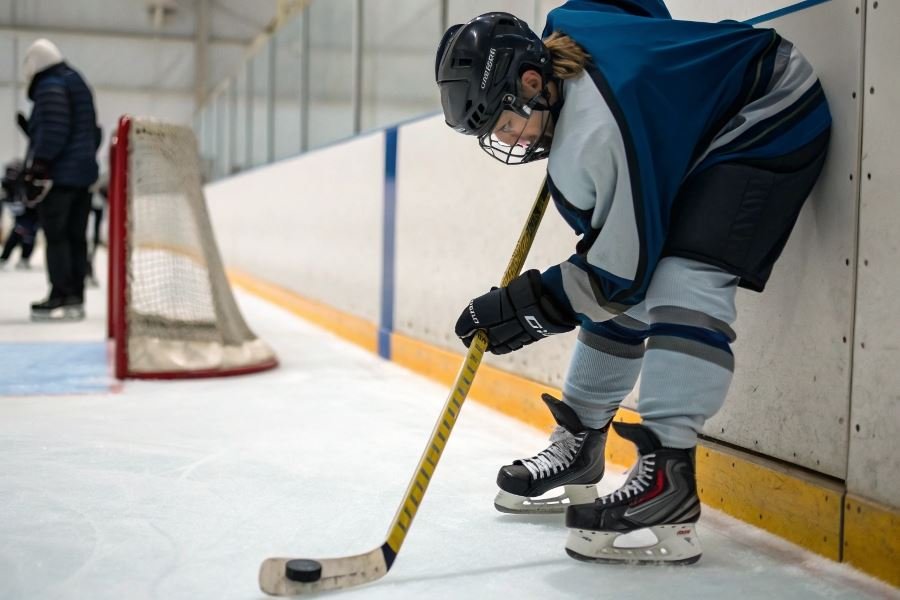
Ever watched a young player struggle to control a puck, only to realize their stick might be the culprit? That perfect shot, that seamless pass—they all begin with the right equipment in your hands. The hockey stick isn’t just a tool; it’s an extension of your body on the ice.
Selecting your first hockey stick might seem overwhelming with the dizzying array of options available. But here’s the truth: the right stick can accelerate your development while the wrong one can create bad habits that might take years to break. When NHL superstar Connor McDavid first stepped onto the ice at age 3, his parents didn’t grab just any stick—they found one that matched his small frame, allowing his natural talent to flourish.
The foundation of skill development
Your hockey stick directly influences three critical aspects of your game:
- Puck control – The right flex and curve pattern makes handling the puck intuitive rather than frustrating
- Shot power – Proper stick length and flex allows you to load energy efficiently
- Passing accuracy – Blade pattern and lie angle determine how cleanly you can deliver the puck
Decision factors that actually matter
Focus on these key elements when making your selection:
- Stick length – Generally reaching between your chin and nose when standing in shoes
- Flex rating – Beginners should divide their weight by 2 for an appropriate starting point
- Curve pattern – Mid curves offer versatility while you develop your style
- Material composition – Composite sticks provide better feel but at higher cost
Rookie mistakes to avoid
Many beginners fall into these common traps:
“The biggest mistake I see is parents buying sticks that are too long and too stiff, thinking their child will ‘grow into it.’ This is like learning to write with a pencil that’s two feet long.” – Youth hockey coach with 15+ years experience
Avoid selecting sticks based solely on what your favorite pro uses—their strength and skill level demand different specifications. Also, don’t overlook the importance of proper lie angle, which ensures the blade sits flat on the ice when you’re in proper stance.
Essential Factors for Choosing Your First Hockey Stick
Stepping onto the ice with the right hockey stick can transform a beginner’s experience from frustrating to fantastic. The perfect stick becomes an extension of your body, enhancing your natural movements while compensating for developing skills. When navigating how to choose a hockey stick for a beginner, three critical elements demand your attention: proper length and flex, blade pattern selection, and material composition.
Finding Your Perfect Length and Flex
The foundation of stick selection starts with proper sizing. Stand in your skates with the stick’s toe on the ground—the butt end should reach between your chin and nose. Too long, and you’ll sacrifice control; too short, and you’ll develop poor posture habits that can plague your development for years.
Flex rating—measured in pounds of force needed to bend the stick one inch—is equally crucial. A simple formula: take your weight in pounds and divide by two.
| Player Weight | Recommended Flex |
|---|---|
| 100-140 lbs | 50-60 flex |
| 140-180 lbs | 65-75 flex |
| 180-220 lbs | 85-100 flex |
| 220+ lbs | 100+ flex |
Youth players should err on the softer side, allowing proper shot mechanics to develop without fighting the stick. A 12-year-old weighing 100 pounds might start with a 40-50 flex junior stick rather than struggling with an adult 85 flex.
Blade Patterns That Complement Your Style
The blade’s curve dramatically affects puck control, shot accuracy, and passing precision. Beginners should consider these key elements:
- Curve depth: Start with a mid-curve (moderate depth) for versatility
- Face angle: Slightly open faces help with lifting the puck
- Curve location: Mid-toe curves forgive imperfect technique
The CCM P29/P92 pattern has become the gold standard for beginners—offering forgiving characteristics while still allowing for growth. The Bauer P88 provides similar benefits with slightly different handling characteristics.
Avoid extreme toe curves or closed faces until your fundamentals are solid—these specialized patterns amplify mistakes rather than minimize them.
Material Matters: Understanding Construction
Hockey sticks have evolved dramatically since wooden models dominated the 1990s. Today’s options include:
-
Composite sticks: Lightweight carbon fiber construction offering superior performance but at premium prices ($80-200)
-
Wood/composite hybrids: Wooden core with composite reinforcement, balancing feel and durability ($40-80)
-
Pure wood: Heaviest option but provides authentic feel and lowest cost ($25-50)
For beginners, a mid-range composite stick offers the best combination of performance and value. The Warrior Covert QRE line and Bauer Vapor series provide excellent entry points with technologies that enhance puck feel without breaking the bank.
The stick’s kick point—where it flexes during shots—also matters. Low-kick sticks (flexing near the blade) suit quick releases and wrist shots, while mid-kick models excel at powerful slap shots. Most beginners benefit from low-kick models as they develop their shooting mechanics.
Remember that your first stick isn’t your forever stick. As your skills evolve, so will your equipment preferences. Start with these fundamentals, focus on developing proper technique, and you’ll quickly discover which stick characteristics best complement your emerging playing style.
Making the Final Decision: Your Path to Hockey Stick Success
Choosing your first hockey stick doesn’t need to feel like solving a complex equation. After exploring flex, curve patterns, and materials, it’s time to bring everything together and make that final decision. Let’s cut through the confusion and get you on the ice with confidence.
Smart spending for lasting performance
Finding the sweet spot between price and quality is crucial for beginners. Entry-level composite sticks typically range from 60 − 120, offeringabalanceofdurabilityandperformancewithoutemptyingyourwallet.Mid − rangeoptions(120-200) provide better feel and lighter weight—worth considering if you’re committed to regular play.
Wisdom from the rink: It’s better to buy one quality stick that lasts a season than three cheap ones that break quickly.
Remember that CCM Hockey and Bauer Hockey often release previous year’s models at significant discounts, offering pro-level technology at beginner-friendly prices. These clearance finds deliver exceptional value without compromising quality.
Test before you invest
Never purchase a stick without testing it first. Here’s how to evaluate properly:
-
The stance test: Get into your hockey stance and see how the stick feels. The blade should sit flat on the ground without forcing you into an awkward position.
-
The puck feel test: If possible, handle a puck with the stick. Notice how the puck feels coming off the blade during stickhandling.
-
The flex test: Apply pressure to feel how the stick bends. It should flex with moderate effort but not feel like it might snap.
-
The weight balance test: Hold the stick with one hand at the midpoint and feel if it’s blade-heavy or butt-end heavy.
Many pro shops have shooting areas where you can test sticks before purchasing. Take advantage of these facilities—they’re game-changers for finding your perfect match.
When to level up your stick game
Most beginners should plan to use their first stick for at least one full season before upgrading. However, certain signs indicate it’s time for an upgrade:
| Upgrade Signal | What It Means |
|---|---|
| Consistent breakage | Your skills have outpaced your equipment |
| Improved shot power | You may benefit from a different flex |
| Developing style | Your play pattern might suit different curve patterns |
| Weight concerns | As skills improve, lighter sticks offer better control |
When your skills progress, you’ll naturally develop preferences about stick feel. That’s when investing in higher-end equipment makes sense. Players who practice regularly often notice significant improvement when upgrading from entry-level to intermediate sticks.
Don’t rush the process. Hockey is a journey, and your equipment should evolve with your skills. Many NHL players still use relatively simple stick configurations because they’ve found what works for them through years of experimentation.
The perfect beginner stick is one that feels comfortable, suits your physical attributes, and leaves you with enough budget for other essential gear. Trust your instincts during testing—the stick that feels most natural in your hands is often the right choice, regardless of what the pros are using.