
Ever watched a 6-year-old trying to handle a regulation hockey puck? It’s like giving a kindergartener a bowling ball and expecting perfect control! Youth hockey development hinges on one often overlooked piece of equipment: the humble puck.
When selecting pucks for children’s hockey, parents and coaches face a crucial decision that directly impacts skill development, safety, and overall enjoyment of the game. The right puck can accelerate learning while the wrong one might frustrate young players before they’ve even mastered basic stick handling.
Age-appropriate pucks aren’t just “nice to have” – they’re essential training tools. Lighter, larger pucks allow beginners to focus on proper technique without struggling against excessive weight. As skills develop, gradually transitioning to regulation equipment creates a natural progression that builds confidence.
Safety considerations should always take priority with youth equipment. Traditional vulcanized rubber pucks travel at dangerous speeds, which is why many youth programs utilize specialized training pucks with reduced weight and velocity. These alternatives significantly reduce injury risk while maintaining authentic play characteristics.
Today’s market offers an impressive variety of youth hockey pucks:
- Blue lightweight pucks (4 oz) – Perfect for players under 8
- Orange training pucks (5 oz) – Ideal for ages 8-12
- Foam practice pucks – Excellent for indoor training and stick handling drills
- Regulation pucks (6 oz) – For advanced youth players ready for the real thing
The journey from beginner to skilled player requires the right equipment at each development stage. Choosing appropriate pucks isn’t just about equipment—it’s about setting young athletes up for long-term success on the ice.
The Science Behind Youth Hockey Pucks
When young players step onto the ice for the first time, the puck they use can make or break their experience. The right equipment transforms frustration into fun, struggle into skill development. Youth hockey pucks differ significantly from standard regulation pucks, with specialized features designed to nurture developing players.
Selecting appropriate pucks for children’s hockey: features of selection requires understanding how weight, material, and design impact skill development. Unlike adult equipment, youth pucks must balance authenticity with accessibility, creating a bridge between beginner-friendly properties and the skills needed for advancement.
Lightweight vs Regulation: A Developmental Pathway
Weight progression matters enormously in youth development. Standard regulation pucks weigh 6 ounces (170 grams), but this can be overwhelming for young players just building strength and coordination.
Lightweight training pucks typically weigh between 2-4 ounces, making them ideal for players under 10 years old. The reduced weight allows for:
- Easier puck control with developing muscles
- Less intimidation factor for beginners
- Reduced risk of injury from errant shots
- More successful passing experiences
As players develop, a gradual progression toward regulation weight builds transferable skills without frustration. Many youth programs follow this weight progression:
| Age Group | Recommended Puck Weight | Benefits |
|---|---|---|
| 5-7 years | 2-2.5 ounces (56-70g) | Maximum control, builds confidence |
| 8-10 years | 3-4 ounces (85-113g) | Developing strength, improved technique |
| 11-13 years | 4-5 ounces (113-142g) | Transitional weight, game-like feel |
| 14+ years | 6 ounces (170g) | Regulation weight, competition ready |
Material Matters: From Foam to Vulcanized Rubber
The material composition dramatically affects how a puck performs on ice and how young players interact with it.
Foam pucks offer the lightest option, perfect for the youngest players (4-6 years) practicing indoors or in driveway settings. They’re soft, safe, and build fundamental skills without intimidation.
Blue rubber pucks from USA Hockey have become the gold standard for youth development. These 4-ounce pucks slide similarly to regulation pucks but with less weight, creating an ideal training bridge.
Composite training pucks combine materials to create specific training benefits:
“The material choice isn’t just about weight—it’s about how the puck slides, bounces, and responds to stick contact. Each material teaches different skills.” – Youth Hockey Development Guide
Plastic pucks with ball bearings inside create unique training opportunities, as players must adapt to unpredictable movement patterns that sharpen reaction times.
Design Elements That Accelerate Skill Building
Modern youth hockey pucks incorporate innovative design features specifically engineered to develop fundamental skills:
- Color-coding systems that indicate weight class, preventing confusion during practice
- Textured edges that provide additional feedback during stickhandling
- Flat-sided training pucks that eliminate rolling when practicing off-ice
- Oversized training pucks (4-5 inches diameter) that improve precision by making standard pucks seem easier to control afterward
The slight dome shape of regulation pucks is often modified in youth versions to create more predictable sliding patterns, allowing young players to focus on technique rather than puck tracking.
When combined with proper coaching, these specialized design elements transform ordinary practice into accelerated skill development, creating a foundation that serves players throughout their hockey journey.
Finding the Perfect Puck for Young Hockey Stars
Hockey isn’t just a sport—it’s a passion that starts young. And while sticks and skates often steal the spotlight, the humble puck deserves serious consideration, especially when it comes to youth players. The right puck can accelerate skill development, while the wrong one might frustrate young athletes and slow their progress.
Matching pucks to developmental stages
Youth hockey development follows a natural progression, and puck selection should evolve alongside player growth:
Ages 4-6 (Beginner): At this stage, coordination is still developing. Lightweight blue pucks weighing 4 ounces (about 30% lighter than standard pucks) provide the perfect introduction. These pucks move more slowly, giving young players more reaction time and confidence.
Ages 7-10 (Developing): As skills improve, players can graduate to blue pucks or lightweight black pucks (4-5 ounces). The slightly increased weight helps develop stronger passing and shooting while maintaining control.
Ages 11-14 (Intermediate): Most players in this range are ready for regulation weight pucks (6 ounces), though some programs use blue-to-black transitional pucks that weigh around 5 ounces to bridge the gap.
Ages 15+ (Advanced): Standard regulation pucks become the norm, preparing players for competitive play.
The weight progression in youth hockey pucks isn’t just about strength—it’s about developing proper technique before adding resistance.
Top performers for different development stages
After testing dozens of options with youth programs across the country, these pucks consistently outperform the competition:
| Age Group | Top Recommended Puck | Key Features | Approximate Price |
|---|---|---|---|
| 4-6 years | USA Hockey Blue Puck | 4 oz weight, softer rubber, high visibility | $2-3 each |
| 7-10 years | Franklin Sports Glide Tech | 4.5 oz weight, reduced friction, excellent durability | $3-4 each |
| 11-14 years | Bauer Official Training Puck | 5.5 oz weight, regulation dimensions, enhanced grip | $4-5 each |
For beginners, the USA Hockey Blue Puck offers the perfect introduction with its lighter weight and slightly larger diameter, making it easier to control and less intimidating.
Developing players benefit from the Franklin Sports Glide Tech pucks, which feature a specialized coating that reduces friction on ice while maintaining enough weight to develop proper shooting mechanics.
Intermediate players preparing for competitive play will appreciate the Bauer Official Training Puck, which closely mimics regulation pucks while offering slightly enhanced control features.
Keeping pucks in play longer
Youth hockey pucks take tremendous abuse, but proper maintenance extends their lifespan:
Storage matters: Keep pucks in a cool, dry place. Exposure to heat can warp rubber compounds, creating unpredictable bounces and rolls.
Rotation system: Establish a puck rotation during practice. This prevents the same pucks from receiving excessive wear and extends overall lifespan.
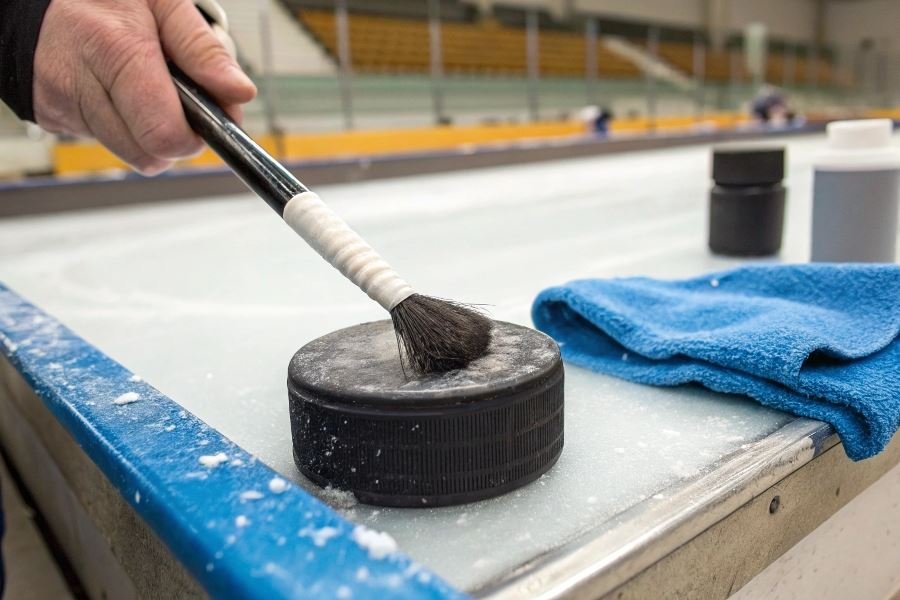
Clean regularly: Wipe pucks with a damp cloth after use to remove ice shavings and debris that can affect performance.
Freeze before use: Placing pucks in a freezer for 1-2 hours before practice reduces friction and prevents excessive wear during initial use.
The investment in quality pucks pays dividends in player development. While saving a few dollars might seem tempting, inconsistent pucks create inconsistent skills. By matching the right puck to your young player’s developmental stage, you’re setting them up for success on their hockey journey.