
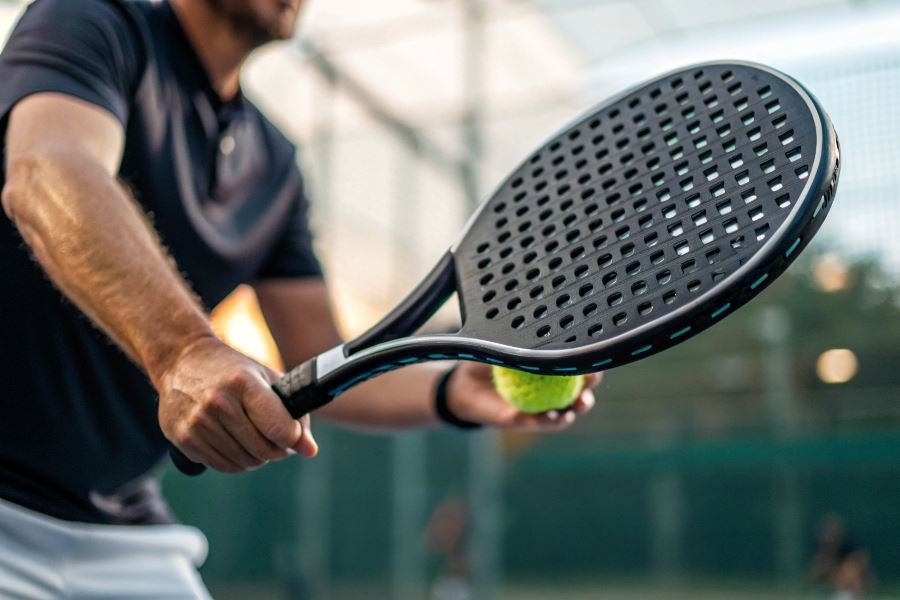
Ever watched a padel match and noticed how players seem almost magically connected to those solid-looking rackets? That connection isn’t magic—it’s proper equipment selection, and it makes all the difference between frustration and pure joy on the court.
Choosing your first padel racket might seem overwhelming, but it’s actually an exciting first step in your padel journey. Unlike traditional tennis rackets, padel rackets are solid, shorter, and have a distinctive perforated surface that creates that satisfying “thwack” sound when you connect with the ball. These unique characteristics directly influence your playing experience, especially as you’re developing your fundamental skills.
Why your racket choice matters more than you think
For beginners, the right racket isn’t just equipment—it’s your primary learning tool. A properly selected racket compensates for developing technique while preventing unnecessary strain or injury. Many newcomers make the mistake of choosing rackets that are too heavy or control-focused, which can significantly slow down your progress and enjoyment.
The perfect beginner racket balances three critical elements:
- Weight and balance – affecting your swing speed and power
- Shape and sweet spot – determining forgiveness on off-center hits
- Materials and construction – influencing durability and feel
Understanding these factors doesn’t require expert knowledge—just awareness of how they translate to your on-court experience. The right racket should feel like a natural extension of your arm, not a hindrance to your movement or enjoyment of this rapidly growing sport.
Essential Factors for Choosing Your First Padel Racket
Stepping onto the padel court for the first time is exhilarating, but finding the perfect racket can feel like navigating a technical maze. The right padel racket becomes an extension of your arm, complementing your natural movements while compensating for beginner challenges. Let’s break down the critical elements that will make or break your early padel experience.
When learning how to choose a racket for padel tennis for a beginner player, you’ll need to balance several technical specifications against your physical attributes and playing style. Even as a newcomer, your height, strength, and natural tendencies toward power or control will influence which racket feels like it was made specifically for you.
Weight and balance: your power-control equation
The weight of your padel racket is perhaps the most immediately noticeable characteristic when you pick it up. Beginners typically benefit from rackets in the 350-370 gram range—light enough for quick reactions but substantial enough for stability.
Balance point matters just as much as total weight. Rackets come in three balance profiles:
| Balance Type | Weight Distribution | Best For |
|---|---|---|
| Head Heavy | More weight toward the head | Power shots, slower swings |
| Balanced | Even weight distribution | All-around play |
| Head Light | More weight in the handle | Maneuverability, quick reactions |
Most coaches recommend beginners start with a balanced or slightly head-light racket. This configuration forgives timing errors while reducing strain on the wrist and elbow—critical for those marathon practice sessions when you’re developing muscle memory.
Shape and size: geometry that defines play
Padel rackets come in three primary shapes, each dramatically affecting how the racket performs:
- Round rackets offer the largest sweet spot and most forgiving play—perfect for beginners still working on consistent contact
- Teardrop designs provide a middle ground between forgiveness and power
- Diamond shapes concentrate mass at the top for explosive power but demand precise technique
The surface area also varies between models, with larger faces offering more forgiveness on off-center hits. As a beginner, prioritize a round or teardrop shape with a generous hitting area over the tempting power of diamond configurations.
Core materials and surface textures: the science of feel
The interior of a padel racket (the core) typically uses either EVA (Ethylene Vinyl Acetate) or Foam in varying densities:
- Soft cores (low-density EVA) provide comfort and control
- Medium cores balance power and feel
- Hard cores (high-density EVA) maximize power but transmit more vibration
Surface textures vary dramatically between brands and models. Rougher surfaces grip the ball longer, generating more spin but requiring more precise timing. Smoother surfaces offer predictability—a valuable asset when you’re still developing consistency.
For beginners, a medium-soft core with a moderately textured surface provides the ideal learning platform.
Grip size and comfort: the connection point
The grip is your physical connection to the racket and deserves careful consideration. Most padel rackets come with a standard circumference, but the thickness of your overgrip can fine-tune this measurement.
Your grip should allow your index finger to fit snugly between your palm and fingertips when holding the racket. Too large, and the racket may twist in your hand; too small, and you’ll strain your forearm muscles.
Comfort features matter more than you might think. Anti-vibration systems, shock-absorbing materials, and ergonomic handle designs can prevent the development of tennis elbow or wrist pain—common issues for enthusiastic beginners putting in long practice hours.
Remember that your first padel racket isn’t forever—it’s the foundation upon which you’ll build technique and discover your playing style. Prioritize comfort, forgiveness, and versatility over specialized performance characteristics that only benefit advanced players.
Top 3 Racket Types for Padel Beginners That Actually Work
Finding the perfect padel racket when you’re just starting out can feel overwhelming. With hundreds of options flooding the market, how do you know which one will help you develop proper technique without emptying your wallet? After testing dozens of models and consulting with professional coaches, I’ve narrowed down the three racket categories that consistently help beginners thrive on the court.
Control-oriented rackets for technique mastery
Control rackets are the gold standard for beginners for one simple reason: they forgive mistakes while teaching proper form. These rackets typically feature:
- Round or teardrop shapes
- Lower weights (340-360g)
- Soft cores (usually EVA)
- Thicker frames (38-40mm)
The Bullpadel Vertex Control exemplifies this category with its forgiving sweet spot and vibration-dampening technology. When you’re learning proper positioning and timing, these rackets give you the confidence to focus on technique rather than power.
Coach’s tip: Control rackets might feel less powerful at first, but they build the foundation for devastating shots later in your padel journey.
The reduced power output actually forces you to develop proper weight transfer and timing—skills that will serve you long after you’ve upgraded your equipment. Most beginners who start with control-oriented rackets report faster improvement in ball placement and consistency.
Balanced rackets for versatile play styles
Not sure if you’ll develop into a power player or a control specialist? Balanced rackets offer the perfect middle ground with:
- Diamond or hybrid shapes
- Medium weights (360-375g)
- Medium-density cores
- Medium sweet spots
The Head Graphene 360+ Alpha Motion delivers this balanced approach beautifully, offering enough power for effective smashes while maintaining sufficient control for defensive play. These rackets adapt to your evolving style rather than forcing you into a particular pattern of play.
What makes balanced rackets particularly valuable for beginners is their forgiveness while still providing feedback on your shots. You’ll know when you’ve hit the sweet spot, but won’t be severely punished when you miss it.
Budget-friendly options that perform above their price point
Quality padel equipment doesn’t always require premium pricing. Several manufacturers have created excellent beginner rackets that deliver professional-level performance without the sticker shock:
| Racket | Weight | Shape | Core | Price Range |
|---|---|---|---|---|
| Babolat Contact | 345g | Round | Soft EVA | $70-90 |
| Wilson Pro Staff Team | 360g | Teardrop | Medium EVA | $80-100 |
| Adidas Metalbone Youth | 350g | Diamond | Soft EVA | $90-110 |
These budget options incorporate many of the same technologies found in premium rackets but use slightly less expensive materials in non-critical areas. The performance difference is negligible for beginners, but the price savings are substantial.
What truly matters in a beginner racket isn’t the brand name or flashy graphics—it’s finding the right balance of forgiveness and feedback. A racket that’s too unforgiving will frustrate you, while one that’s too forgiving won’t help you improve. The sweet spot lies in rackets that provide clear feedback on your technique while still allowing you to enjoy the game as you develop.