
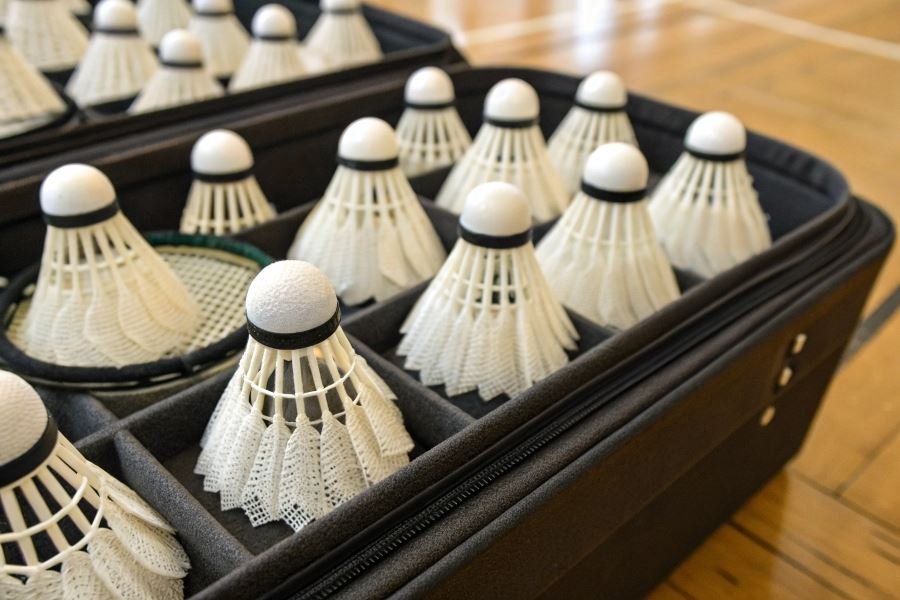
Ever watched a badminton match collapse into frustration because of a misbehaving shuttlecock? That perfect smash that suddenly veers off course or the defensive clear that drops too quickly can transform your game from brilliant to brutal in seconds.
The difference between victory and defeat often flies on the wings of a properly selected shuttlecock. While many players obsess over rackets and footwork, the humble shuttlecock remains the most underappreciated equipment choice that can dramatically impact your performance.
Why testing matters more than you think
Consistency in flight is the holy grail of shuttlecock performance. A high-quality shuttlecock delivers predictable trajectory, allowing you to focus on strategy rather than compensating for equipment quirks. Testing before purchasing isn’t just recommended—it’s essential for players who demand excellence.
Key parameters worth examining
When testing shuttlecocks, focus on:
- Flight stability – Does it maintain a straight path?
- Speed rating – Matches your playing environment and style
- Durability – Withstands multiple hits without deformation
- Cork quality – Provides consistent bounce and feel
Essential testing equipment
Your testing kit doesn’t need to be elaborate:
- Your primary racket (testing with unfamiliar equipment skews results)
- A measuring tape for flight distance assessment
- A smartphone for recording flight patterns
- A notebook for tracking performance differences
The most sophisticated testing equipment, however, remains your own perception. The feel of the shuttlecock leaving your racket tells a story that specifications alone cannot convey.
The Hands-On Shuttlecock Inspection Guide
When you’re standing in the store aisle or browsing online, knowing how to properly test shuttlecocks before buying can save you from disappointment on the court. The difference between a quality shuttlecock and a subpar one isn’t just about price—it’s about performance, durability, and ultimately, your game experience.
Feather Quality: The First Touch Test
The feathers of a premium shuttlecock tell a story before you even hit them. Premium shuttlecocks from brands like Yonex or Victor use wing feathers from the left wing of a goose—these feathers have a natural curve that creates ideal flight characteristics.
What to look for:
- Uniformity in length – All feathers should be precisely the same length
- Consistent coloration – No discoloration or yellowing
- Tight binding – Feathers should be firmly secured to the cork base
- Feather count – Tournament-grade shuttlecocks typically have 16 feathers
For synthetic shuttlecocks, examine the nylon “feathers” for consistent thickness and proper attachment to the base. Quality synthetics like the Mavis 350 have skirts that maintain their shape even after inspection handling.
Cork Base: The Foundation of Flight
The cork base isn’t just a handle for feathers—it’s the heart of the shuttlecock’s weight distribution and flight stability.
Essential inspection points:
- Smooth, rounded cork – No cracks, dents or irregularities
- Proper weight – Tournament shuttlecocks weigh between 4.74-5.50 grams
- Leather covering quality – Should be smooth, evenly applied, and without bubbles
Testing tip: Place the shuttlecock on your palm, cork side down. Gently rotate it—a quality cork base will sit evenly without wobbling.
Balance and Stability Tests
The true character of a shuttlecock reveals itself in how it behaves in your hands before it ever meets your racket.
The spin test:
- Hold the shuttlecock by the tip of one feather
- Gently spin it like a top on a flat surface
- Quality shuttlecocks will spin smoothly with minimal wobble
The drop test:
- Hold the shuttlecock horizontally, cork facing you
- Drop it from shoulder height
- A well-balanced shuttlecock will flip and land with the cork down
| Test Type | What to Look For | Red Flags |
|---|---|---|
| Visual Inspection | Even feathers, tight binding | Loose feathers, uneven skirt |
| Weight Test | 4.74-5.50g for tournament grade | Too light or heavy feels wrong in hand |
| Drop Test | Consistent cork-down landing | Erratic flight path or landing |
| Spin Test | Smooth rotation | Wobbling or uneven spinning |
The pressure test: Apply gentle pressure to the feather skirt from different angles. Quality shuttlecocks will resist deformation and spring back to their original shape.
Remember that shuttlecocks come in different speed ratings (usually 75-79 for tournament play), so select the appropriate speed for your playing conditions. Colder environments typically require faster shuttlecocks, while warmer conditions call for slower ones.
By taking these few moments to physically inspect shuttlecocks before purchase, you’ll ensure consistent performance on court and potentially save money by avoiding inferior products that wear out quickly or perform unpredictably.
Performance Testing Techniques for Shuttlecocks
Ever watched a professional badminton match where the players reject shuttlecocks after a single rally? They’re not being picky—they’re ensuring optimal performance. Testing shuttlecocks before purchase can save you frustration and money, while dramatically improving your game experience.
Flight path evaluation methods
The flight trajectory of a shuttlecock tells you everything about its quality. To properly test this:
- Stand at the back of the court and hit a high clear shot
- Observe if the shuttle maintains a stable arc without wobbling
- Check if it lands within 2 feet of the baseline
Pro tip: Quality shuttlecocks should fly in a predictable parabolic arc. If you notice erratic movement or spinning, that’s a red flag.
A proper test requires hitting at least 5-10 clears with the same shuttlecock. The best ones maintain consistent flight paths even after multiple hits. When testing premium shuttlecocks like Yonex Aerosensa or Li-Ning A+600, you’ll notice they maintain their flight characteristics significantly longer than budget options.
Durability assessment through controlled hitting
Durability testing is crucial, especially if you’re investing in feather shuttlecocks that can cost $25-35 per tube.
Try this systematic approach:
- Hit 10 consecutive smashes at 75% power
- Examine the shuttle for feather damage or cork deformation
- Test flight path again to check for performance degradation
The durability difference between tournament-grade and practice shuttlecocks is striking—premium shuttles might withstand 200+ hits while budget options often fail after 50.
| Shuttlecock Type | Expected Durability (hits) | Price Range ($) |
|---|---|---|
| Premium Feather | 150-300 | 25-40 |
| Mid-range Feather | 80-150 | 18-25 |
| Synthetic | 300-1000 | 15-30 |
Comparing shuttlecock behavior across court conditions
Shuttlecocks perform differently based on temperature, humidity, and altitude—factors that vary dramatically across playing environments.
Temperature effects: In colder gyms (below 65°F), shuttlecocks fly faster and further. In warmer conditions, they slow down significantly.
To test for adaptability:
- Hit identical shots in different areas of your facility
- Note any performance variations near air conditioning vents or windows
- Test the same shuttlecock after 15 minutes of play when the court has warmed up
Synthetic shuttlecocks from manufacturers like Carlton tend to perform more consistently across temperature ranges than feather alternatives.
Humidity impacts feather shuttles dramatically. In humid conditions, test for:
- Increased weight (moisture absorption)
- Reduced flight distance
- Slower overall speed
The altitude factor: If you play at elevations above 3,000 feet, select shuttlecocks specifically rated for high altitude, or test standard shuttles by hitting underhand clears to see if they travel too far.
The best players carry shuttlecocks with different speed ratings (76, 77, or 78) to match specific court conditions. By thoroughly testing before bulk purchasing, you’ll identify which speed rating works best for your regular playing environment.