
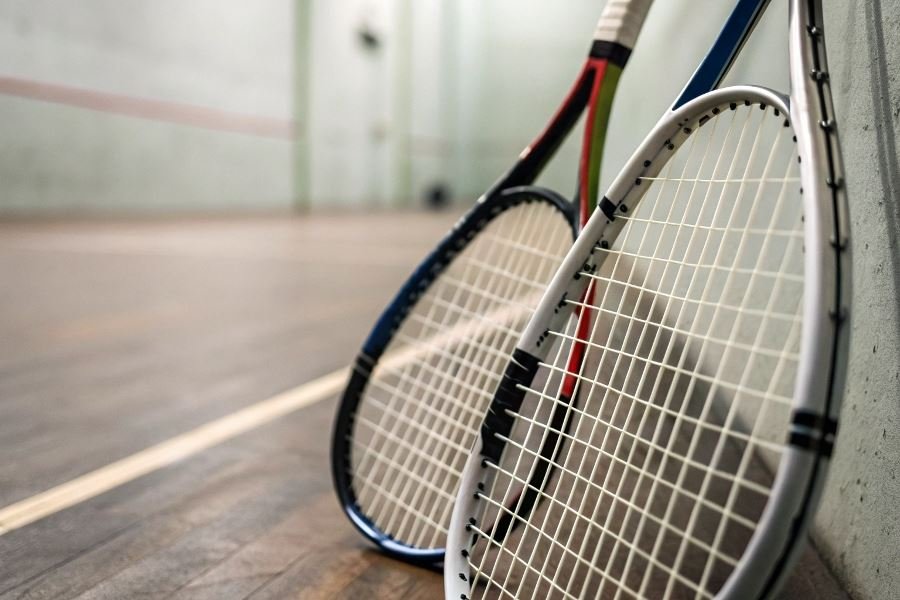
Ever watched a pro squash player effortlessly whip the ball into impossible corners while you struggle to maintain control of your racket during an intense rally? The secret might be right in your hands—literally. The grip of your squash racket isn’t just where you hold it; it’s the critical interface between player and equipment that can elevate or undermine your entire game.
When the ball’s traveling at 175+ mph and split-second decisions determine victory, your grip becomes your lifeline. Professional players understand this intimately, investing significant time and resources into finding their perfect grip setup. The difference between professional and amateur squash racket grips isn’t just about price—it’s about performance engineering, material science, and personalization that matches specific playing styles.
The performance connection
Your grip affects everything: power generation, shot accuracy, wrist flexibility, and fatigue resistance. Professional grips typically offer superior moisture absorption, tactile feedback, and durability compared to their amateur counterparts. While an amateur might use a basic replacement grip, professionals often layer an overgrip atop a specialized base grip, creating a customized feel that enhances their natural playing style.
Material matters
Today’s market offers an impressive array of grip technologies:
- Synthetic polymers with moisture-wicking properties
- Tacky compounds that enhance grip without stickiness
- Perforated materials that improve breathability
- Hybrid materials combining cushioning and responsiveness
The thickness, texture, and elasticity of these materials vary dramatically between professional and recreational options. Premium grips might incorporate silicone infusions, microfiber technologies, or proprietary compounds that maintain performance characteristics even during marathon five-game matches.
Your playing style—whether power-based, finesse-oriented, or somewhere between—should directly influence your grip selection. The right grip doesn’t just feel good; it becomes an extension of your hand, amplifying your strengths and minimizing weaknesses on the court.
Core Differences in Squash Racket Grips: Pro vs. Amateur
When you step onto the squash court, your racket grip becomes your lifeline—the critical connection between player and equipment that can make or break your performance. The difference between professional and amateur squash racket grips isn’t just marketing hype; it’s a tangible reality that impacts every aspect of your game.
Let’s dive into what separates the elite-level grips from their entry-level counterparts. Understanding the squash racket grips: differences between professional and amateur ones reveals why top players are willing to replace their grips far more frequently than casual players—and why that investment pays dividends on the court.
Premium Materials That Last
Professional-grade grips typically feature high-density polymers and advanced synthetic materials that amateur options simply can’t match. While entry-level grips often use basic rubber compounds that deteriorate quickly, pro grips from manufacturers like Karakal incorporate micro-porous polymers that maintain their tactile properties through hundreds of intense rallies.
Material comparison at a glance:
| Feature | Professional Grips | Amateur Grips |
|---|---|---|
| Base material | Premium synthetic polymers | Basic rubber compounds |
| Texture | Multi-directional fiber patterns | Simple embossed patterns |
| Thickness | Customizable (1.5-2.2mm) | Standard (usually 1.8mm) |
| Lifespan | 15-25 hours of intense play | 5-10 hours of casual play |
The difference becomes apparent after just a few sessions—amateur grips begin showing wear patterns and slick spots while professional options maintain their grip integrity significantly longer.
Sweat Management That Won’t Quit
Nothing ruins a crucial point like a slippery grip. Professional squash players generate tremendous heat during matches, making sweat management a critical performance factor.
Pro-level grips from Tecnifibre and Dunlop feature advanced moisture-wicking channels that actively pull sweat away from the contact surface. These grips can absorb up to 3-4 times their weight in moisture while maintaining tackiness. Amateur grips typically become slick after absorbing minimal moisture, forcing players to use excessive grip pressure that leads to forearm fatigue.
The absorption difference is dramatic:
- Professional grips: Maintain performance when saturated at 70-80% capacity
- Amateur grips: Performance degrades at just 30-40% saturation
This difference becomes particularly noticeable during tournament play or extended training sessions where grip changes mid-match can disrupt rhythm and focus.
Tactile Feedback That Elevates Control
The most overlooked aspect of professional grips is their sophisticated tactile feedback system. Pro grips aren’t just about preventing slippage—they’re engineered to transmit precise information about racket face angle and ball contact.
Professional grips from Wilson feature variable density zones that provide different feedback depending on hand position. This allows elite players to make micro-adjustments during complex shots without visual confirmation. Amateur grips offer uniform density throughout, limiting the sensory information available during critical moments.
The control advantage includes:
- Heightened awareness of racket position during deceptive shots
- Improved “feel” for off-center hits
- More consistent pressure distribution across the palm and fingers
This enhanced feedback loop is why professionals can execute complex shot variations with seemingly identical swing mechanics—their grip is providing crucial information that amateur equipment simply cannot deliver.
The grip might be the least expensive component of your squash equipment, but its impact on performance makes it worthy of careful consideration regardless of your skill level.
Making the Right Choice: Squash Racket Grips
Professional vs Amateur Grips: When to Invest
Let’s cut straight to the chase—your grip is your connection to the racket, and that connection can make or break your game. Professional squash players understand this intimately, which is why they’re willing to shell out $15-30 for premium grips like the Karakal PU Super Grip or Tecnifibre Pro Contact.
But when should you make that investment? If you’re playing competitively or hitting the courts 3+ times weekly, professional grips deliver tangible benefits:
- Superior moisture absorption – crucial during those 90-minute sessions where amateur grips would become slippery nightmares
- Enhanced tactile feedback – allowing you to feel the subtle vibrations that inform shot selection
- Consistent performance – maintaining grip integrity even during temperature fluctuations
For weekend warriors or beginners still mastering the basics, standard replacement grips in the $5-10 range from manufacturers like Wilson provide sufficient performance. The technical advantages of premium grips simply won’t translate to noticeable improvements until your technique catches up.
Grip Maintenance Requirements and Replacement Cycles
The lifespan gap between professional and amateur grips is striking:
| Grip Type | Average Lifespan | Maintenance Needs | Replacement Indicators |
|---|---|---|---|
| Professional | 15-25 playing hours | Light cleaning with damp cloth | Smoothing of texture, slight discoloration |
| Amateur | 5-12 playing hours | None (typically replaced rather than maintained) | Slippage, visible wear, tackiness loss |
Professional players often replace grips preventatively before tournaments, while club players typically wait until performance deteriorates. This isn’t just about budget—it’s about recognizing how grip degradation subtly affects technique.
The most expensive grip isn’t always the right choice, but the right grip is always worth every penny.
Professional grips can be extended through proper care: storing rackets in climate-controlled environments, using grip-specific cleaning products, and applying talcum powder for moisture management. Amateur grips rarely respond well to maintenance efforts, making replacement the more practical option.
Cost-Benefit Analysis for Different Player Categories
Let’s break down the annual grip investment based on playing frequency:
Competitive Players (3+ sessions weekly)
Professional grips will cost approximately $150-200 annually but deliver consistent performance that translates to better shot execution. The premium is justified by reduced mid-match adjustments and confidence in grip reliability.
Regular Club Players (1-2 sessions weekly)
The sweet spot often lies in mid-range grips like the Head Hydrosorb Pro at $10-15. Annual costs run $80-120, offering a balance between performance and value. These players benefit from extended durability without paying for professional-grade features they won’t fully utilize.
Occasional Players (1-3 sessions monthly)
Standard replacement grips costing $30-50 annually provide adequate performance. The marginal benefits of premium grips simply don’t justify the additional expense at this playing frequency.
For juniors and developing players, investing in better grips becomes worthwhile once consistent technique is established—typically after 1-2 years of regular play. Until then, focus on proper grip size and replacement discipline rather than premium materials.
Remember that grip selection isn’t just about budget—it’s about matching technology to your playing style, frequency, and performance needs. The right grip enhances your connection to the game, while the wrong one creates an unnecessary barrier between player and racket.