
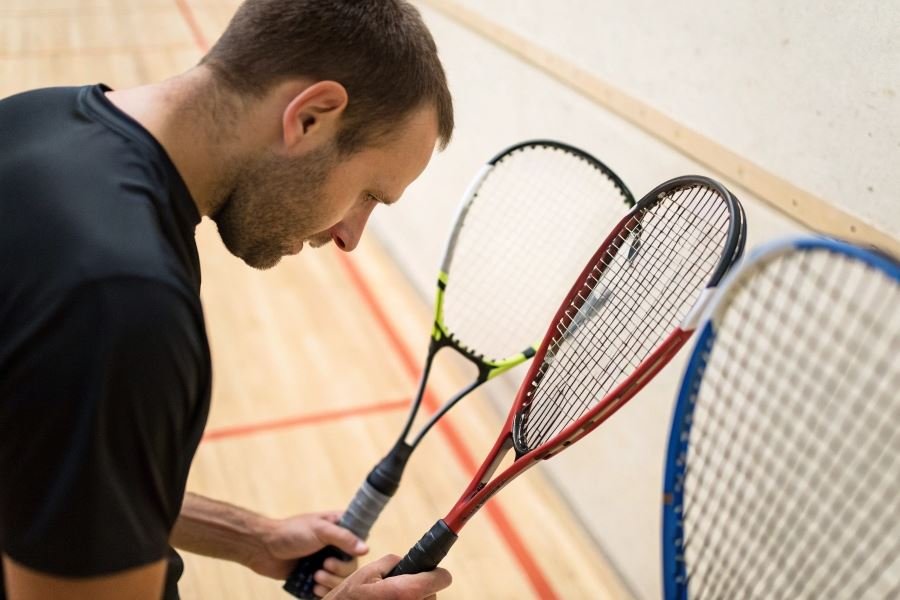
Ever missed that perfect shot because your racket practically launched itself out of your hand? You’re not alone. Professional squash players lose up to 15% of their shot accuracy when grip issues strike during intense matches. The combination of a 45-minute high-intensity workout in an enclosed court at 100+ mph creates the perfect storm for the dreaded sweaty palm syndrome.
The battle against slippery grips isn’t just about comfort—it’s about performance. When your racket rotates unexpectedly during that critical backhand, you’re not just missing a shot; you’re potentially losing the entire match. Top-ranked players understand that grip selection isn’t a minor detail—it’s a game-changer that directly impacts shot precision, power transfer, and confidence.
“I switched my grip setup mid-season last year and immediately saw my error percentage drop by almost 20%. It was like playing with a completely different weapon.” — Professional squash player James Willstrop
The good news? The market offers an impressive arsenal of solutions. From traditional options like toweling grips that absorb moisture to advanced synthetic materials with moisture-wicking channels, players now have specialized tools for every sweat level. Overgrips provide a cost-effective layer of protection, while replacement grips offer a complete refresh. Some players even combine approaches—using an absorbent base grip with a tacky overgrip for the ultimate moisture management system.
Finding your perfect grip match requires understanding both your sweat patterns and playing style. The right grip doesn’t just keep your racket in hand—it transforms your entire game.
Grip Solutions for Sweaty Squash Players
The intensity of a squash match can turn even the coolest players into sweaty competitors. When your racket starts slipping mid-rally, that perfect shot becomes impossible. Finding the right grip for sweaty palms when playing squash isn’t just about comfort—it’s about maintaining control when the pressure mounts and your hands start perspiring. Let’s dive into the three grip types that can transform your game even when your palms are working overtime.
Absorbent Overgrips: Your First Line of Defense
Absorbent overgrips have revolutionized how players handle moisture during intense matches. These thin, replaceable wraps sit on top of your base grip and work like a thirsty sponge.
Materials that make the difference:
- Cotton-based overgrips (like those from Wilson)
- Microfiber-enhanced options (popular in Head products)
- Cellulose-infused varieties for maximum absorption
The application technique matters significantly with absorbent grips. Start at the butt cap and wrap with 50-75% overlap, maintaining consistent tension throughout. Most professionals replace these every 3-5 matches for optimal performance.
Pro tip: Keep 2-3 spare overgrips in your bag. When one becomes saturated during a lengthy match, a quick change between games can revitalize your grip.
The primary benefit? These grips get better as they get wetter—up to a point. They’re ideal for players who experience moderate sweating but can become counterproductive when completely saturated.
Tacky Grips: Stick to Your Game Plan
When absorbent grips surrender to excessive moisture, tacky grips step in with their enhanced friction properties. These specialized grips maintain their “stickiness” even when wet.
What makes tacky grips special:
| Feature | Benefit |
|---|---|
| Silicone-infused surface | Maintains grip in high-moisture conditions |
| Polymer technology | Creates micro-suction against skin |
| Textured patterns | Increases surface area for better contact |
Maintenance requirements for tacky grips are more demanding. Wiping with a clean towel between points helps preserve their sticky qualities. Many players use isopropyl alcohol wipes weekly to remove dirt and oils that diminish tackiness.
These grips excel in high-humidity environments and for players who experience hyperhidrosis (excessive sweating). The downside? They typically wear out faster than other options, especially when regularly exposed to moisture.
Perforated Grips: Breathability is Key
The engineering behind perforated grips focuses on prevention rather than absorption. These innovative grips feature strategically placed holes throughout the material.
Ventilation benefits:
- Air circulation reduces palm temperature
- Moisture evaporates rather than accumulates
- Heat dissipation prevents excessive sweating
The moisture management capabilities work through a dual-action system. First, the perforations allow sweat to escape rather than pool on the surface. Second, many perforated grips incorporate wicking materials that draw moisture away from your palm.
Tecnifibre and Karakal have pioneered some of the most effective perforated grip systems, combining breathability with durability.
These grips work exceptionally well for preventative moisture control but may not be sufficient for players who experience extreme sweating once it begins. Many tournament players combine perforated base grips with absorbent overgrips for the best of both worlds.
Choose your weapon wisely—the right grip can be the difference between a slipping racket and a winning shot when the pressure’s on!
Beyond the Grip: Mastering Sweat Management in Squash
Pre-Game Hand Preparation Rituals
Selecting the perfect grip is only half the battle when dealing with sweaty palms on the squash court. The foundation of exceptional grip performance begins before you even touch your racquet. Start with thoroughly washing your hands with cool water and antibacterial soap to remove oils and residue. Pat—don’t rub—your hands dry with a towel.
Many professional players swear by pre-grip application routines. Apply a thin layer of Tourna Grip Liquid Chalk to your palms 5-10 minutes before play. This creates a moisture-resistant base layer that significantly improves grip adhesion. For extreme sweaters, specialized antiperspirant products like Carpe Lotion applied the night before and 30 minutes pre-match can reduce sweat production by up to 60%.
The difference between amateur and professional hand preparation isn’t talent—it’s attention to detail.
Grip Maintenance and Replacement Schedules
Even the most premium grips deteriorate with exposure to sweat, creating a breeding ground for bacteria and compromising performance. Establish a consistent maintenance routine:
| Grip Type | Cleaning Method | Replacement Frequency |
|---|---|---|
| Synthetic | Wipe with damp cloth after each session | Every 8-12 playing hours |
| Leather | Clean with leather cleaner monthly | Every 15-20 playing hours |
| Overgrips | Not recommended for cleaning | Every 3-6 playing hours |
During intense matches, keep a clean microfiber towel attached to your shorts or nearby for quick hand drying between points. Top players change overgrips as frequently as every match during tournaments—a practice worth adopting for serious recreational players.
For synthetic and leather grips, extend lifespan by using grip-specific cleaning sprays like Black Widow Grip Cleaner weekly. This removes salt deposits from dried sweat that can harden grips and reduce tackiness.
Essential Accessories for Sweat Management
The battle against sweaty palms requires a comprehensive arsenal beyond just choosing the right grip:
-
Wristbands: Not just a fashion statement, quality wristbands like Nike Dri-FIT prevent sweat from running down your arm onto your hands. Position them 2-3 inches from your wrist for optimal effectiveness.
-
Grip-enhancing powders: Wilson Pro Performance Powder creates a moisture-absorbing barrier between your hand and grip. Apply sparingly between games for immediate traction improvement.
-
Grip-specific towels: The Mission Enduracool cooling towel reduces hand temperature by up to 30 degrees when activated with water, significantly decreasing sweat production during play.
-
Portable grip dryers: For tournament play, the compact Gamer Grip Fan accelerates between-game grip drying, extending performance life by up to 40%.
Remember that consistency trumps intensity—establish a systematic approach to grip management rather than scrambling for solutions mid-match.
By implementing these complementary strategies alongside your carefully selected grip, you’ll maintain optimal racquet control regardless of how intense the match becomes. The difference between winning and losing often comes down to these seemingly small details that deliver massive performance advantages when the pressure mounts.