
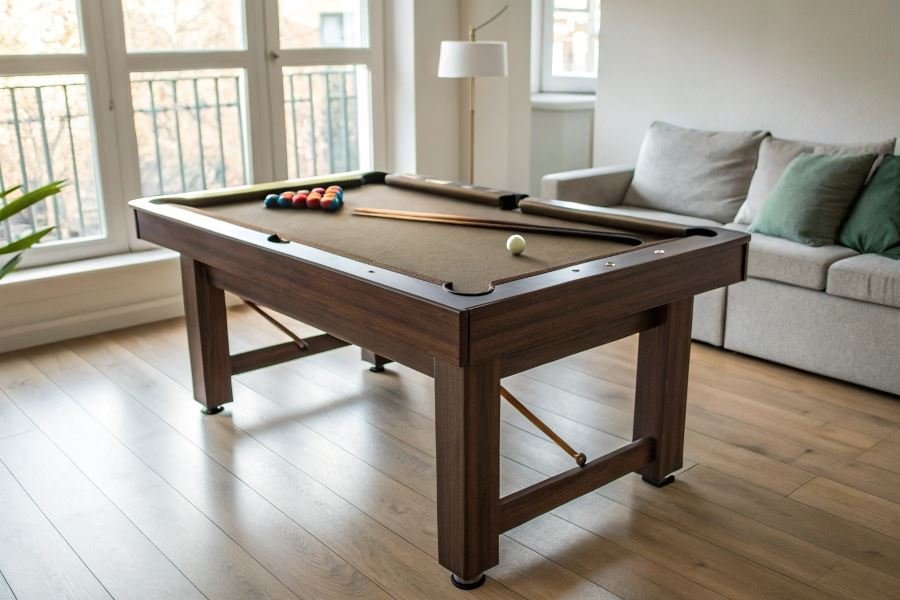
Ever walked into a bustling sports bar and noticed how the billiard tables become instant social hubs? That’s no accident. The right commercial billiard table doesn’t just fill space—it generates revenue, creates atmosphere, and keeps customers coming back night after night.
Selecting the perfect billiard table for your business venue requires a completely different mindset than choosing one for your home. Commercial tables face relentless use that would destroy a residential model within months. While a home table might see a few games per week, commercial tables often endure 12+ hours of daily play, with players of varying skill levels (and respect for equipment).
“The difference between commercial and residential tables isn’t just durability—it’s the difference between profit and constant repair costs.”
Commercial vs. residential: The crucial differences
Commercial tables feature industrial-grade components that residential models simply don’t need:
- Tournament-grade cloth that resists burns, spills, and tears
- Reinforced frames designed for thousands of games
- Commercial-grade pockets that won’t sag or tear
- Specialized ball return systems built for high-volume play
The ROI equation
A quality commercial table priced between 3, 500−7,000 might seem steep initially, but the math tells a different story. A properly maintained commercial table can generate $10,000+ annually while lasting 7-10 years with minimal maintenance. The residential alternative? Expect replacement within 2-3 years under commercial conditions—a costly mistake many first-time business owners learn the hard way.
Commercial Billiard Tables That Stand the Test of Time
When investing in billiard tables for your establishment, you’re not just buying furniture—you’re investing in an experience that will define your venue for years to come. The criteria for choosing a billiard table for commercial use differ significantly from residential selections, with durability, space efficiency, and maintenance requirements taking center stage in the decision-making process.
Built to Withstand Constant Play
Commercial billiard tables face a level of abuse that home tables simply don’t encounter. With hundreds of players weekly, spilled drinks, and occasional rough handling, your investment needs industrial-grade construction.
Frame Construction Matters: The backbone of any commercial table is its frame. Look for:
- Solid hardwood frames (maple or oak) with reinforced corners
- Metal corner brackets for additional stability
- Cross-beam support systems that prevent warping
Tables with one-piece slate beds outperform sectional slates in high-traffic environments, maintaining level play even after years of heavy use.
The difference between residential and commercial-grade tables becomes apparent within months, not years. While a home table might see 5-10 hours of play weekly, commercial tables often endure 60+ hours, accelerating wear patterns dramatically.
Space Economics in Commercial Settings
Square footage equals revenue in commercial settings, making table size and placement critical considerations.
Standard commercial table sizes include:
| Table Size | Room Size Required | Ideal For |
|---|---|---|
| 7-foot | 13’ × 16’ | Bars, smaller venues |
| 8-foot | 13’6″ × 17’ | Pool halls, mid-size venues |
| 9-foot | 14’ × 18’ | Tournament venues, upscale establishments |
Clearance Is Non-Negotiable: Allow minimum 5-foot cue clearance around all sides. Inadequate space leads to damaged walls, frustrated customers, and ultimately, reduced table usage.
Consider traffic flow patterns when positioning tables. The ideal layout allows spectators to watch without interfering with players’ shots, creating natural social zones that enhance the overall experience.
Surface Materials That Deliver Performance
The playing surface represents the heart of your billiard table investment, directly impacting game quality and maintenance requirements.
Slate Thickness Hierarchy:
- 3/4 inch: Minimum acceptable for light commercial use
- 1 inch: Standard for most commercial applications
- 1-1/4 inch: Tournament-grade performance
The cloth covering your slate dramatically affects both play characteristics and maintenance cycles. While traditional Simonis worsted wool remains the gold standard for serious play, newer blends from manufacturers like Championship incorporate stain-resistant technologies that extend cloth life by up to 30%.
Maintenance schedules for commercial tables should include weekly brushing, quarterly deep cleaning, and cloth replacement every 1-3 years depending on usage patterns.
Remember that maintenance accessibility should influence your purchase decision. Tables with easy-access pockets and removable rails simplify routine maintenance, reducing downtime and extending the table’s serviceable life.
By prioritizing construction quality, space efficiency, and surface materials appropriate for commercial demands, you’ll select a billiard table that delivers both player satisfaction and business value for years to come.
Beyond the Basics: Commercial Billiard Table Selection Mastery
Style that speaks volumes
When selecting a billiard table for commercial use, style isn’t just about looks—it’s about brand identity. Your pool table becomes a centerpiece that communicates your establishment’s personality. A sleek, modern Brunswick Metro with minimalist lines and metal accents screams upscale sports bar, while a traditional Olhausen Chicago with rich mahogany and leather pockets whispers exclusive club.
Consider your existing décor: exposed brick pairs beautifully with industrial-inspired tables, while traditional pubs benefit from classic English designs. Lighting is crucial—tables with built-in illumination systems create dramatic focal points that draw customers across the room.
The right billiard table doesn’t just fit your space—it elevates it, becoming an Instagram-worthy feature that patrons specifically seek out.
Color psychology matters too. Deep greens promote relaxation and extended play sessions, while vibrant blues energize competitive environments. The cloth color should complement your brand palette without creating eyestrain during extended play.
Investment planning beyond price tags
Commercial billiard tables represent significant investments, with quality options ranging from $3,500 to $15,000+. However, focusing solely on purchase price misses the bigger financial picture.
Consider these long-term value factors:
| Factor | Budget Impact | Strategic Consideration |
|---|---|---|
| Daily usage hours | Higher = faster wear | Commercial-grade slate thickness (1″ minimum) |
| Customer demographic | Casual vs. serious players | Cushion responsiveness and cloth quality |
| Revenue generation | Direct income potential | Tournament-ready specifications |
| Replacement cycle | 7-10 years typical | Modular design for partial updates |
The Valley Panther ZD-X might cost $2,000 more upfront than competitors, but its commercial-grade components typically extend its service life by 3+ years—delivering superior ROI when calculated per customer play session.
Smart budget planning includes allocating funds for:
- Initial purchase and professional installation
- Maintenance supplies (specialized brushes, covers)
- Annual professional releveling ($200-400)
- Cloth replacement every 2-3 years ($300-700)
- Cushion replacement every 5-7 years ($500-900)
Service support that keeps you in the game
The finest table becomes worthless when out of commission. Evaluate warranty coverage with commercial usage specifically in mind—many residential warranties become void in business settings.
Diamond Pro-Am tables come with industry-leading 10-year commercial warranties on slate and frame components, while Olhausen offers transferable lifetime warranties on select models. Read the fine print regarding:
- Parts covered vs. excluded
- Labor inclusion/exclusion
- On-site service availability
- Response time guarantees
- Warranty transfer options if selling your business
Beyond warranty, investigate the manufacturer’s parts ecosystem. Can replacement rails, pockets, and hardware be sourced quickly? Local service technicians matter tremendously—a table requiring specialized out-of-state technicians means extended downtime.
Preventative maintenance agreements from companies like Billiard Factory can reduce long-term costs by catching issues before they require major repairs, keeping your revenue-generating tables in play when competitors’ sit idle.
Remember that service reputation often tells a more accurate story than warranty documentation. Speak with other commercial operators about their real-world experiences with specific manufacturers’ support systems before making your final decision.