
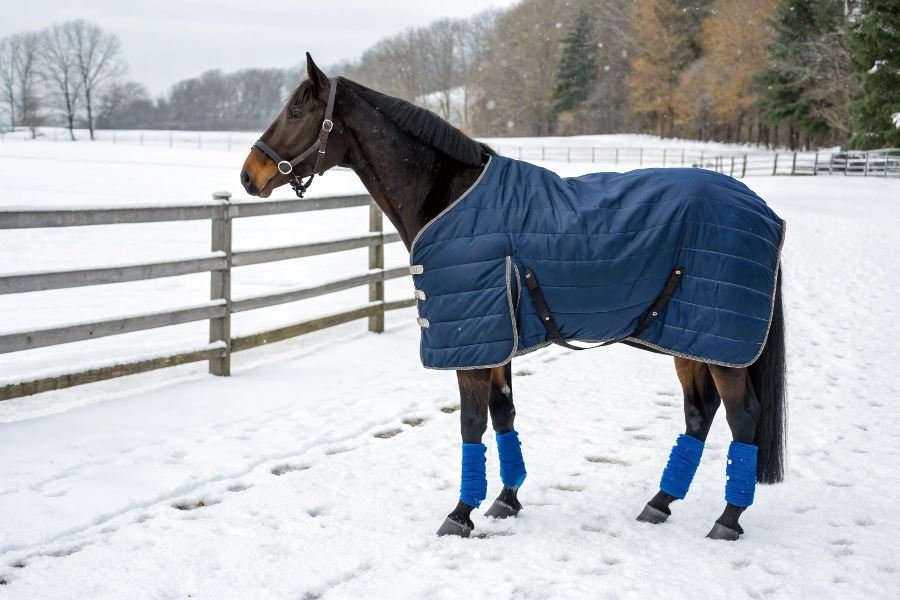
Your horse’s legs are engineering marvels—carrying over 1,000 pounds at speeds up to 40 mph. Yet they’re also incredibly vulnerable.
Think of protective leg wraps as the unsung heroes of equestrian sports. These seemingly simple accessories stand between your horse and potentially career-ending injuries. Whether you’re navigating cross-country obstacles or loading your companion for a three-hour trailer ride, the right leg protection can make all the difference.
The critical shield for fragile architecture
A horse’s leg contains no muscle below the knee or hock—just bone, tendon, ligament, and skin. This delicate structure handles tremendous forces during movement. A single misstep can lead to thousands in veterinary bills and months of rehabilitation. Quality leg wraps provide crucial support and protection against:
- Impact injuries from striking obstacles
- Interference injuries when legs collide during movement
- Overextension of tendons during sharp turns
- Environmental hazards like rocks or uneven terrain
When protection becomes essential
Different riding scenarios demand specific protection strategies:
During training sessions, everyday wraps provide moderate protection while allowing full range of motion. For competition environments, specialized boots offer maximum protection without compromising performance. Trailering situations require stable support to prevent fatigue and swelling during long journeys.
Choosing the perfect protection
The ideal leg wrap balances several critical factors:
- Protection level: from light support to maximum impact resistance
- Breathability: preventing dangerous heat buildup
- Proper fit: too tight restricts circulation, too loose offers no protection
- Durability: withstanding the demands of your discipline
Your horse’s leg health isn’t just about performance—it’s about ensuring years of sound, pain-free partnership.
Essential Criteria for Choosing Horse Leg Protection
When it comes to equine leg protection, the difference between good and exceptional can mean everything for your horse’s performance and safety. The market offers a dazzling array of options, but understanding the key factors will help you navigate this crucial equipment decision with confidence.
Selecting protective leg wraps for a horse requires careful consideration of materials, proper sizing, and durability factors. Each element plays a vital role in ensuring your equine athlete receives optimal support and protection during training sessions, competitions, or even casual trail rides. Let’s dive into what makes certain leg wraps stand out from the pack.
Material Matters: The Foundation of Protection
The material of your horse’s leg wraps fundamentally determines their effectiveness, comfort, and appropriate use cases:
Neoprene wraps offer exceptional water resistance and thermal properties. They’re particularly valuable for horses working in wet conditions or those needing therapeutic heat retention. The slight elasticity provides consistent pressure distribution across the leg.
Fleece options deliver superior cushioning and are notably gentle on sensitive skin. These wraps excel at moisture-wicking, making them ideal for extended wear during training sessions.
Cotton wraps remain the traditional choice for many equestrians, offering breathability and washability that’s hard to beat. They’re versatile enough for everyday use but require proper wrapping technique to avoid dangerous pressure points.
The revolution in equine leg protection came with gel-infused wraps, which absorb impact forces up to 30% more effectively than standard materials while conforming to the unique contours of your horse’s legs.
Sizing and Fit: Precision Protection for Every Breed
Proper sizing isn’t just about comfort—it’s about safety and effectiveness:
| Horse Type | Typical Front Leg Size | Typical Hind Leg Size | Recommended Wrap Length |
|---|---|---|---|
| Draft | 12-14 inches | 14-16 inches | 14-16 feet |
| Warmblood | 10-12 inches | 12-14 inches | 12-14 feet |
| Thoroughbred | 9-11 inches | 11-13 inches | 10-12 feet |
| Pony | 6-8 inches | 8-10 inches | 8-10 feet |
When fitting wraps, ensure you can slip two fingers between the wrap and your horse’s leg—any tighter risks circulation problems, while looser wraps may shift during movement, potentially causing dangerous tripping hazards.
Anatomical considerations matter tremendously across breeds. Quarter Horses typically need more protection around their fetlocks, while Warmbloods often require additional support for their larger tendons. Professional’s Choice offers breed-specific designs that account for these variations.
Durability and Maintenance: The Long Game
The most effective leg protection becomes worthless if it deteriorates quickly or becomes a breeding ground for bacteria.
Construction quality reveals itself in the details—look for double-stitched edges, reinforced strike areas, and secure fastening systems that won’t lose effectiveness after repeated use. Eskadron wraps feature industrial-grade hook-and-loop closures that maintain their grip even after hundreds of applications.
Maintenance requirements vary dramatically between materials:
- Neoprene requires simple rinsing and air drying
- Fleece needs gentle machine washing with specialized detergent
- Cotton demands proper washing and careful rerolling to maintain even pressure
- Gel-infused options typically wipe clean but may need occasional deep cleaning
The best wraps balance protection with practicality, offering straightforward care routines that fit into your busy barn schedule without compromising your horse’s safety.
Making the Final Decision on Horse Leg Protection
Choosing the right protective leg wraps for your horse isn’t just about grabbing whatever’s on sale—it’s about finding that sweet spot where quality meets affordability while addressing your horse’s specific needs. Let’s cut through the confusion and nail down exactly how to make this crucial decision.
Smart Budget Balancing Without Sacrificing Protection
When it comes to your horse’s leg protection, the old adage “buy cheap, buy twice” often rings true. However, this doesn’t mean emptying your bank account is necessary.
Price-to-longevity ratio should be your north star. A $75 set of premium polo wraps that lasts three seasons works out cheaper than replacing $30 wraps every few months. Plus, inferior protection can lead to vet bills that dwarf any savings you might have made.
Consider this approach:
- Invest more in areas where your horse needs specialized protection
- Save on general-purpose items where premium features aren’t essential
- Look for off-season sales from reputable retailers
The difference between budget and quality wraps often comes down to materials, stitching quality, and closure systems—all factors that affect both protection and longevity.
Expert Input That Makes All The Difference
Your horse’s protection needs are as unique as their conformation and discipline. This is where professional guidance becomes invaluable.
Veterinarians can provide insight into your horse’s specific anatomical considerations. For instance, horses with previous tendon injuries might benefit from specialized support wraps with additional compression features.
Trainers bring practical experience to the table:
“I’ve seen countless horses perform at their peak when fitted with appropriate leg protection that matches their movement style and discipline demands.” – Professional trainers consistently emphasize this point.
Schedule a consultation where both your vet and trainer can observe your horse in motion. This collaborative approach often reveals protection needs you might otherwise miss.
Top Performers in Horse Leg Protection
After testing dozens of brands and consulting with professionals, these three consistently deliver exceptional protection, durability, and value:
1. Professional’s Choice
Professional’s Choice sports medicine boots have revolutionized equine leg protection with their unique combination of limestone-based neoprene and UltraShock lining. Their VenTECH Elite Sports Medicine Boots provide superior impact protection while allowing heat dissipation—crucial for intense training sessions.
2. EquiFit
EquiFit T-Boot EXP2s stand out with their revolutionary ImpacTeq technology that remains flexible during normal movement but instantly transforms into a rigid shield upon impact. The antimicrobial lining prevents bacterial growth even during heavy use.
3. Classic Equine
Classic Equine Legacy System boots offer exceptional value without compromising protection. Their 100% virgin perforated neoprene construction provides excellent breathability while the suspended splint bone design offers targeted protection exactly where horses need it most.
| Brand | Standout Feature | Best For | Price Range |
|---|---|---|---|
| Professional’s Choice | UltraShock lining | All-around protection | 75−180 |
| EquiFit | ImpacTeq technology | High-impact disciplines | 120−250 |
| Classic Equine | Suspended splint bone design | Value-conscious buyers | 65−140 |
Remember that the best leg protection is the one that fits your horse perfectly, addresses their specific needs, and stays within your budget while providing reliable protection ride after ride.