
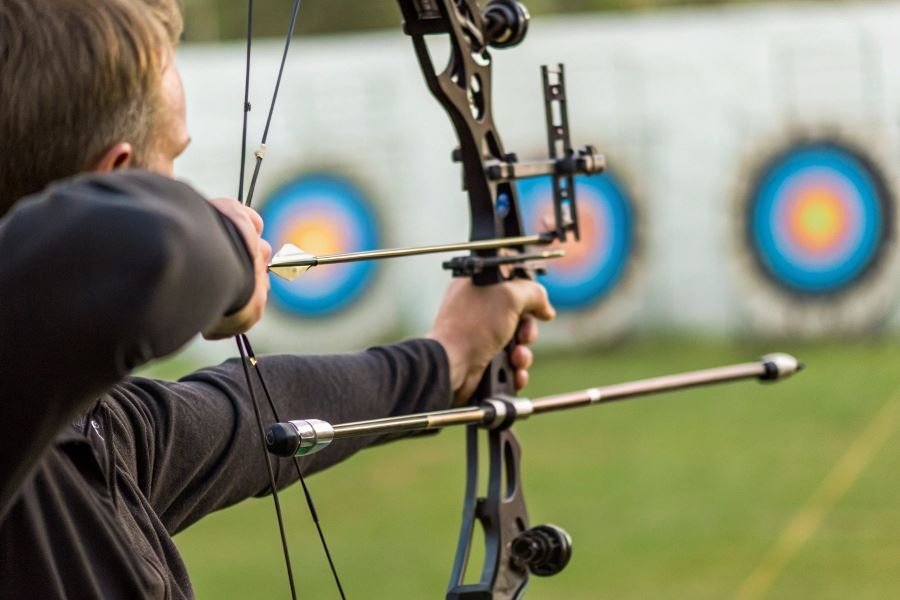
The whisper of the bolt cutting through air, the satisfying thud as it strikes dead center—there’s nothing quite like the focused intensity of crossbow target shooting.
Target shooting with crossbows has exploded in popularity over the past decade, with participation numbers doubling since 2015. What was once primarily a hunting tool has transformed into a precision sport that demands skill, focus, and the right equipment. The beauty of crossbow target shooting lies in its accessibility—it requires less upper body strength than traditional archery while offering similar satisfaction in mastering accuracy.
When searching for the perfect target shooting crossbow, several critical factors determine which model will elevate your performance. Accuracy is king, but it’s built on a foundation of proper draw weight, velocity consistency, trigger quality, and overall balance. Unlike hunting crossbows that prioritize stopping power, target models emphasize repeatability and precision above all else.
The market offers three primary crossbow types optimized for target shooting:
- Recurve target crossbows – Offering simplicity, reliability, and fewer moving parts
- Compound target crossbows – Providing enhanced speed and reduced holding weight
- Reverse draw crossbows – Featuring improved balance and reduced vibration
“The difference between a good target crossbow and a great one isn’t just in the specs—it’s in how it becomes an extension of your shooting style.” — Professional target shooter Tom Reynolds
Each design brings distinct advantages to the firing line. The ideal choice depends on your shooting style, physical capabilities, and the specific target competitions you plan to enter. Understanding these fundamentals will guide you toward a crossbow that doesn’t just hit the target—it hits your perfect bullseye.
Technical Specs That Make or Break Your Target Crossbow
When determining which crossbow is better for target shooting, the devil truly lives in the technical details. The perfect target crossbow isn’t just about looks or brand name—it’s a precision instrument where every specification contributes to your success on the range.
Draw Weight: Finding Your Sweet Spot
The draw weight of your crossbow fundamentally shapes your target shooting experience. Most competitive target crossbows feature draw weights between 125-175 pounds, striking the crucial balance between manageable cocking and sufficient power.
For indoor competitions where distances rarely exceed 20 yards, a crossbow with 125-150 pounds draw weight provides ample performance without unnecessary strain. The TenPoint Vengent S440 exemplifies this balance with its 140-pound draw weight coupled with a crank cocking device that reduces the effective effort to just 5 pounds—perfect for extended practice sessions.
Key consideration: Lower draw weights generally allow for more comfortable repeated shooting, critical for practice sessions where you might fire 50+ bolts. However, they must still generate enough velocity for consistent accuracy.
Speed and Kinetic Energy: Distance Demands
Target shooting at varying distances requires specific velocity thresholds to maintain accuracy and consistent point of impact.
| Distance (yards) | Recommended Speed (FPS) | Minimum Kinetic Energy (ft-lbs) |
|---|---|---|
| 20 | 300+ | 55+ |
| 40 | 350+ | 75+ |
| 60+ | 400+ | 95+ |
The Ravin R29X delivers an impressive 450 FPS with 170 foot-pounds of kinetic energy, making it exceptional for long-range target shooting where flat trajectories are crucial. This performance comes from its HeliCoil technology that reduces friction and maintains energy throughout the shot cycle.
Remember that excessive speed isn’t always beneficial—consistency trumps raw velocity for precision target work.
Accuracy-Enhancing Features: The Technical Trifecta
Rail Design: The Foundation of Accuracy
The rail system serves as the backbone of accuracy in target crossbows. Carbon fiber rails, like those found on the Barnett Hyper Ghost 425, reduce weight while maintaining rigidity—essential for preventing flex during the shot cycle that would otherwise introduce inconsistency.
Anti-dry fire mechanisms aren’t just safety features; they ensure proper nock engagement, eliminating a common source of accuracy-robbing inconsistency.
Trigger Mechanisms: The Moment of Truth
Target-focused crossbows feature triggers with:
- Pull weights between 2-3.5 pounds
- Zero creep (movement before release)
- Crisp, predictable break points
The Excalibur Assassin 400TD showcases a match-grade trigger with a 3-pound pull weight and virtually zero creep—specifications that rival custom firearms.
Limb Technology: Power Delivery Systems
Modern target crossbows employ three primary limb designs:
- Split limbs – Offer superior vibration dampening
- Solid limbs – Provide exceptional durability
- Reverse draw configurations – Create better balance and longer power strokes
The Scorpyd Nemesis 480 utilizes a reverse draw design with split limbs, creating an incredibly balanced platform that resists canting—the subtle tilting that destroys accuracy at distance.
When evaluating which crossbow is better for target shooting, prioritize models with adjustable stocks, precision triggers under 3.5 pounds, and vibration-dampening systems. These features contribute significantly more to consistent accuracy than raw speed specifications that dominate marketing materials.
The ideal target crossbow combines manageable draw weight, appropriate velocity for your competition distances, and accuracy-enhancing features that minimize shooter-induced errors—creating a system where your skill, not equipment limitations, determines your score.
Making Your Final Crossbow Selection for Target Excellence
Smart budget planning for precision shooting
Let’s face it—crossbow pricing spans from bargain-bin options to mortgage-payment territory. For target shooting specifically, you don’t need to empty your bank account to get started. Entry-level target crossbows from reputable manufacturers like Barnett begin around 300 − 400, offeringdecentaccuracyandreliabilityforbeginners.Mid − rangeoptions(500-800) deliver significant performance upgrades with improved triggers, reduced vibration, and enhanced accuracy potential.
For those serious about competition, premium target crossbows from Ravin or TenPoint command 1, 000 − 2, 000butdelivertournament − readyprecision.Rememberthatyourtotalinvestmentshouldincludequalitybolts(50-100 per dozen), a reliable scope (150 − 300), andasturdytarget(100-200).
Budget tip: Many archers find greater value investing in a quality mid-range crossbow rather than upgrading an entry-level model later—the performance gap is substantial, and you’ll save in the long run.
Matching specs to your shooting profile
Your ideal crossbow should align perfectly with your physical capabilities and shooting goals. Consider these crucial factors:
- Draw weight: Beginners and recreational shooters should start with 150-175 pounds, while experienced shooters might prefer 175-225 pounds for flatter trajectories
- Speed: 300-350 FPS works well for most target applications; ultra-fast models (400+ FPS) offer advantages for long-range precision but require more skill to master
- Physical dimensions: Compact models improve maneuverability for smaller shooters; larger frames often provide better stability
Your shooting frequency matters too. Weekend warriors can thrive with simpler designs, while dedicated competitors benefit from premium features like match-grade triggers (under 3 pounds pull weight) and advanced anti-vibration systems.
| Shooter Profile | Recommended Draw Weight | Ideal Speed Range | Key Features to Prioritize |
|---|---|---|---|
| Beginner | 150-175 lbs | 300-330 FPS | Adjustable stock, forgiving accuracy |
| Intermediate | 175-200 lbs | 330-375 FPS | Quality scope, precision trigger |
| Advanced | 200-225+ lbs | 350-450 FPS | Match-grade components, customization |
Three standout crossbows for target domination
After testing dozens of models across price points, these three crossbows consistently deliver exceptional target performance:
-
TenPoint Vapor RS470 – The gold standard for serious competitors, delivering blistering 470 FPS speeds with match-grade accuracy. Its ACUslide cocking system and 3.5-pound S1 trigger create a competition-ready platform that punches well above its $2,199 price tag. The integrated noise dampening system virtually eliminates vibration—critical for maintaining focus during precision shooting.
-
Ravin R29X – At $2,099, this compact powerhouse measures just 29 inches long yet delivers 450 FPS with remarkable 1-inch groups at 100 yards. The HeliCoil technology maintains perfect arrow alignment through the entire power stroke, while the Versa-Draw cocking system reduces effort to a manageable 12 pounds. Perfect for shooters who demand tournament-level accuracy in a more maneuverable package.
-
CenterPoint Wrath 430 – The value champion at $649, offering 430 FPS performance that rivals premium models. Its adjustable stock, CNC-machined rail, and surprisingly crisp trigger make it the ideal entry point for serious target shooting without breaking the bank. While it lacks some refinement of premium models, its performance-to-price ratio is unmatched.
The perfect target crossbow balances your budget, skill level, and competitive aspirations—prioritize accuracy and comfort over raw speed and flashy features.
Remember that the “best” crossbow ultimately depends on your specific needs, but these recommendations provide exceptional starting points across various price ranges and skill levels.