
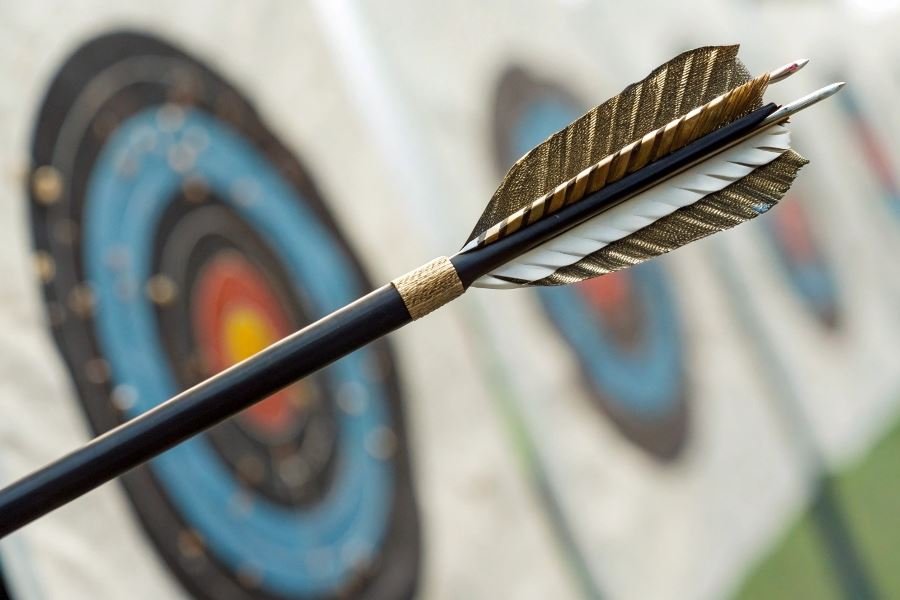
Ever watched an archer miss a target by inches and wondered why? It wasn’t just skill—it was likely the wrong arrow. The difference between bullseye and disappointment often comes down to those seemingly minor details of arrow weight and length that many archers overlook.
When your arrow doesn’t match your bow and shooting style, it’s like wearing shoes three sizes too big to run a marathon—technically possible, but painfully inefficient. I’ve seen championship-level archers transform their accuracy overnight simply by correcting their arrow specifications. The physics is unforgiving: an arrow too light or too heavy creates a cascade of performance problems that no amount of skill can fully overcome.
“The right arrow isn’t just equipment—it’s the physical extension of your intention,” explains Olympic coach Mark Thompson. When arrows are improperly matched, energy transfer becomes inefficient, creating inconsistent flight patterns that frustrate even veteran shooters.
Three critical factors determine your perfect arrow match:
- Draw weight of your bow
- Draw length of your shooting form
- Intended use (target shooting vs. hunting)
Each factor creates a ripple effect through your entire shooting system. When properly balanced, these elements work in harmony, delivering that satisfying thwack as your arrow hits exactly where you aimed. When mismatched, they fight against each other, creating frustration and inconsistency that can make archery feel more like gambling than precision sport.
Arrow Weight Mastery for Precision Shooting
Finding the perfect arrow weight for your bow isn’t just a technical detail—it’s the difference between hitting your target with authority or watching your shot drift off course. When archers dial in their arrow weight correctly, the results speak for themselves: tighter groups, better penetration, and that satisfying thwack when you hit exactly where you aimed.
Understanding how to choose the weight and length of an arrow for your bow requires balancing several factors that work together to create your ideal setup. The right arrow weight transforms your shooting experience from frustrating to phenomenal, especially when matched perfectly to your bow’s characteristics and shooting style.
Decoding Arrow Spine and Weight Measurements
Arrow weight is typically measured in grains (gr), with most hunting and target arrows falling between 350 and 500 grains total weight. But don’t confuse this with spine rating—a common rookie mistake!
Spine rating refers to the arrow’s stiffness, usually expressed as a number like 340 or 400. The lower the number, the stiffer the arrow. This isn’t weight, but rather how much the arrow bends under pressure.
Arrow weight consists of several components:
| Component | Typical Weight Range | Purpose |
|---|---|---|
| Shaft | 5-9 grains per inch | Primary structure |
| Point/Broadhead | 85-150 grains | Penetration and flight stability |
| Vanes/Fletching | 10-30 grains total | Stabilization |
| Insert | 10-50 grains | Connects point to shaft |
| Nock | 5-12 grains | Connects to bowstring |
Your total arrow weight dramatically affects both speed and kinetic energy—lighter arrows fly faster but carry less energy, while heavier arrows hit harder but follow a more arched trajectory.
Matching Arrow Weight to Your Bow and Purpose
The relationship between your bow’s draw weight and your arrow weight is crucial. A general rule: your arrow should weigh roughly 5-6 grains per pound of draw weight as a minimum. For a 70-pound compound bow, that means arrows no lighter than 350-420 grains.
Different shooting purposes demand different weight profiles:
- Target shooting: Lighter arrows (5-6 grains per pound) maximize speed and flatten trajectory
- 3D archery: Medium weight (6-7 grains per pound) balances speed with forgiveness
- Hunting: Heavier arrows (7-8+ grains per pound) deliver superior penetration and kinetic energy
Your Easton Archery or Gold Tip arrows might come with recommended bow weight ranges, but these are starting points, not gospel.
Testing and Fine-Tuning for Peak Performance
Finding your perfect arrow weight often requires methodical testing. Start with these steps:
- Paper tuning: Shoot through paper at close range to check arrow flight
- Group testing: Compare groups with different arrow weights at various distances
- Chronograph testing: Measure actual arrow speed with different weights
Pro tip: Increase arrow weight in 25-grain increments during testing to clearly see the effects.
When fine-tuning, pay attention to:
- Sound: Heavier arrows typically create less noise
- Bow vibration: More weight often means less hand shock
- Point of impact consistency: The right weight maintains accuracy across distances
Many top shooters keep multiple arrow setups—lighter ones for target days and heavier setups for hunting season. This versatility allows you to optimize for specific conditions rather than compromising with a one-size-fits-all approach.
Remember that arrow weight is just one piece of the archery puzzle, but mastering it puts you significantly closer to achieving your personal best performance.
Finding Your Perfect Arrow Length: The Ultimate Guide
Mastering the draw length measurement
Finding your ideal arrow length starts with knowing your draw length – it’s the foundation of archery accuracy. The most reliable method requires a friend’s help and a simple measuring arrow. Stand in your natural shooting position, draw the bow to full anchor point, and have your friend mark where the arrow extends beyond the resting point on your bow. This measurement from the throat of the nock to the mark is your true draw length.
For those without a measuring arrow, the “wingspan method” offers a solid approximation:
- Stand with arms extended like a T-position
- Measure fingertip to fingertip
- Divide this measurement by 2.5
Pro tip: Most archery pro shops offer professional draw length measurements using specialized equipment for pinpoint accuracy. This service typically includes form assessment that can dramatically improve your shooting consistency.
Calculating your ideal arrow length
Once you’ve determined your draw length, calculating proper arrow length becomes straightforward. The golden rule most experienced archers follow:
Add 1-2 inches to your draw length for safety and optimal performance. This extra length prevents arrows from falling off the arrow rest during full draw.
For example, if your draw length measures 28 inches, your ideal arrow length would be 29-30 inches. This additional length provides crucial safety margin while maintaining performance.
| Draw Length | Recommended Arrow Length | Application |
|---|---|---|
| 26″ | 27-28″ | Compact hunting setups |
| 28″ | 29-30″ | Standard target/hunting |
| 30″ | 31-32″ | Longer draw archers |
Safety warning: Arrows cut too short can be pulled beyond the arrow rest during drawing, potentially causing dangerous dry-fires or hand injuries. Never compromise safety for minor performance gains.
Tailoring length to your shooting style
Different archery disciplines and bow types demand specific arrow length considerations:
Target archery often benefits from slightly longer arrows that provide more forgiveness and stability in flight. Target archers typically add 1.5-2 inches to their draw length when selecting arrows.
Bowhunting setups generally perform best with arrows cut closer to minimum safe length (draw length +1 inch) to maximize kinetic energy and penetration. The reduced weight of shorter arrows translates to flatter trajectories and deeper penetration.
Traditional archery with recurve or longbows requires special consideration. Without a defined draw stop like compound bows, traditional archers should add 2-3 inches beyond their typical draw length to accommodate draw length variations that naturally occur.
Your arrow rest type also influences ideal length. Drop-away rests work well with shorter arrows, while whisker biscuit or shoot-through rests typically require slightly longer arrows for optimal clearance and performance.
Remember that arrow length affects spine (stiffness) requirements. Shorter arrows require stiffer spines to maintain proper flight characteristics. Always consult arrow spine charts from manufacturers like Easton or Carbon Express when making adjustments to ensure your arrows are properly matched to your setup.