
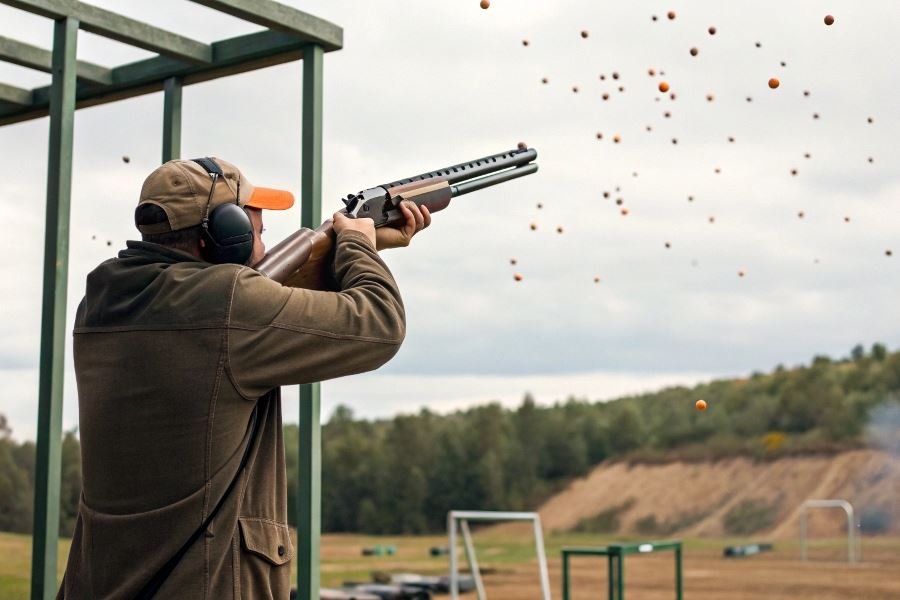
Ever stood at the firing line, heart racing, knowing your next shot could be the difference between victory and defeat? In that moment, it’s not just your skill that determines the outcome—it’s the cartridge loaded in your firearm.
The world of sport shooting has evolved dramatically since the first organized competitions in the late 19th century. Today’s competitive shooters understand that selecting the right ammunition isn’t just a preference—it’s a strategic decision that directly impacts performance. The right cartridge can transform good technique into championship-winning accuracy.
“The difference between first and fourth place often comes down to millimeters on target—and those millimeters are frequently determined by your cartridge choice.” — Championship shooter Mark Reynolds
The science behind the shot
What makes a cartridge perform in competitive environments? Three critical factors determine whether your ammunition will help or hinder your performance:
- Ballistic consistency – How predictably the cartridge performs shot after shot
- Recoil profile – How the energy transfer affects your ability to maintain position
- Environmental adaptability – How the cartridge performs across temperature and humidity variations
When evaluating the elite cartridges that dominate today’s competitions, experts focus on a triad of performance metrics: pinpoint accuracy that puts rounds exactly where aimed, manageable recoil that allows for quick follow-up shots, and reliable availability that ensures consistent training with identical ammunition.
The difference between adequate and exceptional cartridges often reveals itself not on paper targets but in the milliseconds between shots and the confidence felt when squeezing the trigger.
Precision Meets Performance: The Elite Cartridge Trio
When the difference between victory and second place comes down to millimeters, your choice of ammunition becomes critical. The world of competitive shooting demands precision, consistency, and performance that matches your skill level. Let’s dive into the cartridges that dominate shooting ranges across America.
The selection of top 3 cartridges for sport shooting reflects decades of competitive evolution, with each option serving distinct disciplines and shooter preferences. From Olympic events to weekend competitions, these three stand out for their reliability, availability, and proven track records.
.22 Long Rifle: The Foundation of Champions
The humble .22LR remains the cornerstone of competitive shooting for good reason. Introduced in 1887 by Stevens Arms, this rimfire cartridge offers:
- Minimal recoil making it ideal for training and precision work
- Exceptional accuracy potential at standard competition distances
- Cost-effectiveness that enables high-volume practice sessions
The .22LR dominates Olympic small-bore events, Rimfire Challenge competitions, and serves as the entry point for virtually every competitive shooter’s journey.
The .22LR’s ballistic performance may seem modest, but its ability to punch clean, scoring-ring holes at 50 meters makes it the most shot competition round in history.
Its subsonic options (typically 1050-1070 fps) provide the consistency that match shooters demand, while standard velocity loads deliver the sweet spot between stability and precision.
9mm Parabellum: Versatility Meets Power
The 9×19mm Parabellum strikes the perfect balance for action shooting sports. Developed in 1902 by Georg Luger, this centerfire cartridge has become the standard for:
- USPSA Production and Carry Optics divisions
- IDPA Stock Service Pistol competitions
- Steel Challenge and 3-Gun events
| Attribute | Typical Match Load |
|---|---|
| Bullet Weight | 115-147 grains |
| Velocity | 900-1150 fps |
| Power Factor | 125-135 |
The 9mm’s manageable recoil combined with sufficient power to knock down steel targets makes it the versatile middle-ground option that dominates pistol competitions. Major manufacturers like Federal Premium and Hornady offer match-grade loads specifically engineered for competitive applications.
.308 Winchester: Long-Range Dominance
When precision at extended distances becomes the challenge, the .308 Winchester rises to the occasion. This powerhouse, introduced by Winchester in 1952, delivers:
- Sub-MOA accuracy potential in quality rifles
- Consistent performance across varying environmental conditions
- Manageable recoil compared to larger long-range options
The .308 Winchester excels in F-Class competitions, Precision Rifle Series events, and traditional high-power rifle matches. Its balance of external ballistics, barrel life, and terminal performance has made it the benchmark against which other precision cartridges are measured.
Match-grade .308 ammunition typically features 168-175 grain projectiles with meticulously controlled powder charges, delivering the consistency required when engaging targets beyond 600 yards.
The staying power of these three cartridges in competitive circles speaks to their fundamental excellence. While newer options may offer incremental improvements in specific areas, these proven performers continue to fill trophy cases and break records in the hands of skilled competitors.
Making the Perfect Match: Your Ideal Sport Shooting Cartridge
Choosing the right cartridge for sport shooting isn’t just about picking what’s popular—it’s about finding the perfect match for your discipline, budget, and equipment. After exploring the top contenders, let’s break down how to make that critical decision that could impact your competitive edge and shooting experience.
Matching Cartridges to Your Discipline
Different shooting sports demand different ammunition solutions:
For precision rifle competitions, the .308 Winchester delivers that sweet spot of manageable recoil and exceptional accuracy. The stability of this round makes it particularly valuable when shooting at distances between 300-800 yards where wind drift becomes increasingly challenging.
Bullseye pistol shooters gravitate toward the .22 LR for its minimal recoil and impressive accuracy at standard competition distances. The gentle push of this cartridge allows for rapid follow-up shots while maintaining tight groupings—essential for those seeking to maximize their scores.
The 9mm Luger shines in dynamic shooting sports like USPSA and IDPA, where the balance of controllable recoil and sufficient power factor makes it the go-to choice for competitors looking to navigate stages with speed and precision.
Cost-Benefit Analysis
| Cartridge | Avg. Cost Per Round | Rounds Per Competition | Monthly Training Cost (200 rounds) |
|---|---|---|---|
| .22 LR | $0.08-0.15 | 50-100 | $16-30 |
| 9mm Luger | $0.25-0.40 | 150-300 | $50-80 |
| .308 Win | $0.80-1.50 | 20-60 | $160-300 |
The economics are clear: .22 LR offers exceptional value for high-volume training. A competitive shooter can fire 1,000 rounds of quality .22 LR for roughly the same cost as 200 rounds of match-grade .308 Winchester.
For those balancing performance with budget, the 9mm represents the middle ground. Its widespread availability means competitive pricing, while still delivering the performance needed for most action shooting disciplines.
Equipment Compatibility Considerations
Your existing equipment—or what you’re planning to purchase—plays a crucial role in cartridge selection:
Barrel life expectancy varies dramatically between cartridges. A quality .308 Winchester barrel might last 5,000-8,000 rounds before accuracy begins to degrade, while a .22 LR barrel can often exceed 50,000 rounds of accurate shooting.
Recoil management systems become increasingly important as cartridge power increases. The 9mm requires modest compensation in most modern firearms, while the .308 Winchester demands more substantial recoil mitigation for extended practice sessions.
The feeding reliability of your firearm with specific cartridge types should never be overlooked. Some semi-automatic platforms show clear preferences for certain bullet profiles and overall cartridge lengths.
The Final Shot
The ideal cartridge choice emerges at the intersection of your shooting discipline, budget constraints, and equipment compatibility. For beginners and those focused on fundamental skill development, the .22 LR offers unmatched value and accessibility. Competitive action shooters will find the 9mm Luger delivers the performance needed without breaking the bank. Those pursuing long-range precision will appreciate the ballistic advantages of the .308 Winchester, despite its higher cost.
Remember that the “perfect” cartridge isn’t universal—it’s personal. The best choice is one that allows you to train consistently, compete confidently, and continue developing your skills without unnecessary limitations from your ammunition selection.