
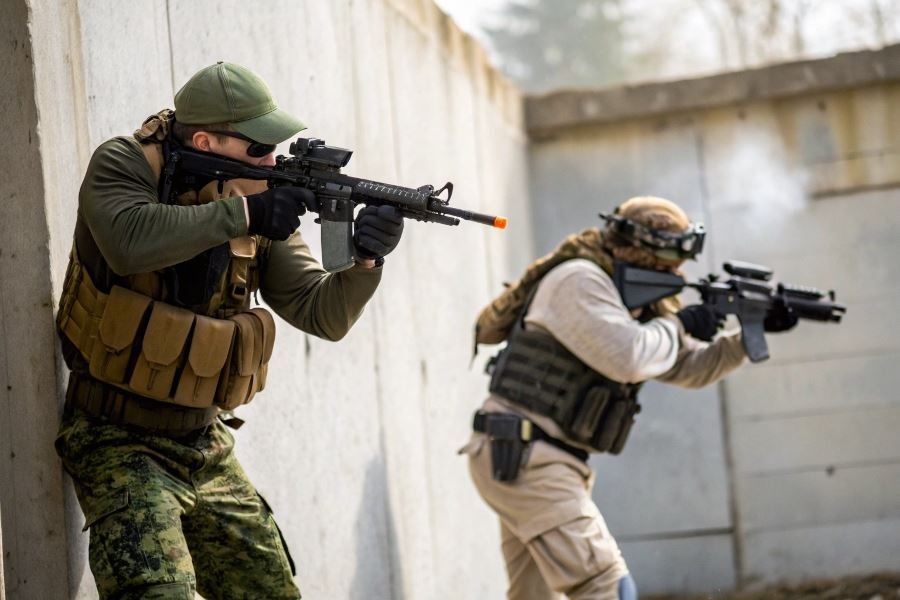
The distinctive crack of a spring-loaded airsoft rifle echoes across the field, followed by the rapid-fire buzz of its electric counterpart. Which sound represents your future gameplay style?
Airsoft has exploded from niche hobby to mainstream recreation, with participation growing 35% since 2020. What began as military simulation training has transformed into a thrilling sport embraced by weekend warriors, competitive teams, and tactical enthusiasts alike. At the heart of this evolution lies a crucial decision every player must make: electric or spring-powered rifles?
This choice isn’t merely technical—it’s about matching your equipment to your playing style, budget, and expectations. The mechanism powering your airsoft rifle fundamentally shapes your experience on the field, influencing everything from rate of fire to maintenance requirements.
The battlefield factors
Before diving into the specifics of each system, understanding the key comparison points helps frame your decision:
- Performance metrics: How do they stack up in accuracy, range, and consistency?
- Practical considerations: Weight, battery life vs. arm fatigue, and field adaptability
- Investment value: Initial costs versus long-term maintenance expenses
- Play style compatibility: Which mechanism complements your tactical approach?
The spring vs. electric debate isn’t about finding a universal “best” option—it’s about identifying which technology aligns with your specific needs. Some players swear by the reliability of spring-loaded mechanisms, while others can’t imagine playing without the convenience of electric-powered rapid fire.
As we examine both options in depth, you’ll discover why this fundamental choice deserves careful consideration before your next airsoft investment.
Electric vs Spring Airsoft: The Ultimate Showdown
When you’re standing on the field, adrenaline pumping, that split-second between pulling the trigger and hitting your target can make all the difference. This is where the age-old debate of electric vs spring airsoft rifles comes into play—a choice that can dramatically impact your gameplay experience.
The question of electric vs spring airsoft rifles: which is better isn’t just about preference; it’s about matching your equipment to your playing style, budget, and battlefield conditions. Let’s dive into what separates these two popular platforms and help you make an informed decision that’ll keep you competitive on the field.
Performance That Matters
Firing Rate: Electric airsoft rifles (AEGs) dominate here with rates of 10-30 rounds per second in fully automatic mode. Spring-powered rifles require manual cocking between each shot, limiting you to 1-2 rounds per second at best.
Accuracy Comparison: Contrary to popular belief, spring rifles often deliver superior shot-to-shot consistency. Without the variable power of batteries, they provide:
| Rifle Type | Shot Consistency | Effective Range | FPS Variation |
|---|---|---|---|
| Spring | High | 150-200 ft | ±3-5 FPS |
| Electric | Medium | 150-180 ft | ±5-10 FPS |
Range Factors: Both platforms can achieve similar ranges when properly upgraded, but electric rifles from manufacturers like Tokyo Marui offer more consistent performance out of the box, especially in cold weather where spring rifles maintain velocity better.
The Real Cost of Ownership
Initial investment for quality platforms breaks down approximately as:
- Spring Rifles: $50-150 for entry-level to mid-range models
- Electric Rifles: $150-350 for comparable quality
But the true cost story doesn’t end at purchase:
Maintenance Economics: Spring rifles win the long-term expense battle with virtually no recurring costs beyond occasional spring replacements ($10-20). Electric rifles require:
- Battery replacements: $20-40 every 1-2 years
- Motor maintenance: $15-30 annually
- Potential gearbox repairs: $30-100 depending on damage
“The simplicity of spring mechanisms translates to significant savings over time, especially for casual players who don’t need rapid-fire capabilities.”
Battlefield Reliability
Weather Performance: Spring rifles shine in extreme conditions. They’ll function reliably in temperatures where AEG batteries struggle, particularly in cold environments below 40°F.
Durability Factors: The internal mechanics tell an interesting story:
- Spring rifles contain fewer moving parts, resulting in fewer potential failure points
- Electric rifles from brands like G&G Armament feature complex gearboxes that, while more prone to wear, offer field repairability
Field Longevity: A well-maintained spring rifle from JG Works can last 5+ years of regular use with minimal maintenance, while electric platforms typically require internal servicing every 1-2 years depending on usage intensity.
The verdict? There’s no universal winner. Spring rifles offer unmatched reliability, lower long-term costs, and consistent performance for precision shooters. Electric options deliver tactical versatility, superior rate of fire, and convenience that competitive players often find indispensable. Your perfect match depends entirely on your battlefield priorities and playing style.
Electric vs Spring Airsoft: The Ultimate Showdown
When you’re standing in the airsoft shop with cash in hand, the electric versus spring debate can feel like choosing between a sports car and a mountain bike. Both will get you there, but the journey? Completely different. After testing dozens of models across varied terrains and match styles, I’ve distilled everything you need to know about making this crucial choice.
The fundamental differences that matter
Electric airsoft rifles (AEGs) and spring-powered options represent two fundamentally different approaches to the sport. Let’s break down what separates them:
| Feature | Electric (AEG) | Spring |
|---|---|---|
| Fire rate | Automatic/semi-auto | Manual cocking between shots |
| Power source | Battery (typically NiMH or LiPo) | Mechanical energy |
| Price range | 150−500+ | 30−200 |
| Weight | Heavier (battery + motor) | Lighter |
| Maintenance | More complex (electrical components) | Simpler mechanics |
| Sound signature | Distinctive motor whine | Quieter operation |
| Weather resistance | Vulnerable to moisture | More weather-resistant |
The performance gap between these platforms has narrowed in recent years, but their fundamental characteristics remain unchanged. AEGs deliver rapid-fire capability that transforms your gameplay, while spring rifles offer reliability that never quits mid-battle.
Finding your perfect match by experience level
Your experience level should heavily influence which platform you choose:
For beginners: Spring-powered rifles offer an excellent entry point. They teach fundamental marksmanship principles and proper trigger discipline without the complexity of battery management. The Cyma M14 spring rifle provides exceptional value for newcomers with its robust construction and forgiving learning curve.
For intermediate players: This is where AEGs begin to shine. Once you understand the basics, the tactical advantages of semi-auto and full-auto capabilities become game-changing. The G&G Combat Machine series offers the perfect balance of performance and affordability for those making the transition.
For advanced players: High-end AEGs with programmable fire control systems dominate competitive play. However, don’t dismiss spring-powered sniper platforms like the Novritsch SSG24, which offer unmatched precision for specialist roles.
The verdict: matching the tool to your mission
The “better” option ultimately depends on your specific needs:
For weekend skirmishes: AEGs win handily. Their versatility across different engagement distances and scenarios makes them the go-to choice for regular players.
For milsim events: Both have their place. AEGs for assault roles, spring snipers for recon positions.
For backyard plinking: Spring rifles offer simplicity and lower total cost of ownership without sacrificing fun.
For reliability: Spring rifles will never leave you stranded with a dead battery.
For competitive edge: AEGs provide the rate of fire and consistency needed at higher levels of play.
The most successful airsoft players I’ve encountered don’t limit themselves to a single platform. They understand that each has distinct advantages in specific scenarios. Your first purchase is just the beginning of what often becomes a carefully curated arsenal tailored to different playing styles and environments.
Pro tip: Whatever you choose, allocate 20% of your budget for quality eye protection and tactical gear. The best rifle means nothing if you’re uncomfortable or unsafe on the field.