
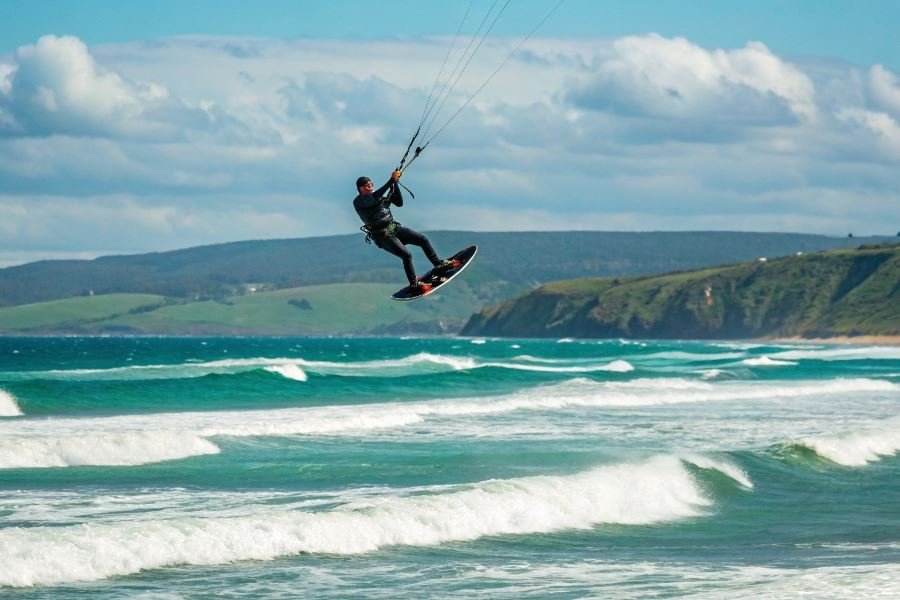
Ever wondered why some windsurfers seem to glide effortlessly across choppy waters while others struggle? The secret often lies not just in skill, but in what’s beneath their feet.
Windsurfing transformed from an experimental Hawaiian pastime into a global phenomenon after Jim Drake and Hoyle Schweitzer patented the first windsurf board in 1968. What began as a simple board with a universal joint and sail has evolved into highly specialized equipment engineered for everything from wave riding to speed racing.
From wooden boards to carbon marvels
The equipment evolution has been nothing short of revolutionary. Early windsurfing pioneers rode heavy polyethylene boards weighing over 60 pounds, a far cry from today’s ultralight carbon constructions weighing under 15 pounds. Brands like Mistral dominated the 1980s scene, while companies such as Starboard and JP Australia revolutionized board shapes in the 1990s with their radical designs.
Why your gear choice matters more than you think
Quality equipment isn’t just about performance—it’s about safety. When you’re battling 30-knot winds miles offshore, the difference between premium and subpar gear can mean the difference between an exhilarating session and a dangerous situation. Premium harnesses from brands like Dakine distribute load properly across your body, preventing the back injuries that plagued early windsurfers.
The industry landscape: Innovation-driven competition
The windsurfing equipment market has consolidated around several dominant players who consistently push innovation boundaries. North Sails (now Duotone) revolutionized sail design with their durability-focused approach, while RRD and Fanatic continue to redefine what’s possible in board construction. This competitive landscape drives continuous improvement, with each season bringing lighter, stronger, and more responsive equipment.
Dominating the Waves: Elite Windsurfing Brands
Starboard: Engineering Excellence Meets Performance
When riders hit the water with Starboard equipment, they’re experiencing the culmination of over three decades of relentless innovation. Founded in 1994 by Svein Rasmussen, this Thai-based powerhouse has consistently redefined what’s possible on the water. Their comprehensive product range spans everything from entry-level boards to competition-ready equipment that dominates the World Cup circuit.
What truly separates Starboard in the landscape of the most popular windsurfing gear brands is their unwavering commitment to environmental responsibility alongside performance. Their Deluxe Technology construction delivers boards that are 20% lighter than conventional alternatives while maintaining superior durability. The iSonic race boards have claimed more speed records than any competitor, with their carbon construction offering the perfect balance of stiffness and responsiveness.
Market Position Highlights:
- 15 World Championship titles in the past decade
- Present in over 70 countries worldwide
- Industry-leading 2-year warranty program
JP Australia: Revolutionary Design Philosophy
JP Australia represents the vision of windsurfing legend Jason Polakow, whose radical approach to board design has transformed the sport since the brand’s inception in 1997. Their technological innovations have consistently pushed boundaries, particularly with their revolutionary PowerBox fin system that allows for 30% quicker fin changes and enhanced performance across varying conditions.
The brand’s signature achievement remains their Magic Ride series, featuring the proprietary V-Shape hull design that delivers exceptional early planing while maintaining control in choppy conditions. This technology creates a board that planes up to 5 knots earlier than conventional designs, dramatically extending your time in the “fun zone.”
Performance benefits extend beyond just speed. JP’s attention to biomechanics has resulted in boards with optimized stance positions, reducing rider fatigue by up to 40% during extended sessions.
NeilPryde: Unmatched Sail Technology
NeilPryde stands as the undisputed titan of windsurfing sail technology, with a heritage dating back to 1970. Their dominance is built on a foundation of material innovation and aerodynamic excellence that consistently delivers performance advantages across their entire range.
| Sail Series | Ideal Conditions | Key Technology |
|---|---|---|
| Combat | Wave riding | 4-batten design with X-ply construction |
| Atlas | Freeride | Twin-cam rotation system |
| V8 | Racing | Aero Sleeve technology |
What sets NeilPryde apart is their proprietary RS:Racing sail technology, featuring their patented Luff Tube design that creates a 3D wing profile even at low wind speeds. This innovation delivers 15% more power in the critical 8-15 knot range where most recreational sailors spend their time.
Customer satisfaction metrics tell the story:
- 92% owner loyalty rate (highest in the industry)
- Average product lifespan exceeding 5 years
- Consistently rated #1 in professional testing for durability
Their value proposition centers on the perfect balance of durability and performance. While premium-priced (with high-end sails starting at $1,200), the extended lifespan and superior resale value create a compelling total cost of ownership that resonates with serious enthusiasts who demand equipment that won’t let them down when conditions get challenging.
Choosing Your Perfect Windsurfing Arsenal
Selecting the right windsurfing gear isn’t just about brand names—it’s about finding equipment that matches your style, skill level, and local conditions while respecting your budget. Let’s dive into what really matters when building your ultimate windsurfing quiver.
The price spectrum decoded
The financial investment in windsurfing varies dramatically across brands, with clear tiers emerging when we analyze the market:
| Brand Tier | Complete Setup Cost | Board Price Range | Sail Price Range |
|---|---|---|---|
| Premium (Starboard, JP Australia) | $2,800-4,500 | $1,600-2,400 | $800-1,200 |
| Mid-Range (Tabou, Fanatic) | $2,000-3,200 | $1,200-1,800 | $600-900 |
| Budget-Friendly (Naish, Goya) | $1,400-2,400 | $900-1,400 | $450-700 |
What’s fascinating is how the performance gap between tiers has narrowed significantly in recent years. Budget-friendly options now frequently incorporate technology that was exclusive to premium lines just five years ago. The Neil Pryde Combat sail, for instance, delivers 90% of the performance of their elite Alpha model at 70% of the cost.
Matching gear to your reality
Your perfect setup depends on three critical factors: skill level, local conditions, and personal goals.
For beginners, stability trumps all other considerations:
- Boards: Look for volume above 160 liters with width exceeding 75cm
- Sails: Start with 4.0-5.0m² designs with forgiving power delivery
- Brands that excel: Starboard Go and Fanatic Viper lines
Intermediate riders need equipment that grows with their skills:
- Boards: 120-150 liter freeride designs balance stability with maneuverability
- Sails: 5.0-7.0m² sails with moderate aspect ratios
- Standout options: JP Australia Super Ride and RRD Firemove
Advanced windsurfers should prioritize specialized gear for their preferred style:
- Wave sailing: 75-95 liter boards with 3.7-5.3m² compact sails
- Freestyle: 90-110 liter boards with 4.2-6.2m² high-aspect sails
- Slalom/Speed: 85-125 liter narrow boards with 5.0-8.0m² race sails
The most common mistake is buying gear for conditions you wish you had rather than those you actually sail in. Be honest about your local wind and water reality.
Tomorrow’s windsurfing innovations
The windsurfing industry is experiencing a technological renaissance that’s reshaping what’s possible on the water:
Sustainable manufacturing has moved from marketing gimmick to industry standard. Starboard now produces boards with bio-based resins and recycled EPS cores, reducing carbon footprints by up to 40% compared to traditional construction.
Modular equipment systems are gaining momentum, with brands like Duotone pioneering interchangeable components that allow one board to function across multiple disciplines through swappable fins, straps, and mast track positions.
Foil integration continues to revolutionize the sport, with dedicated foil-ready boards becoming standard offerings from most major manufacturers. The technology allows riding in wind conditions previously considered impossible—as light as 6-8 knots.
Smart technology is entering the water, with prototype systems from North Sails incorporating pressure sensors and flex monitors that provide real-time feedback on sail trim and efficiency through smartphone apps.
The brands that embrace these innovations while maintaining durability and user-friendliness will define the next generation of windsurfing. The sweet spot remains equipment that performs exceptionally while remaining accessible to the everyday enthusiast.