
Ever pulled a life jacket from storage only to find it moldy, straps deteriorating, or buckles broken? That split-second of doubt could be the difference between safety and disaster when you’re suddenly overboard.
Life jackets aren’t just another piece of gear—they’re engineered safety devices designed to keep you afloat when everything else fails. Proper maintenance doesn’t just save you money; it saves lives. A well-maintained life jacket can last 7-10 years, while neglected ones might fail when you need them most.
The safety stakes couldn’t be higher. Coast Guard data shows that 86% of drowning victims weren’t wearing life jackets, and of those who were, equipment failure contributed to nearly 12% of fatalities. Regular inspection and maintenance aren’t optional—they’re essential.
Different materials demand different care approaches:
Material-specific maintenance requirements
| Material Type | Common Challenges | Care Requirements |
|---|---|---|
| Foam (most common) | Water absorption, compression | Air dry completely, store uncompressed |
| Inflatable | Leaks, CO2 cartridge issues | Regular inflation tests, cartridge inspection |
| Neoprene/Nylon | UV degradation, salt damage | Rinse after use, UV protectant application |
The fabric and foam in your life jacket gradually break down from exposure to sunlight, chlorine, salt, and body oils. Even invisible damage can compromise buoyancy—the very thing you’re counting on in an emergency.
Remember: Your life jacket can’t do its job if you don’t do yours first. Proper care isn’t just about longevity—it’s about reliability when every second counts.
Maximize Your Life Jacket’s Lifespan With These Care Essentials
Life jackets aren’t just safety equipment—they’re investments in your peace of mind on the water. Proper maintenance doesn’t just save you money; it could literally save your life when you need that flotation most. The difference between a well-maintained life jacket and a neglected one becomes starkly apparent in emergency situations, which is why knowing how to care for a life jacket: tips for extending its lifespan should be essential knowledge for every water enthusiast.
Material-Specific Cleaning Techniques
Different life jacket materials demand different cleaning approaches:
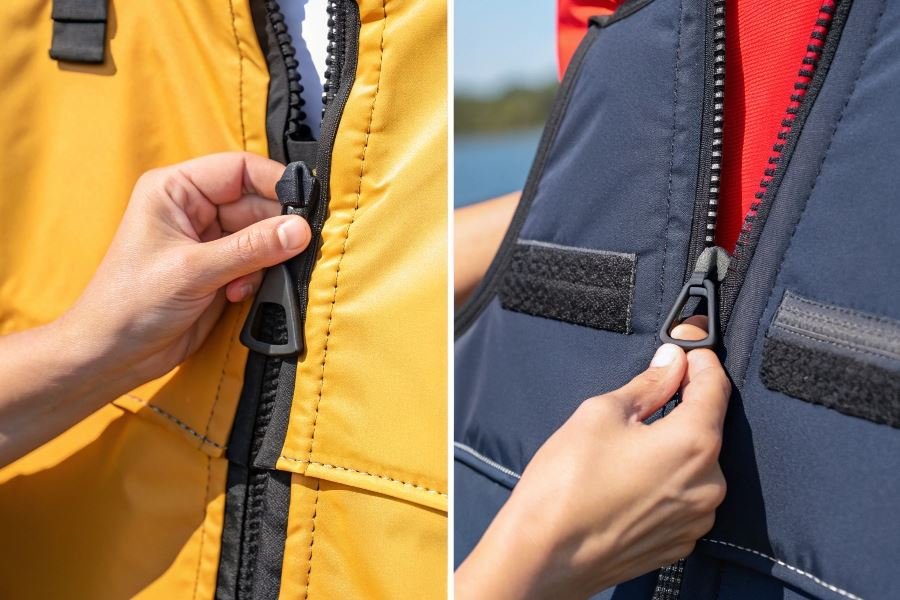
Nylon/Vinyl Jackets: Mix mild soap (never bleach!) with warm water. Using a soft-bristled brush, gently scrub away salt, sand, and sunscreen residue. Pay special attention to buckles and zippers where grime accumulates.
Neoprene Jackets: These require gentler handling. Use specialized NRS Wetsuit Shampoo or mild soap with cool water. Never wring or twist neoprene—press water out instead.
Foam-Filled PFDs: Submerge in soapy water and gently agitate. Rinse thoroughly as soap residue can degrade materials over time.
Pro tip: Remove any detachable parts before cleaning and treat them separately to prevent damage to connection points.
Strategic Drying and Storage Methods
Improper drying causes 70% of preventable life jacket damage. Follow these protocols:
- Initial Water Removal: Hang your PFD to drip-dry for 30 minutes after rinsing
- Complete Air Drying: Place in a well-ventilated area away from direct sunlight
- Timing Check: Never store until 100% dry—typically 24-48 hours depending on humidity
| Storage Don’ts | Storage Do’s |
|---|---|
| Compressed in bags | Hang on wide, padded hangers |
| Direct sunlight | Cool, dry closets or gear rooms |
| Damp environments | Climate-controlled spaces |
| Near heat sources | Away from chemicals and fuels |
Storage position matters: Store inflatable life jackets partially inflated to prevent material creasing and bladder deterioration.
Systematic Inspection Routines
Develop a habit of thorough inspections:
Before Every Use:
- Check for visible damage to outer shell
- Test all buckles, zippers, and straps
- Ensure no foam compression or shifting
Monthly Deep Inspection:
- Examine seams for thread deterioration
- Test buoyancy in controlled water environments
- Check reflective materials for visibility
- Inspect inflatable jackets’ CO2 cartridges for corrosion
For inflatable PFDs: Fully inflate manually and leave for 24 hours. If it loses air, it needs professional service immediately.
Annual Professional Assessment: Even with diligent home care, have your life jacket professionally inspected annually by certified technicians at your local West Marine or specialized water safety equipment provider.
Remember that most quality life jackets, when properly maintained, should provide 5-7 years of reliable service. However, heavy use in saltwater environments may reduce this timeframe. The small effort of regular maintenance delivers enormous returns—both financially and in the confidence that your safety equipment will perform flawlessly when you need it most.
Maximizing Your Life Jacket’s Lifespan
The seasonal maintenance playbook
Let’s face it—your life jacket works hard to keep you safe on the water, and deserves some serious TLC throughout the year. Creating a seasonal maintenance schedule isn’t just smart; it’s essential for preserving that critical flotation when you need it most.
Spring prep should be your annual deep-clean ritual. As boating season approaches, wash your jacket thoroughly with mild soap and fresh water, removing any salt, chlorine, or mildew that accumulated during storage. This is also the perfect time to inspect all straps, buckles, and seams for winter damage.
During summer’s peak usage, implement a quick-rinse policy after every outing. Even freshwater contains microorganisms and minerals that can degrade materials over time. A 60-second rinse followed by proper air-drying away from direct sunlight can prevent 90% of common deterioration issues.
When fall arrives, perform a mid-season deep clean before considering storage. Pay special attention to zippers and hardware, applying appropriate lubricants to metal components that might corrode during winter months.
For winter storage, ensure your life jacket is completely dry, then store it in a cool, dry place with good ventilation. Avoid compressed storage that can damage foam panels—hanging storage systems work best for maintaining proper shape.
The difference between a life jacket that lasts 3 years versus 10+ years often comes down to consistent seasonal maintenance rather than quality of construction.
When safety trumps sentimentality
Even with impeccable care, every life jacket eventually reaches retirement age. Recognizing these warning signs is non-negotiable for water safety:
- Faded color or brittle fabric indicates UV damage that has likely affected internal components
- Compressed or hardened foam that doesn’t spring back when squeezed
- Torn straps, broken buckles, or failed stitching at stress points
- Mildew smell that persists despite cleaning (indicates internal degradation)
- More than 5 years of heavy use regardless of visible condition
The most dangerous sign is when your jacket fails the “float test”—if you place it in water and it doesn’t float with at least 90% of its surface above water, replace it immediately.
The life jacket longevity blueprint
Extending your life jacket’s service life comes down to these proven practices:
- Store properly in dry, ventilated areas away from chemicals, fuels, and direct sunlight
- Clean thoroughly after exposure to salt water, chlorine, or heavy soiling
- Dry completely before storage—never compress or fold while damp
- Avoid dragging across rough surfaces like boat decks or docks
- Conduct quarterly inspections of all components regardless of usage
Material-specific care makes a significant difference. Nylon and neoprene jackets benefit from occasional fabric conditioner treatments, while foam-only models should never be exposed to petroleum-based products that can dissolve internal components.
Maintenance investment versus replacement costs
| Maintenance Action | Time Investment | Potential Lifespan Extension |
|---|---|---|
| Seasonal cleaning | 30 min, 4x yearly | 2-3 additional years |
| Proper storage | 10 min setup once | 1-2 additional years |
| Post-use rinse | 2 min per use | Prevents 80% of premature failures |
| Annual inspection | 15 min yearly | Early problem identification |
Remember that a quality life jacket typically costs between 60−150, while proper maintenance requires minimal investment beyond time and basic supplies. The math clearly favors maintenance over frequent replacement—not to mention the incalculable value of reliable performance when you need it most.
By following these long-term strategies, your life jacket will remain a reliable safety partner for years of water adventures, ready to perform its critical function when every second counts.