
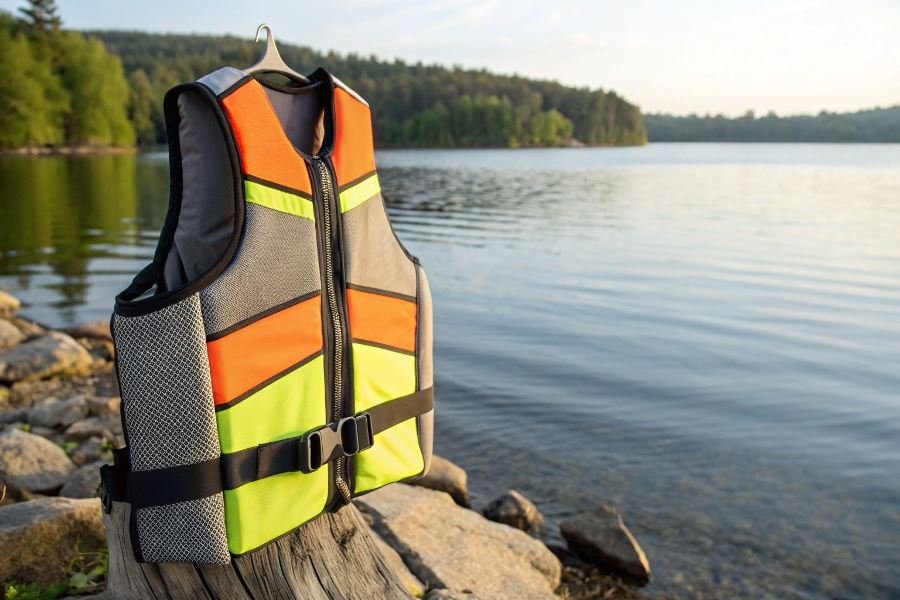
Every second counts when water safety is at stake. Last summer alone, drowning claimed the lives of over 800 children in the United States—a statistic that should stop every parent in their tracks. The right life jacket isn’t just an accessory; it’s potentially the difference between life and tragedy.
When selecting a life jacket for your child, three critical factors demand your immediate attention: proper fit, Coast Guard approval, and age-appropriate design. A life jacket that rides up or shifts position in water essentially becomes useless at the moment your child needs it most.
The non-negotiable Coast Guard stamp
The U.S. Coast Guard approval isn’t just bureaucratic red tape—it’s your assurance that the life jacket has been rigorously tested to perform when it matters. Look for the distinctive approval number and Type designation (typically Type II or III for children). Type II jackets provide more buoyancy and will turn most unconscious wearers face-up, while Type III offers greater comfort but requires the wearer to maintain position.
Matching jackets to developmental stages
A toddler’s life jacket differs dramatically from one designed for a pre-teen, and for good reason:
- Infants (under 30 lbs): Require head support and a grab handle
- Children (30-50 lbs): Need sufficient buoyancy with freedom of movement
- Youth (50-90 lbs): Benefit from designs that accommodate growing independence
Remember: a properly fitted life jacket should feel snug but not restrictive. When lifted by the shoulders, the jacket shouldn’t rise above your child’s ears or chin.
Essential Safety Features in Children’s Life Jackets
When it comes to water safety, there’s simply no room for compromise. Children’s life jackets represent that critical line between fun water adventures and potential tragedy. As a parent or guardian, knowing what to pay attention to when selecting a life jacket can make all the difference in keeping young ones safe during aquatic activities.
Finding the Perfect Fit
The most crucial aspect of any children’s life jacket is proper fit—a poorly fitted PFD (Personal Flotation Device) might as well be no PFD at all. When shopping for children’s life jackets, what to pay attention to first is the weight range, not age or size. The U.S. Coast Guard categorizes children’s life jackets into specific weight classes:
- Infant: 8-30 pounds
- Child: 30-50 pounds
- Youth: 50-90 pounds
Adjustability is non-negotiable. Look for jackets with at least three adjustable straps—two at the waist and one at the chest. This ensures the jacket stays snug during water activities, preventing it from riding up over the child’s head.
Perhaps the most overlooked yet critical feature is the crotch strap. This simple addition prevents the jacket from slipping over a child’s head when they’re in the water—a potential lifesaver in emergency situations.
Buoyancy Matters
Different water environments demand different levels of buoyancy:
| Water Environment | Recommended Buoyancy | Features to Look For |
|---|---|---|
| Calm, supervised pools | 7-12 lbs of buoyancy | Type III jackets, more mobility |
| Lakes, slow-moving rivers | 12+ lbs of buoyancy | Type II jackets, head support |
| Ocean, rough water | 15+ lbs of buoyancy | Type I jackets, maximum flotation |
The buoyancy rating indicates how much weight the jacket can keep afloat. For children under 30 pounds, ensure the life jacket turns them face-up if they fall into the water unconscious—a feature found in Type I and II jackets approved by the U.S. Coast Guard.
Safety Elements That Save Lives
When evaluating children’s life jackets, three critical safety elements deserve special attention:
Head Support Design
For infants and toddlers, head support is absolutely essential. Look for jackets with padded neck collars designed to keep a child’s head above water and face-up. This feature becomes particularly important if a child loses consciousness in the water.
Grab Handles
Emergency retrieval handles might seem like a small detail, but they’re game-changers in rescue situations. These sturdy fabric loops, typically positioned on the upper back of the jacket, allow for quick extraction from water. The best designs feature brightly colored handles that stand out against the jacket material.
Visibility Features
In open water, visibility can mean the difference between a quick rescue and a prolonged search. Premium children’s life jackets include:
- Reflective materials that catch light even in low visibility conditions
- Bright, contrasting colors (orange, yellow, and red are industry standards)
- Whistles attached to the jacket for audible signaling
The American Academy of Pediatrics recommends testing your child’s life jacket in a controlled water environment before any major water excursion. Have them practice floating and becoming comfortable with how the jacket feels and functions.
Remember that even the best life jacket is just one component of water safety. Constant supervision remains the most important safety measure of all.
Maximizing Your Investment in Children’s Life Jackets
When it comes to keeping kids safe on the water, a quality life jacket isn’t just a purchase—it’s an investment in peace of mind. But how do you ensure that investment pays dividends over the long haul? Let’s dive into the essentials of maintaining, replacing, and selecting the perfect life jacket for your young water enthusiast.
Extending Life Jacket Lifespan Through Proper Care
The difference between a life jacket that lasts one season versus several years often comes down to simple maintenance habits. After each use, rinse your child’s life jacket with fresh water to remove salt, chlorine, and other contaminants that can degrade materials over time.
Never store a damp life jacket! Mildew can quickly compromise both the appearance and structural integrity of the vest. Instead:
- Hang dry completely in a well-ventilated area away from direct sunlight
- Avoid high-heat drying methods that can warp or damage buoyant materials
- Store in a cool, dry place during off-seasons
For deeper cleaning, use mild soap and a soft brush to address stubborn stains. Products like Mustang Survival offer specialized cleaners designed specifically for life jacket materials that won’t compromise buoyancy or structural integrity.
A well-maintained life jacket isn’t just cleaner—it’s safer. Regular inspection should become second nature before every water outing.
Growth Milestones and Replacement Indicators
Children outgrow their life jackets just like they outgrow their shoes. The perfect fit today might be dangerously restrictive or loose tomorrow. Watch for these critical indicators that it’s time for an upgrade:
Weight range indicators: Most children’s life jackets are rated for specific weight ranges (e.g., 30-50 lbs). Once your child exceeds this range, safety effectiveness diminishes significantly.
Fit test failures: Perform the “lift test” regularly—lift the shoulders of the life jacket upward. If it rises past your child’s chin or ears, it’s too loose and needs replacement.
| Age Milestone | Typical Replacement Reason | Safety Check |
|---|---|---|
| 1-3 years | Weight/size increase | Crotch strap still secure |
| 4-7 years | Activity type changes | Chest fit appropriate |
| 8-12 years | Wear and tear | Buoyancy still adequate |
Beyond growth, physical wear indicators demand immediate replacement:
- Faded color (UV damage compromises material strength)
- Torn straps or broken buckles
- Compressed or hardened foam inserts
- Mildew that cannot be removed
Balancing Comfort With Critical Safety Features
The most effective life jacket is the one your child will actually wear without complaint. Modern designs from manufacturers like O’Neill and Stearns have revolutionized comfort without compromising safety.
Look for these comfort features that don’t sacrifice protection:
- Segmented foam panels that move with your child
- Soft, chafe-free materials around neck and armholes
- Lightweight designs that don’t restrict movement
However, never compromise on these non-negotiable safety elements:
Head support for younger children who may not have developed neck strength
Grab handles that allow for quick retrieval from water
Bright, visible colors that stand out against water backgrounds
The ultimate balance comes from matching the life jacket to your child’s specific water activities. A jacket designed for wakeboarding offers different features than one intended for casual swimming or boating.
Remember that comfort features should enhance—never replace—the fundamental safety requirements established by the U.S. Coast Guard. The best life jacket combines compliance with comfort in a package your child will happily wear every time they approach the water.