
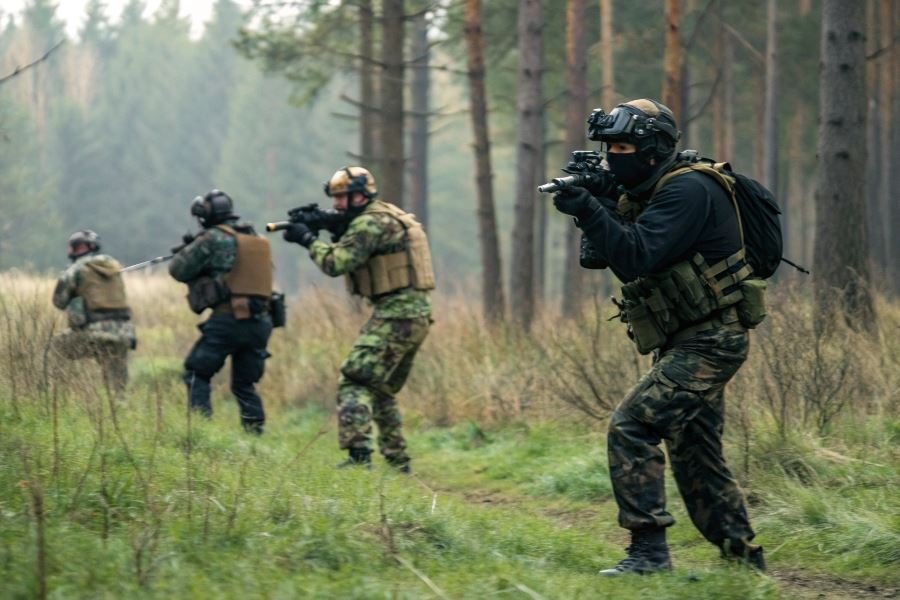
Ever caught a 6mm plastic BB traveling at 350 feet per second with your bare eye? Trust me, you don’t want to. That’s why protective gear isn’t just an accessory in airsoft—it’s your first line of defense in a sport where projectiles fly at speeds that would make your grandmother faint.
When players step onto an airsoft field without proper protection, they’re not just risking welts and bruises—they’re gambling with their vision, hearing, and dental health. The right protective gear transforms airsoft from potentially dangerous to thrillingly safe. Think of it as your personal force field against tiny plastic missiles.
The real risks behind the fun
Let’s get real: airsoft BBs can cause significant damage. Eye injuries top the list—a direct hit can lead to corneal abrasions, retinal damage, or worse. Teeth aren’t far behind; dental repairs after taking a BB to an unprotected mouth can cost thousands of dollars. Even exposed skin can suffer painful welts that take days to heal.
Know the rules or stay home
Most fields won’t even let you through the gate without meeting minimum protection requirements. ANSI Z87.1-rated eye protection isn’t just recommended—it’s mandatory at virtually every reputable venue in the country. Many fields also require full-face protection for players under 18.
“Safety regulations aren’t suggestions—they’re the non-negotiable foundation that keeps our sport thriving,” as veteran players often remind newcomers.
Beyond field rules, some states and municipalities have specific laws governing airsoft safety equipment, particularly for public play areas. Ignorance of these regulations won’t protect you from potential legal consequences or field ejection.
Armor Up: Essential Protective Gear for Airsoft
When you step onto the airsoft field, you’re entering a world where plastic BBs fly at speeds up to 400 feet per second. That’s why proper protection isn’t just recommended—it’s absolutely critical. Understanding necessary protective gear for airsoft: what you need to know can mean the difference between an exhilarating day of tactical fun and a painful experience you won’t want to repeat.
Let’s break down the essential protective equipment by body region to ensure you’re fully covered from head to toe.
Face and Eye Protection: Your First Line of Defense
Your eyes and face are priority number one in airsoft. A direct hit to an unprotected eye can cause permanent damage—this is non-negotiable territory.
Full-Face Masks: These provide comprehensive protection for your entire face. The Dye i5 masks offer exceptional fog resistance with thermal lenses and outstanding peripheral vision—crucial when you’re scanning for opponents from cover.
Goggles: If you prefer more breathability, quality goggles like ESS Land Ops paired with a lower face mesh mask create a modular system. Look for ANSI Z87.1+ or MIL-PRF-32432 ratings to ensure they can withstand direct impacts.
Mesh Options: Metal mesh masks protect against dental damage (a $2,000+ dental bill makes that $40 mask seem like a bargain). They offer superior breathability but can allow tiny BB fragments through, so some players wear shooting glasses underneath for complete protection.
| Protection Type | Pros | Cons | Recommended For |
|---|---|---|---|
| Full-Face Mask | Complete protection, integrated system | Can fog up, less customizable | Beginners, CQB players |
| Goggles + Mesh | Better breathability, customizable | Multiple pieces to adjust | Experienced players |
| Mesh Only | Maximum airflow, no fogging | Potential fragment issues | Outdoor play in dry conditions |
Head and Neck Protection: Don’t Forget What’s Above and Below
A BB to the bare scalp or exposed neck can leave welts that last for days.
Helmets: Beyond looking tactical, helmets like the Team Wendy EXFIL provide impact protection and mounting points for accessories. For a budget option, MICH/ACH replicas offer solid protection without breaking the bank.
Balaclavas: These thin fabric head coverings prevent painful scalp shots while managing sweat. In colder weather, they provide thermal regulation—a win-win for comfort and protection.
Neck Guards: Often overlooked until you take your first neck shot. High-collar shirts, shemagh scarves, or dedicated neck protectors like those from Valken prevent those particularly painful hits to the throat and cervical vertebrae.
Body Protection: Torso and Beyond
Your torso houses vital organs and sensitive areas that deserve proper shielding.
Chest Rigs: Lightweight options like the Condor MCR provide moderate protection while offering practical magazine storage. They’re perfect for players who prioritize mobility over maximum protection.
Plate Carriers: These heavier options like the 5.11 TacTec distribute weight evenly and can accept foam or rubber plates for additional impact protection. They’re ideal for CQB environments where hits come fast and hard.
Padded Clothing: Purpose-built airsoft garments feature strategic padding in vulnerable areas. Brands like Valken offer compression shirts with integrated padding for shoulders, ribs, and spine—areas particularly susceptible to painful hits.
Remember that while protection is essential, mobility remains crucial in airsoft. The best setup balances safety with your ability to move, aim, and react quickly. Start with maximum protection as a beginner, then adjust based on your play style and pain tolerance as you gain experience.
Gear Up Smart: Making Informed Airsoft Protection Choices
Stepping onto the airsoft field without proper protection is like showing up to a gunfight with a water balloon. Your gear choices directly impact not just your safety, but your overall experience and performance. Let’s break down how to make protection decisions that keep you in the game longer and playing better.
Protection meets performance
The eternal airsoft dilemma: maximum protection often means minimum mobility. Finding your sweet spot requires understanding your playing style and environment.
Full-face masks offer comprehensive protection but can limit peripheral vision and breathing comfort during intense matches. Meanwhile, mesh lower face masks paired with ballistic-rated goggles provide excellent protection while maintaining better breathability—crucial during those adrenaline-pumping woodland skirmishes.
The best protective gear becomes an extension of yourself, not an obstacle to overcome.
For CQB (Close Quarters Battle) environments, prioritize full-coverage options like the Dye i5 mask system, which offers exceptional fog resistance and face protection. For outdoor field play, modular systems allow you to adjust protection based on engagement distance and intensity.
Temperature considerations matter too—what works in January might be unbearable in July. Lightweight chest protectors with ventilation channels from brands like Condor balance impact protection with heat management.
Maintenance extends gear lifespan
Protective gear isn’t “set and forget”—it requires regular inspection and maintenance to remain effective.
| Equipment Type | Inspection Frequency | Replacement Indicators |
|---|---|---|
| Eye Protection | Before every game | Scratches, cracks, loose fit |
| Face Masks | Monthly | Mesh deformation, strap elasticity loss |
| Gloves | Every 3-6 months | Worn padding, holes, seam separation |
| Body Armor | Bi-annually | Compromised plates, torn carriers |
Cleaning protocols matter. Sweat and dirt accumulation not only creates unpleasant odors but can degrade materials over time. Most hard plastic components can be cleaned with mild soap and water, while fabric elements often benefit from antimicrobial sprays like those from FrogLube.
Never use harsh chemicals on polycarbonate lenses—they can compromise impact resistance. Instead, use microfiber cloths and lens-specific cleaners to maintain clarity without damaging protective coatings.
Player progression gear packages
Beginner Package:
Start with safety fundamentals that won’t break the bank but won’t leave you vulnerable either:
- ANSI Z87.1+ rated full-face mask (essential non-negotiable)
- Padded gloves with knuckle protection
- Neck protection (simple wrap-around design)
- Basic knee pads
Intermediate Package:
As your skills develop, so should your gear:
- Separate ballistic goggles and lower mesh mask combination
- Tactical vest with front and back protection
- Enhanced gloves with improved dexterity
- Reinforced elbow and knee protection
- Padded belt system for hip protection
Advanced Package:
Seasoned players benefit from specialized protection tailored to their role:
- Multiple eye protection options (full mask for CQB, goggles for field play)
- Role-specific armor (lighter for scouts, more comprehensive for support gunners)
- Articulated joint protection that moves with you
- Helmet with rail system for accessory mounting
- Climate-adaptive base layers with moisture-wicking properties
Remember that even the most advanced players never compromise on eye protection—it’s the one area where “good enough” isn’t good enough. The Revision Desert Locust goggle system remains popular among veterans for its balance of protection, comfort, and optical clarity.
Your protective gear journey should evolve with your skills, playing environment, and role preferences—but always prioritize safety over aesthetics or convenience.