
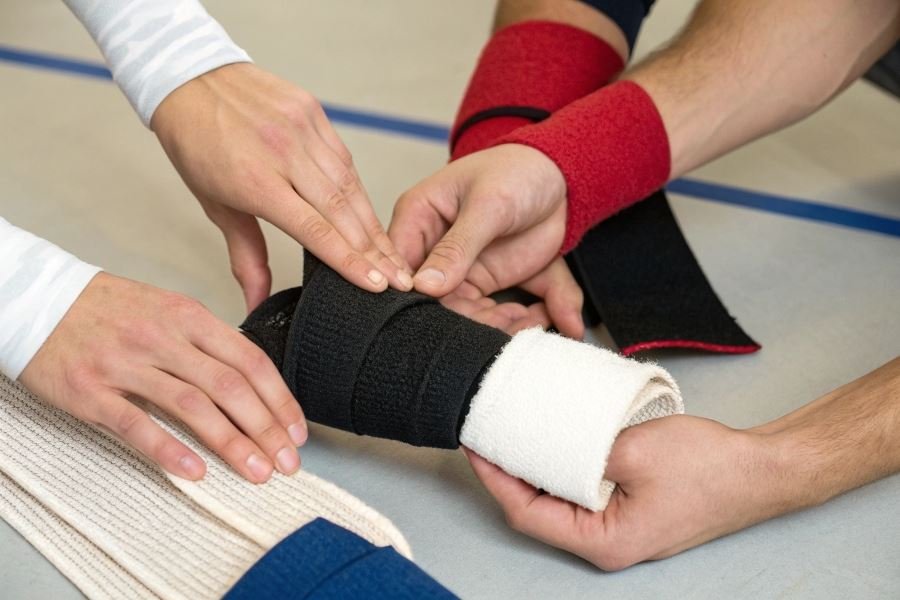
Ever watched an athlete grimace through pain, wrapped in what looks like a mummy’s bandage? That’s not just for show. The right bandage can mean the difference between a quick recovery and a season-ending setback.
When injury strikes or prevention becomes priority, you’re faced with a crucial decision: elastic or rigid support? These aren’t just different versions of the same tool – they’re distinct approaches to body mechanics during activity and recovery.
Elastic bandages flex and move with you, providing compression that improves circulation while still allowing range of motion. Think of them as loyal training partners that adapt to your movements. Meanwhile, rigid bandages act more like protective armor, limiting movement to prevent further damage and providing structural support when your body needs it most.
The stakes couldn’t be higher. Studies show that proper support can reduce recovery time by up to 30% for common sports injuries. But choose wrong, and you might actually hinder healing or create new problems.
Your selection should be guided by several factors:
- Injury type and severity: Acute sprains often need rigid support; chronic conditions may benefit from elastic
- Activity demands: Contact sports vs. endurance activities require different approaches
- Recovery phase: What works during initial injury differs from rehabilitation stages
The bandage that perfectly supports a basketball player’s ankle might be completely wrong for a runner’s knee. Understanding these differences isn’t just smart—it’s essential for getting back in the game safely.
The Ultimate Bandage Showdown: Elastic vs Rigid Support Systems
When injury strikes, your choice of bandage can make all the difference between a quick recovery and prolonged sideline time. The sports medicine world offers two primary contenders in the support arena: elastic and rigid bandages. Each brings distinct advantages to the table, and knowing which to reach for can significantly impact your healing journey.
Elastic Bandages: Dynamic Support for Active Recovery
Elastic bandages have revolutionized the way athletes manage minor injuries while maintaining mobility. These flexible warriors provide graduated compression that improves circulation, reduces swelling, and offers moderate support without completely restricting movement. When considering elastic vs rigid sports bandages: which one is right for you often depends on your activity level and injury severity.
The magic of elastic bandages lies in their versatility. Made primarily from cotton interwoven with elastic fibers like spandex or rubber, they conform perfectly to complex body contours like ankles, wrists, and knees. Modern elastic bandages from brands like ACE feature self-adhering properties, eliminating the need for metal clips that can cause skin irritation during activity.
Ideal applications for elastic bandages include:
- Mild to moderate sprains
- Muscle strains requiring compression
- Post-workout support
- Injury prevention during sports
- Early rehabilitation phases
Rigid Bandages: Maximum Stability When You Need It Most
When complete immobilization becomes necessary, rigid bandages step into the spotlight. These unyielding supports transform from flexible strips into rock-solid structures through chemical reactions in materials like plaster of Paris or fiberglass-reinforced resins.
The primary function of rigid bandages is immobilization—keeping injured joints perfectly aligned to facilitate proper healing. Unlike their elastic counterparts, rigid bandages sacrifice comfort for stability, creating a protective shell that prevents potentially damaging movements.
The difference in healing outcomes can be dramatic when the correct bandage type is selected for specific injuries.
Material Matters: Composition and Durability
| Bandage Type | Primary Materials | Durability | Water Resistance | Weight |
|---|---|---|---|---|
| Elastic | Cotton, spandex, rubber, polyester | 3-6 months with proper care | Low to moderate | Light |
| Rigid | Plaster of Paris, fiberglass, polyurethane | Until healing complete (typically 4-8 weeks) | Varies (fiberglass is waterproof) | Heavy to moderate |
Modern elastic bandages have evolved significantly from their predecessors. Premium options now incorporate antimicrobial treatments to prevent odor and skin infections during extended wear. Some feature graduated compression zones that provide targeted pressure where it’s most beneficial.
Rigid bandage technology has similarly advanced, with synthetic casting materials from 3M offering significant improvements over traditional plaster. These newer materials are lighter, more durable, and some are even waterproof—allowing patients to shower without protective covers.
Durability considerations:
- Elastic bandages require regular washing and proper storage to maintain elasticity
- Rigid casts are single-use but must withstand daily activities for weeks
- Environmental factors like humidity and temperature affect both types differently
The decision between elastic and rigid support ultimately comes down to injury severity, recovery goals, and activity requirements. For active individuals needing moderate support while maintaining function, elastic bandages provide the perfect balance. When complete healing demands absolute immobilization, rigid options deliver uncompromising stability that elastic alternatives simply cannot match.
Making the Right Choice: Your Perfect Sports Bandage
Injury-specific bandage recommendations
When recovering from an injury, choosing the right bandage can significantly impact your healing process. Elastic bandages excel for soft tissue injuries like muscle strains and minor sprains, providing gentle compression that reduces swelling while allowing some movement.
For example, a grade 1 ankle sprain typically responds well to an elastic bandage that offers moderate support while maintaining circulation. The gentle pressure helps control inflammation without restricting necessary movement that promotes healing.
Rigid bandages become essential for more severe injuries requiring immobilization. Fractures, severe sprains, and post-surgical recovery often demand the structural support that only rigid bandages provide.
The difference between elastic and rigid support isn’t just about comfort—it’s about creating the optimal healing environment for your specific injury.
Consider this injury-specific guide:
| Injury Type | Recommended Bandage | Key Benefit |
|---|---|---|
| Mild sprains | Elastic | Allows controlled movement while reducing swelling |
| Muscle strains | Elastic | Provides compression without restricting blood flow |
| Severe sprains | Rigid | Immobilizes joint to prevent further damage |
| Fractures | Rigid | Maintains bone alignment during healing |
| Tendonitis | Elastic | Offers support while allowing therapeutic movement |
Sport-specific bandage considerations
Different sports place unique demands on your body, influencing which bandage type serves you best.
Contact sports athletes often benefit from rigid bandages during competition. Football players frequently use rigid taping techniques to protect vulnerable joints from the unpredictable forces of tackles and collisions.
For endurance athletes like marathon runners, elastic bandages typically provide the ideal balance of support and mobility. These athletes need protection that won’t restrict their range of motion or cause discomfort over extended periods.
Basketball and volleyball players—who rely on explosive jumping movements—often prefer a hybrid approach: rigid support for practice sessions when recovering from injuries, transitioning to elastic support during competition for greater mobility.
Your playing surface matters too. Athletes competing on harder surfaces like tennis courts or indoor basketball floors generally benefit from more supportive bandaging than those on softer surfaces like grass fields.
When to seek professional guidance
While many bandaging decisions can be made independently, certain situations demand professional input.
Consult a healthcare provider when:
- Your injury hasn’t improved after 48-72 hours of self-care
- You’re experiencing numbness, tingling, or color changes
- You’re unsure about the severity of your injury
- You need to return to sport quickly after an injury
Physical therapists and sports medicine physicians can provide customized bandaging recommendations based on your specific injury, sport, and recovery timeline. Many professional teams work with athletic trainers from organizations like the National Athletic Trainers’ Association to develop personalized support protocols.
The right bandaging strategy evolves throughout your recovery. What works during the acute phase of an injury may not be optimal during rehabilitation. Professional guidance ensures your support strategy adapts appropriately as you heal.
Remember that proper application technique is just as important as choosing the right type of bandage. Even the perfect bandage selection can be ineffective—or potentially harmful—if applied incorrectly.