
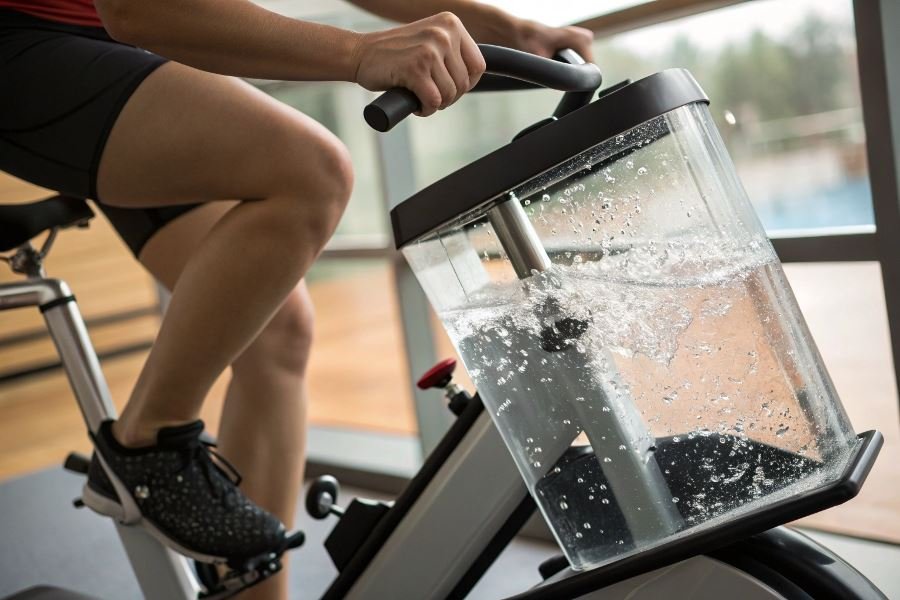
Ever wondered why athletes are trading their land bikes for underwater pedals? Water exercise bikes are making waves in fitness circles, offering a unique blend of resistance training and joint-friendly workouts that traditional cycling can’t match.
Water exercise bikes—essentially stationary cycles designed for pool use—harness water’s natural resistance to transform ordinary pedaling into a full-body, high-intensity, low-impact workout. The magic happens when you push against water’s natural resistance, which is 12 times greater than air, creating a workout that builds muscle while being remarkably gentle on joints.
The health benefits that make a splash
Unlike traditional cycling, aqua biking delivers impressive results without the punishment. Studies show water-based cycling can burn up to 800 calories per hour while reducing joint impact by nearly 85%. For recovery athletes and those managing arthritis, this difference is game-changing.
“Water provides multi-directional resistance that engages more muscle groups simultaneously than land-based alternatives.” — American Aquatic Fitness Association
What separates good from great in water bikes
When comparing models, focus on these critical features:
- Resistance mechanisms: Magnetic vs. water-flow systems
- Adjustability: How easily can seat height and handlebar position adapt to different body types?
- Stability: Does it remain firmly planted during intense sessions?
- Materials: Marine-grade stainless steel outlasts aluminum in chlorinated environments
Today’s market: More choices, better technology
The water exercise bike market has evolved dramatically, with options ranging from $300 entry-level models to $3,000+ professional-grade equipment. Premium brands like Hydrorider and AquaJogger dominate professional settings, while newcomers like WaterFlex offer compelling features at mid-range price points.
The latest models incorporate smart technology—waterproof performance tracking and app connectivity—bringing data-driven training to the pool environment.
Dive Into the Aquatic Fitness Revolution: Water Exercise Bikes Compared
Entry-Level Excellence: Top 3 Budget-Friendly Options
Let’s kick things off with the most accessible gateway to aquatic cycling! The Aqua Creek Tidalwave ($399) has revolutionized the entry point for water exercise enthusiasts. With its rust-resistant aluminum frame and 3-level resistance adjustment, it delivers surprising durability at this price point. The pedals feature a wider surface area than competitors, providing better stability for beginners.
When examining the comparison of popular models of water exercise bikes across different price ranges, it becomes clear that even entry-level options can deliver impressive performance benefits. The differences often come down to construction materials, resistance mechanisms, and adjustability features.
The Fitmax Aqua Bike ($449) edges ahead with its 5-level resistance system and ergonomic seat design that users consistently rate more comfortable for longer sessions. Its slightly heavier frame (32 lbs) provides better stability in more turbulent water conditions, though it sacrifices some portability.
Rounding out our entry-level trio is the AquaJogger AquaCiser ($379), the lightweight champion at just 26 lbs. While it offers fewer resistance settings, its simplified design makes it ideal for rehabilitation purposes and seniors. The trade-off? Less durability with its partial plastic construction.
| Model | Weight | Resistance Levels | Frame Material | Price |
|---|---|---|---|---|
| Aqua Creek Tidalwave | 29 lbs | 3 | Aluminum | $399 |
| Fitmax Aqua Bike | 32 lbs | 5 | Aluminum/Steel | $449 |
| AquaJogger AquaCiser | 26 lbs | 2 | Aluminum/Plastic | $379 |
Mid-Range Marvels: Performance Meets Versatility
Stepping up to mid-range options unlocks significant performance improvements. The Hydrorider Professional ($799) introduces magnetic resistance technology that creates a smoother, more customizable workout experience. Its 12-position seat adjustment system accommodates users from 5’0″ to 6’5″ with precision comfort.
The AquaNess AquaBike ($749) counters with its innovative dual-resistance system combining water and magnetic resistance. This creates a more dynamic workout that adapts to your intensity level. The standout feature here is the integrated heart rate monitoring that syncs with most fitness apps.
For those seeking versatility, the Waterrower Aqua Trainer ($829) transforms from bike to elliptical with a simple adjustment. While slightly heavier at 42 lbs, its multi-exercise functionality makes it perfect for family use where different workout preferences exist.
Premium Performance: The Aquatic Elite
At the premium end, the Poolbiking One ($1,499) represents the pinnacle of aquatic cycling technology. Its marine-grade stainless steel construction guarantees decades of use even in saltwater pools. The variable fluid dynamic resistance system creates a workout experience that rivals professional training facilities.
The HydroXciser Pro ($1,299) focuses on professional-grade biomechanics with its infinitely adjustable resistance system and competition-style handlebars. Its proprietary water-flow technology creates resistance that increases exponentially with effort, mimicking natural swimming resistance patterns.
For the ultimate in luxury features, the AquaFit Elite ($1,599) integrates waterproof performance tracking technology that measures watts, cadence, and estimated calorie burn. Its carbon fiber components reduce weight while maintaining structural integrity, and the ergonomic design was developed with input from physical therapists and professional athletes.
The Value Equation
Premium models deliver undeniable performance advantages and longevity, often lasting 10+ years compared to 3-5 years for entry-level options. However, mid-range models like the Hydrorider Professional hit the sweet spot of performance and value for most serious fitness enthusiasts, offering 80% of premium features at roughly half the price.
Your ideal water exercise bike ultimately depends on usage frequency, fitness goals, and budget constraints—but regardless of price point, the aquatic advantage remains consistent across all models.
Making Waves: Your Ultimate Guide to Water Exercise Bike Selection
When it comes to aquatic fitness equipment, water exercise bikes represent the perfect fusion of low-impact training and effective resistance. After exploring the various models available on the market, it’s time to bring everything together and help you make that all-important decision.
Key differentiators that make a splash
Water exercise bikes aren’t created equal, and understanding their differences is crucial for finding your perfect match. The most significant factors separating top contenders include:
Resistance mechanisms – Models like the Hydrorider Professional utilize adjustable paddle systems that create progressive resistance as you pedal faster, while the AquaNess V3 employs fixed resistance that relies solely on your effort level.
Construction materials – Premium options typically feature marine-grade stainless steel frames that resist corrosion, whereas budget-friendly alternatives often use treated aluminum that requires more maintenance.
Adjustability range – High-end models like the Poolbiking One Plus offer up to 12 seat positions and 8 handlebar configurations, accommodating users from 4’10″ to 6’5″ with precision.
The difference between good and great often comes down to stability underwater and how the bike handles chlorinated environments over time.
Finding your perfect water cycling companion
Your specific needs should guide your selection process:
| User Profile | Recommended Models | Key Benefits |
|---|---|---|
| Rehabilitation | AquaCiser Elite, HydroFit Therapy | Gentler resistance, superior stability, easy mounting |
| Weight Loss | Berra Aquabike Pro, WaterRider X | Higher resistance range, calorie-burn tracking |
| Cross-Training Athletes | AquaJogger Pro, Hydrospin Elite | Performance metrics, variable resistance settings |
| Seniors | AquaComfort Plus, HydroRelax Senior | Enhanced stability, simplified controls, ergonomic seating |
For those focused on joint rehabilitation, models with wider pedals and gentler resistance curves provide the therapeutic benefits without strain. Competitive athletes should prioritize bikes with performance tracking and greater resistance variability.
Budget-conscious shoppers should consider the AquaCiser II, which delivers 80% of premium features at roughly 60% of the cost.
The horizon of aquatic cycling innovation
The water exercise bike market continues to evolve with exciting developments on the horizon:
Smart connectivity is becoming standard, with newer models incorporating waterproof Bluetooth sensors that sync with fitness apps. The BERRA Aquabike Smart already offers real-time performance metrics through its dedicated mobile application.
Hybrid designs are emerging that allow for multiple exercise modalities. The Waterflex INO8 transforms from a traditional cycling position to an elliptical stance, maximizing workout variety.
Eco-friendly materials represent the industry’s response to environmental concerns, with manufacturers like AquaStrength pioneering biodegradable components and sustainable production methods.
The most promising innovation may be variable water resistance technology that automatically adjusts based on your fitness level and goals, creating personalized resistance profiles throughout your workout.
By weighing these factors against your personal needs, budget constraints, and fitness objectives, you’ll find a water exercise bike that doesn’t just meet expectations—it exceeds them, making every aquatic workout both effective and enjoyable.