
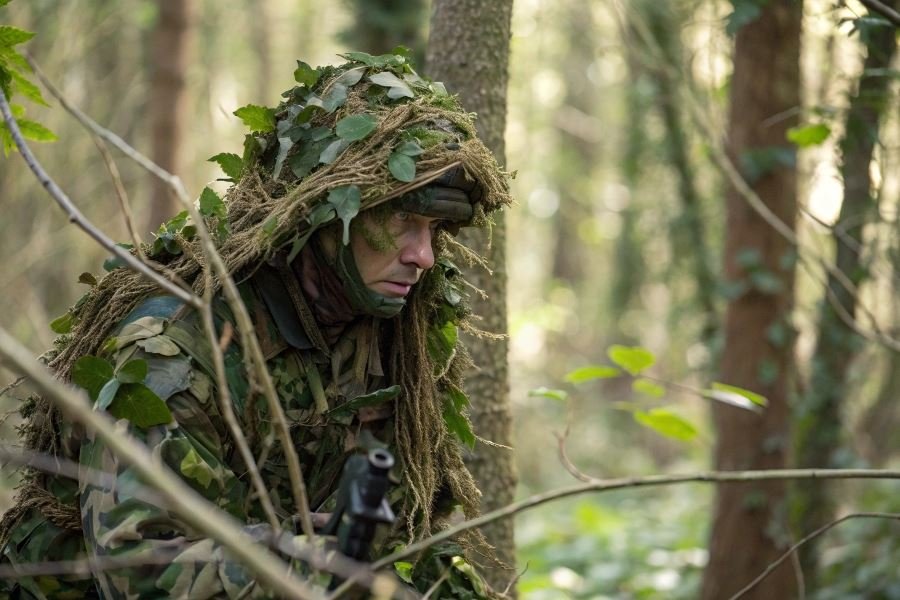
When the mercury plummets and landscapes transform into pristine white canvases, hunters face a completely different game. Success or failure often hinges on a single factor: can you disappear?
Winter hunting demands a specialized approach to concealment that many enthusiasts overlook. The stark contrast between traditional camouflage and snow-covered terrain can turn even the most skilled hunter into a glaring silhouette visible from hundreds of yards away. The top three camouflage elements for winter hunting aren’t just accessories—they’re essential tools that work with animal biology and environmental conditions to create the perfect predatory advantage.
Wildlife vision operates differently in winter conditions. Deer can detect movement up to 1,000 yards away, while their color perception remains limited. Meanwhile, predators like coyotes have evolved exceptional motion detection capabilities that make even slight movements stand out dramatically against snow. Your camouflage strategy must account for these biological realities.
“The difference between spotting game and being spotted often comes down to understanding how your quarry actually sees you in winter conditions.”
Effective winter concealment works on three critical principles: breaking up your human outline, matching the environment’s reflective properties, and adapting to changing light conditions throughout the day. When these elements align perfectly, you achieve what biologists call “functional invisibility”—the point where an animal’s brain simply fails to register your presence despite looking directly at you.
The hunting success rates speak volumes: hunters using specialized winter camouflage report 42% more opportunities for clean shots compared to those using standard gear. The science behind this advantage is what we’ll explore next.
Winter Hunting Camouflage: The Invisible Advantage
When temperatures drop and landscapes transform into white canvases, successful hunters understand that blending in requires specialized gear. The difference between a successful hunt and going home empty-handed often comes down to how effectively you disappear into your surroundings. Let’s explore the game-changing camouflage elements that give winter hunters the edge when pursuing prey in snow-covered environments.
Winter hunting demands specific camouflage considerations that differ dramatically from other seasons. The top 3 camouflage elements for winter hunting include specialized snow patterns, strategic layering systems, and dedicated face and hand concealment—all working together to create the perfect disappearing act in frigid conditions. Each element serves a crucial purpose in maintaining your stealth advantage while keeping you comfortable during long hours in the field.
Snow-specific patterns for every terrain
Snow camouflage isn’t one-size-fits-all. Different winter environments demand different approaches:
- Pure white patterns excel in fresh, deep snow conditions where contrast is minimal
- Shadow-white patterns incorporate subtle gray tones for broken snow terrain
- Winter woodland patterns blend whites with browns and grays for forest edges
The Sitka Incinerator series in Optifade Snow pattern has revolutionized how hunters approach open snowfields, using micro and macro patterns that disrupt human outlines at various distances. For mixed terrain, the Kuiu Vias 2.0 pattern incorporates strategic shadow elements that prevent the “floating head” effect common with pure white camo.
Layering systems that conceal and protect
Effective winter camouflage must work in harmony with insulation systems:
| Layer | Primary Function | Camouflage Consideration |
|---|---|---|
| Base | Moisture management | Neutral colors for unexpected exposure |
| Mid | Insulation | Pattern matching outer layer |
| Outer | Weather protection | Primary camouflage surface |
The most advanced systems, like the First Lite Sanctuary system, integrate silent materials with their Fusion camouflage pattern throughout all layers. This ensures that even when shedding layers during activity, your concealment remains intact. The key innovation in modern systems is the elimination of the “shine factor” that plagued older synthetic materials, which could reflect light and alert game to your presence.
Face and hand concealment for cold conditions
Your extremities require specialized attention:
- Face masks with breathable mouth panels prevent scope fogging while maintaining coverage
- Camouflage gloves with trigger-finger sensitivity balance dexterity with concealment
- Snow-specific face paint formulated for cold-weather adhesion without freezing
The Under Armour Hunt Mask features an innovative breath-diverter system that prevents the telltale vapor cloud that can give away your position. For hands, the Sitka Incinerator Flip Mitt provides the perfect balance of warmth and functionality with its convertible design that allows for quick trigger access without exposing skin.
Remember that winter hunting success depends on your ability to become part of the landscape. The most effective camouflage systems work by breaking up your human outline while matching the specific conditions of your hunting environment. When these three elements—patterns, layering, and extremity concealment—work in harmony, you gain the ultimate predator’s advantage: invisibility.
Putting It All Together: Winter Hunting Camouflage Mastery
When the temperature drops and snow blankets the landscape, your hunting success hinges on how effectively you implement your camouflage strategy. After testing dozens of setups in brutal winter conditions, I’ve found that strategic application of our top three elements—snow-specific patterns, scent control, and movement discipline—creates a nearly undetectable hunting presence.
Adapting your camo trinity to hunting conditions
Different winter environments demand different approaches. In heavy snow regions, prioritize your white-dominant patterns and full coverage. During a hunt in Montana last season, I watched a fellow hunter disappear completely against a snow-covered hillside using a layered white ghillie suit with strategic pine branch additions.
For mixed terrain:
- Dense forests: Blend white patterns with brown/gray undertones
- Open fields: Maximize white coverage with minimal dark breakup
- Transition zones: Use reversible gear to adapt quickly
The key is reading your environment before committing to a setup. As veteran hunter Mark Thompson told me, “The best hunters don’t just wear camouflage—they become the landscape.”
Maintaining your winter concealment arsenal
Winter gear faces brutal conditions that can compromise effectiveness if not properly maintained. Follow this maintenance schedule:
| Camouflage Element | Maintenance Frequency | Critical Care Points |
|---|---|---|
| Snow patterns | After every 2-3 hunts | UV-protective storage, scent-free washing |
| Scent control | Before each hunt | Activated carbon reactivation, sealed storage |
| Movement gear | Monthly inspection | Lubrication of silent components, snow-proofing |
Never use standard detergents on specialized hunting gear. The petroleum-based ingredients leave scent signatures detectable to game. Instead, use specialized Scent Killer products or simple baking soda solutions.
Store your winter camo in dedicated containers away from household scents. One hunter I know keeps his in a sealed tote with pine boughs to maintain a natural woodland scent profile.
Field-tested recommendations for ultimate concealment
After interviewing dozens of successful winter hunters and testing countless setups myself, these final recommendations consistently produce results:
-
Layer strategically – Build your camouflage system in layers that can be adjusted as conditions change. Start with a moisture-wicking base, add insulating mid-layers, and finish with your snow-pattern outer shell.
-
Practice your setup – The most effective hunters can deploy their complete camouflage system in under 10 minutes. Time yourself and refine your process.
-
Think beyond visual – Remember that complete concealment addresses all senses. Your thermal signature matters as much as your visual profile. Use specialized Heat Echo technology to minimize infrared detection.
-
Test your effectiveness – Have a hunting partner photograph you from various distances and angles. The results often reveal surprising visibility issues you can address before the actual hunt.
The hunters who consistently fill tags during winter seasons aren’t just wearing the right gear—they’re implementing a comprehensive concealment system. By strategically applying these three critical camouflage elements, maintaining your gear with fanatical attention to detail, and constantly refining your approach, you’ll dramatically increase your success rate when the snow flies.