
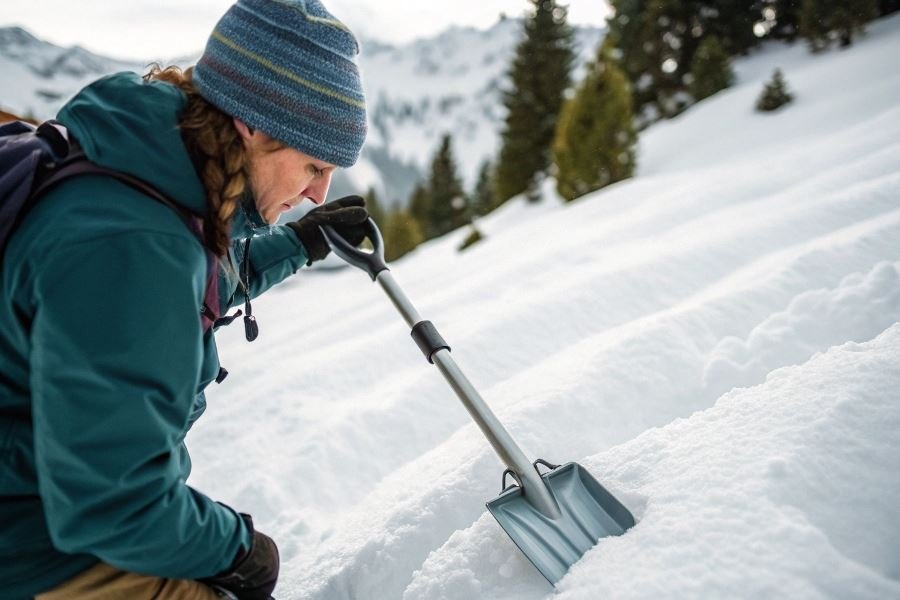
When the mountain gives way, you have 15 minutes. After that, survival rates plummet to less than 30%.
Backcountry adventurers often obsess over beacons and probes, yet the humble avalanche shovel remains the unsung hero of rescue operations. This critical tool transforms the difference between recovery and rescue—between bringing home a friend or a body.
The critical lifeline in white wilderness
Avalanche shovels aren’t just accessories; they’re essential life-saving equipment. When someone’s buried under snow, the clock starts ticking mercilessly. Even with perfect beacon technique, you still need to move massive amounts of snow—up to one ton—to reach a buried victim. A proper shovel is the only tool that makes this physically possible within the critical rescue window.
Snow science: Not all white stuff is created equal
Different mountain ranges produce dramatically different snow conditions. Wet, heavy Sierra cement demands a robust metal blade that can slice through the density. Meanwhile, the powdery champagne snow of the Rockies might allow for lighter materials but requires designs that can move volume efficiently. Your shovel must match your terrain or it becomes deadweight in your pack.
Beyond the basics: Features that save minutes
When evaluating avalanche shovels, consider these critical elements:
- Material composition: Aircraft-grade aluminum offers the optimal balance between strength and weight
- Blade design: D-grip handles provide leverage in deep snow; extendable shafts increase efficiency
- Deployment speed: Seconds matter—look for intuitive assembly mechanisms that work with gloves
- Packability: The best safety tool is useless if left behind because it’s too cumbersome
Essential Avalanche Shovel Selection Guide
When your life—or someone else’s—hangs in the balance, your avalanche shovel isn’t just another piece of gear. It’s potentially the difference between rescue and tragedy. The backcountry doesn’t forgive equipment failures, which is why understanding avalanche shovels: selection criteria for different conditions becomes critical knowledge for anyone venturing into avalanche territory.
Material Matters: The Foundation of Reliability
The material of your avalanche shovel dictates its strength, weight, and durability—three factors that can dramatically impact rescue operations.
Aluminum shovels dominate the market for good reason. They offer an excellent balance of strength, weight, and affordability. Most recreational backcountry travelers choose mid-weight aluminum shovels (16-20 oz) that can handle hard-packed avalanche debris without bending or breaking.
Carbon fiber options have emerged as premium alternatives, shaving precious ounces (typically 20-30% lighter than aluminum counterparts) while maintaining impressive strength. However, they come with two significant drawbacks: substantially higher price points ($150-300 compared to $50-100 for quality aluminum) and occasionally brittle behavior in extremely cold conditions.
Steel shovels represent the tank division—virtually indestructible but considerably heavier (often 24+ oz). Professional rescue teams and ski patrollers frequently opt for steel when vehicle transport is available and ultimate reliability trumps weight concerns.
| Material | Weight Range | Durability | Price Range | Best For |
|---|---|---|---|---|
| Aluminum | 16-22 oz | Good-Excellent | $50-120 | Most recreational users |
| Carbon Fiber | 12-16 oz | Good | $150-300 | Weight-conscious mountaineers |
| Steel | 24-32 oz | Excellent | $70-150 | Professional rescue, extreme conditions |
Design Elements That Save Minutes
When seconds count, thoughtful design features can dramatically accelerate digging efficiency.
Blade shape varies significantly between models, with each configuration offering distinct advantages:
- Flat blades excel at cutting precise snow blocks and creating clean trenches
- Curved blades move more snow volume per scoop—critical during initial excavation
- Serrated edges cut through ice and hardened snow layers that form in avalanche debris
The handle design might seem like a minor consideration until you’re digging for 30 minutes straight. D-grips provide excellent leverage and can be operated with mittens, while T-grips often allow for more compact packing. The most versatile models feature extendable shafts that telescope or assemble to provide optimal leverage while digging.
Assembly mechanisms deserve particular scrutiny. In high-stress rescue situations, complicated systems fail. The best designs deploy in seconds with gloved hands and lock securely without tools. Button-snap connections have proven more reliable than twist-locks in sub-freezing temperatures.
Weight and Packability: Balancing Readiness and Mobility
Your perfect avalanche shovel must balance two competing priorities: robust enough for efficient digging yet light and compact enough that you’ll actually carry it.
For ski mountaineers and alpinists where every ounce matters, ultralight options (12-16 oz) with collapsible designs make sense. These typically feature smaller blades and shorter handles—acceptable compromises when extreme weight savings are necessary.
Backcountry skiers and splitboarders generally benefit from mid-weight options (16-22 oz) with full-size blades and extendable handles. These provide sufficient digging power without excessive weight penalties.
Snowmobilers and heli-skiers can prioritize functionality over weight, opting for larger blades and longer handles (20-28 oz) that move more snow faster—critical when dealing with deeper burials common in mechanized backcountry travel.
Remember: the most effective avalanche shovel is the one you have with you. Even the most technically advanced rescue tool becomes worthless if left behind because it was too heavy or awkward to pack.
Your Avalanche Shovel: The Perfect Match for Your Winter Adventures
Tailoring your shovel to your winter pursuits
The avalanche shovel you choose should be as personalized as your winter adventures. Backcountry skiers venturing into steep terrain need lightweight, collapsible models like the Black Diamond Deploy that won’t weigh down their packs but can handle serious digging. Its aluminum construction balances weight and strength perfectly at just 1.3 pounds.
For snowmobilers covering vast distances, durability trumps ultralight design. The BCA RS EXT with its extendable handle offers the leverage needed when digging through dense avalanche debris from a standing position. Its D-grip handle works seamlessly with gloved hands during those critical moments.
Mountain guides and rescue professionals require tools that won’t fail during extended use. The Ortovox Pro Alu III features a professional-grade aluminum blade with strategic reinforcements that can chip through ice-hardened snow without bending or breaking.
The 15-minute rule is unforgiving: Most avalanche survivors are recovered within the first quarter-hour. Your shovel’s effectiveness directly impacts this critical window.
Weekend warriors shouldn’t compromise on quality either. The Mammut Alugator Light offers professional-grade performance in a package that won’t break the bank or your back at 1.5 pounds.
Keeping your lifesaver ready for action
Your avalanche shovel deserves more attention than the annual pre-season inspection. After each use, disassemble completely and dry thoroughly to prevent corrosion, especially at connection points. Salt and minerals in snow can silently compromise metal components over time.
Test the locking mechanisms monthly during winter by:
- Assembling and disassembling while wearing thick gloves
- Checking for smooth operation without hesitation
- Inspecting for hairline cracks or metal fatigue
Never store your shovel assembled with tension on the locking mechanisms. This can weaken springs and create slop in the connections precisely when you need perfect function.
Apply a thin coat of silicone lubricant to moving parts before storage, avoiding petroleum-based products that attract dirt and can degrade plastic components.
Practice makes perfect rescue response
The most advanced avalanche shovel becomes useless without proper technique. Organized practice sessions should be mandatory for anyone venturing into avalanche terrain.
| Practice Element | Frequency | Focus Areas |
|---|---|---|
| Assembly drill | Weekly | Blind assembly while wearing gloves |
| Digging technique | Monthly | Strategic V-conveyor method |
| Full burial scenario | Seasonally | Coordinated probe-shovel-rescue |
Time yourself regularly. Experienced rescuers can assemble their shovels in under 10 seconds even with heavy gloves. Your target should be no more than 15 seconds from pack to ready position.
Join a formal avalanche rescue course where instructors can evaluate your technique. The American Avalanche Association offers courses nationwide that incorporate the latest strategic shoveling techniques that can reduce excavation time by up to 50%.
Remember that muscle memory develops through repetition. The stress of a real rescue situation will cause fine motor skills to deteriorate, making practiced movements your only reliable response.
Your avalanche shovel isn’t just equipment—it’s your partner in survival. Choose wisely, maintain diligently, and practice relentlessly. When seconds count, you’ll be glad you did.