
Ever watched $30 worth of shuttlecocks disappear during a single intense badminton session? You’re not alone. The average competitive player goes through 2-3 dozen shuttlecocks monthly—a staggering expense that adds up faster than points in a rally.
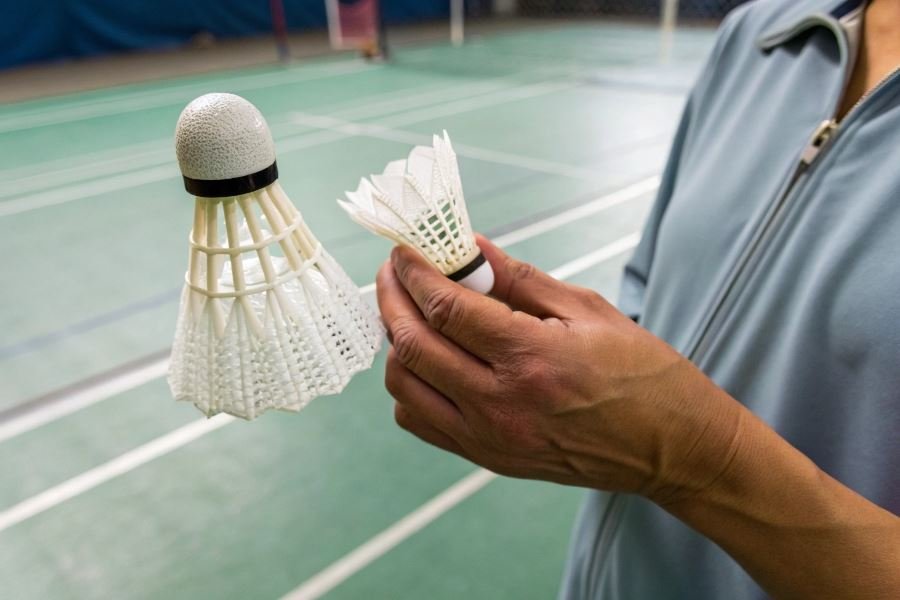
Behind every shuttlecock lies an engineering marvel that deserves proper care. Whether you’re wielding a natural feather shuttle (crafted from 16 precisely trimmed goose or duck feathers mounted into a cork base) or a synthetic alternative, understanding what you’re hitting makes all the difference in extending its playable life.
The anatomy matters: Natural feathers offer superior flight characteristics and that satisfying “crack” on impact, but they’re notoriously fragile. Synthetic shuttles sacrifice some performance for durability, lasting up to 5 times longer in recreational play. Knowing which type you’re using fundamentally changes your maintenance approach.
Why bother with proper care? Beyond the obvious financial benefits (saving potentially hundreds of dollars annually), well-maintained shuttlecocks deliver consistent performance. That predictable flight path could mean the difference between a winning smash and a frustrating miss.
Smart players implement simple practices between games:
- Store shuttles in temperature-controlled environments (extreme heat warps cork bases)
- Rotate your shuttlecock “fleet” rather than using the same one repeatedly
- Use a specialized feather humidifier for natural shuttles during dry seasons
The difference between a shuttlecock lasting three games versus one isn’t just economic—it’s about maintaining the quality and consistency that elevates your game from good to great.
Shuttlecock Survival Guide: Storage and Handling Secrets
Let’s face it—shuttlecocks aren’t cheap. A quality tube of feather shuttles can set you back $25-35, and watching them deteriorate after just a few games feels like watching money fly away with each smash. The good news? With proper care, you can dramatically extend the lifespan of badminton shuttlecocks and get more bang for your buck on the court.
Most players focus solely on technique and equipment when trying to improve their game, but knowing how to extend the lifespan of badminton shuttlecocks is equally crucial for consistent performance and budget management. The right storage and handling techniques can double—sometimes even triple—how long your shuttles last.
Climate control: The shuttlecock’s best friend
Feather shuttlecocks are surprisingly sensitive to their environment. The optimal storage conditions include:
- Temperature: 65-75°F (18-24°C) — Extreme heat causes feathers to dry out and become brittle
- Humidity: 45-55% — Too dry, and feathers crack; too humid, and they warp
Never store shuttlecocks in your car trunk or garage where temperatures fluctuate wildly. Instead, keep them in a climate-controlled space like a closet in your home.
Pro tip: A small silica gel packet placed in your shuttlecock tube can help maintain ideal humidity levels during storage.
For tournament players, consider investing in a Yonex AC326 shuttlecock case with humidity control features. These specialized cases maintain optimal conditions even when you’re traveling between venues with different climates.
Rotation systems that maximize shuttle life
Implementing a proper rotation system during play is perhaps the most underutilized technique for extending shuttle longevity:
| Rotation Method | Best For | Expected Lifespan Increase |
|---|---|---|
| Three-shuttle rotation | Casual play | 30-40% |
| Six-shuttle rotation | Club practice | 50-60% |
| Match-specific selection | Tournaments | 20-30% |
The three-shuttle rotation works brilliantly for recreational players. Simply rotate between three shuttlecocks during your session, allowing each to “rest” between uses. This prevents any single shuttle from absorbing excessive impact in a short timeframe.
For club practice, implement the six-shuttle system where you rotate through six shuttles, using each for approximately 5-7 points before switching. This gives feathers time to recover their natural resilience between uses.
Handling techniques: The gentle touch approach
How you handle shuttlecocks makes a tremendous difference in their durability:
- Always hold by the cork base — Never grab the feather skirt
- Avoid finger oils — Oils transfer to feathers, making them heavy and affecting flight
- Use a shuttlecock pickup tube like the Victor AC361 to collect shuttles without damaging feathers
When adjusting feathers (which you should do regularly), use gentle, outward strokes from the base toward the tip. This realigns feathers without breaking them at the base where they connect to the cork.
Speed matching is another critical technique. Before each session, test and group shuttlecocks by speed. Using a shuttle that’s too fast or slow for court conditions forces players to hit with inappropriate force, damaging the shuttle prematurely.
With these storage and handling techniques, you’ll not only save money but also enjoy more consistent play with shuttles that maintain their flight characteristics longer. Your wallet—and your game—will thank you.
Shuttlecock Survival Guide: Triple-Threat Maintenance Methods
Badminton’s unsung hero—the shuttlecock—deserves more respect than it typically receives. These feathered projectiles take a beating during play, but with proper care, you can dramatically extend their lifespan and save significant money over a season. Let’s dive into the three most effective maintenance techniques that serious players swear by.
Feather Reshaping: Bringing Bent Shuttles Back to Life
When shuttlecocks take hard hits, their feathers often bend or splay outward, creating aerodynamic chaos. Don’t toss them yet! Professional players use a simple steam reshaping technique:
- Hold the damaged shuttlecock over steam from boiling water for 3-5 seconds
- Immediately reshape the feathers with your fingers while they’re pliable
- Set the shuttlecock with feathers down in a standing position to cool and set
Pro tip: Use a Yonex shuttlecock press between sessions to maintain that perfect cylindrical shape. These specialized tools cost around $15-20 but can triple your shuttlecock lifespan.
For particularly stubborn feathers, try the hairdryer method: apply gentle heat on low setting while carefully manipulating the feathers back into position. The warmth makes the feathers more malleable without damaging their structure.
Moisture Management: The Silent Shuttlecock Killer
Moisture is the arch-nemesis of feather shuttlecocks. When feathers absorb humidity, they become heavy and unpredictable in flight. Here’s how elite players combat this:
- After play, place shuttlecocks in a breathable container—never sealed plastic
- Store with silica gel packets to absorb ambient moisture
- Rotate your shuttlecock supply to ensure even usage and drying time
The most overlooked aspect of shuttlecock care is post-match drying. Create a simple drying station by placing shuttlecocks cork-side up in an egg carton with good air circulation.
| Storage Method | Effectiveness | Cost |
|---|---|---|
| Breathable tube with silica | Excellent | $10-15 |
| Egg carton with ventilation | Very good | $0 |
| Sealed plastic container | Poor | $5 |
Players in humid climates might consider a dedicated Babolat shuttlecock tube with built-in moisture control, which maintains optimal humidity levels automatically.
Cork Base Reinforcement: Building a Stronger Foundation
The cork base often deteriorates before the feathers give out. Extend its lifespan with these techniques:
- Apply a thin layer of clear nail polish to the cork base to seal and protect it
- For splitting corks, use a tiny amount of wood glue and clamp until dry
- Reinforce the feather-cork junction with specialized Li-Ning shuttlecock glue
Game-changing hack: Professional players often apply a microscopic amount of beeswax to the cork base, creating a moisture barrier while maintaining the proper weight balance.
For tournament-level play, consider the “double-base method”—salvaging the cork base from a damaged shuttlecock and carefully attaching it to a shuttlecock with good feathers but a compromised base.
These maintenance methods require minimal investment but deliver remarkable returns. A well-maintained shuttlecock can last 3-4 times longer than a neglected one, turning what might be a $30 monthly expense into less than $10. Your wallet—and your game—will thank you.