
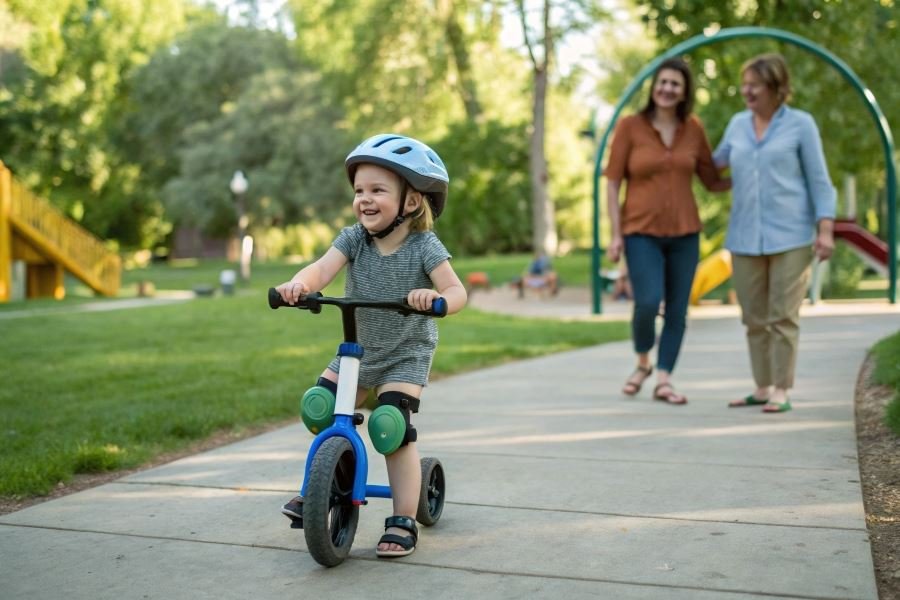
Ever watched a toddler effortlessly glide past on two wheels, feet barely touching the ground, with a smile that could power a small city? That’s the magic of balance bikes – and it’s transforming how children learn to ride.
Balance bikes are revolutionizing childhood mobility by stripping away everything that doesn’t matter. These pedal-free, lightweight cycles allow children to focus on the fundamental skill that traditional training wheels actually prevent: balance. By pushing with their feet and gradually learning to glide, kids develop the core stability, coordination, and confidence that make transitioning to a pedal bike almost seamless.
The sweet spot for balance bike introduction? Most children are ready between 18 months and 4 years old. The beauty lies in meeting them where they are developmentally – when they can confidently walk, they’re typically ready to start their balance bike journey. The earlier they start, the more intuitive cycling becomes.
The training wheels debate: Why balance bikes win
Traditional bikes with training wheels teach children to pedal before balancing – essentially backward! This approach often leads to:
- Dependency on stabilizers
- Delayed development of true balance
- Harder transition to independent riding
- Fear when training wheels are removed
Balance bikes, by contrast, build confidence organically. Children learn to control their speed, navigate turns, and develop spatial awareness before adding the complexity of pedaling. Studies show most balance bike users transition to pedal bikes without ever needing training wheels, often 1-2 years earlier than their peers.
The difference isn’t just in skill development – it’s in the joy. Watch a child on a balance bike and you’ll see pure, uninhibited freedom – exactly what childhood movement should be.
Essential Factors for the Perfect Balance Bike
Finding the right balance bike transforms a child’s first cycling experience from frustrating to fantastic. The difference between a well-chosen bike and a poor fit can mean the difference between a confident rider and a reluctant one.
When parents approach the challenge of how to choose a balance bike for a child, they often focus solely on price or aesthetics. However, the technical specifications matter tremendously for safety, comfort, and skill development. Let’s dive into what truly matters when selecting this crucial first set of wheels.
Size matters more than you think
The perfect balance bike positions your child with feet flat on the ground while seated. Inseam measurement is your golden metric here—not age or height alone.
| Inseam Length | Recommended Seat Height | Typical Age Range |
|---|---|---|
| 12-14 inches | 11-12 inches | 18-24 months |
| 14-17 inches | 13-14 inches | 2-3 years |
| 16-20 inches | 14-16 inches | 3-4.5 years |
| 18-22 inches | 16-18 inches | 4-6 years |
Always leave 1-1.5 inches of clearance between the seat and your child’s inseam for comfortable standing and gliding.
Weight ratio is critical
A balance bike should weigh no more than 30% of your child’s body weight. Heavier bikes create frustration and limit maneuverability.
The difference between a 6-pound and 10-pound bike might seem minimal to adults, but represents a massive 67% increase for a toddler!
Frame materials define the experience
Different materials offer distinct advantages:
- Aluminum frames: Lightweight (6-9 pounds), rust-resistant, but can be pricier
- Steel frames: Durable and affordable, but heavier (9-11+ pounds)
- Wooden frames: Eco-friendly and aesthetically pleasing, but less adjustable and weather-resistant
- Composite frames: Modern option combining lightweight properties with durability
Tire types for different adventures
Your riding environment dictates the optimal tire choice:
- Air (pneumatic) tires: Superior traction and shock absorption for varied terrain
- Foam tires: Maintenance-free, puncture-proof, but less grip on uneven surfaces
- Rubber tires: Middle-ground option with decent traction and no maintenance
For families who enjoy trail riding or frequent park visits, the cushioning of air tires from brands like Strider or Woom provides noticeable comfort advantages.
Adjustability extends lifespan
The best balance bikes grow with your child through:
- Adjustable seat height with at least 3-4 inches of range
- Adjustable handlebars for proper riding posture
- Extendable frames on premium models
A quality balance bike with proper adjustability can serve a child for 2-3 years, making the investment substantially more worthwhile.
Safety features worth considering
While simplicity is part of the balance bike appeal, certain safety features merit attention:
- Hand brakes: Valuable for kids 2.5+ years to develop braking habits early
- Steering limiters: Prevent jackknifing handlebars during learning
- Covered bolts and recessed hardware: Eliminate scratching hazards
- Grip end bumpers: Protect hands during inevitable falls
The Early Rider and Prevelo models excel with thoughtfully designed safety features without compromising the riding experience.
Remember that the perfect balance bike combines appropriate sizing, manageable weight, quality construction, suitable tires, growth potential, and essential safety features—creating the foundation for a lifetime of cycling confidence.
Making the Final Decision: Your Child’s Perfect Balance Bike
Finding the right balance bike for your child combines practical considerations with quality assessment. Let’s cut through the noise and focus on what truly matters when making that final decision.
Smart budget planning without sacrificing quality
Balance bikes range from $40 budget options to premium models exceeding $200. The sweet spot for most families lies between $80-150, where durability meets reasonable pricing.
When evaluating price-to-quality ratio, consider these factors:
- Frame material determines longevity – Aluminum frames justify higher prices through weight reduction and rust resistance
- Resale value remains stronger for recognized brands
- Adjustable features extend usability timeframes, offering better long-term value
Remember that the cheapest options often require replacement within months, while mid-range models typically serve multiple children over years. A $120 bike that lasts three years (and potentially through multiple children) represents better value than replacing a $60 bike annually.
The most expensive balance bike isn’t necessarily the best for your child, but the cheapest rarely represents good value.
Standout performers in the balance bike world
After extensive testing and parent feedback analysis, these brands consistently deliver exceptional performance:
| Brand | Recommended Model | Key Strengths | Approximate Price |
|---|---|---|---|
| Strider | Sport 12 | Lightweight, adjustable, exceptional durability | $110 |
| Woom | Woom 1 | Premium components, ergonomic design, growth-friendly | $199 |
| Banana Bike | GT | Budget-friendly, good adjustability, solid construction | $80 |
The Strider Sport 12 earns its reputation through virtually indestructible construction and weight under 7 pounds—perfect for younger riders. Meanwhile, the Woom 1 justifies its premium price through thoughtful design elements like child-specific handbrakes and ergonomic grips.
For budget-conscious families, the Banana Bike GT delivers remarkable performance without breaking the bank, though it lacks some refinements of pricier alternatives.
Keeping the wheels turning for years
Balance bikes require minimal maintenance compared to pedal bikes, but these simple practices extend their lifespan significantly:
- Regular bolt checks prevent unexpected failures – Tighten all connections monthly
- Clean and dry after wet rides to prevent rust development
- Store indoors when possible to minimize weather exposure
- Apply bicycle-specific lubricant to moving parts quarterly
With proper care, quality balance bikes typically last 2-4 years of active use. Many families report passing well-maintained models through multiple children with minimal degradation in performance.
Maintenance requirements vary by material—steel frames need more rust prevention while composite frames require protection from UV exposure. Most manufacturers provide specific care instructions worth following.
The final decision combines your budget reality with your child’s specific needs. Prioritize safety features, appropriate sizing, and durability over flashy designs or unnecessary accessories. The perfect balance bike grows with your child while providing the confidence-building foundation that makes future cycling adventures possible.