
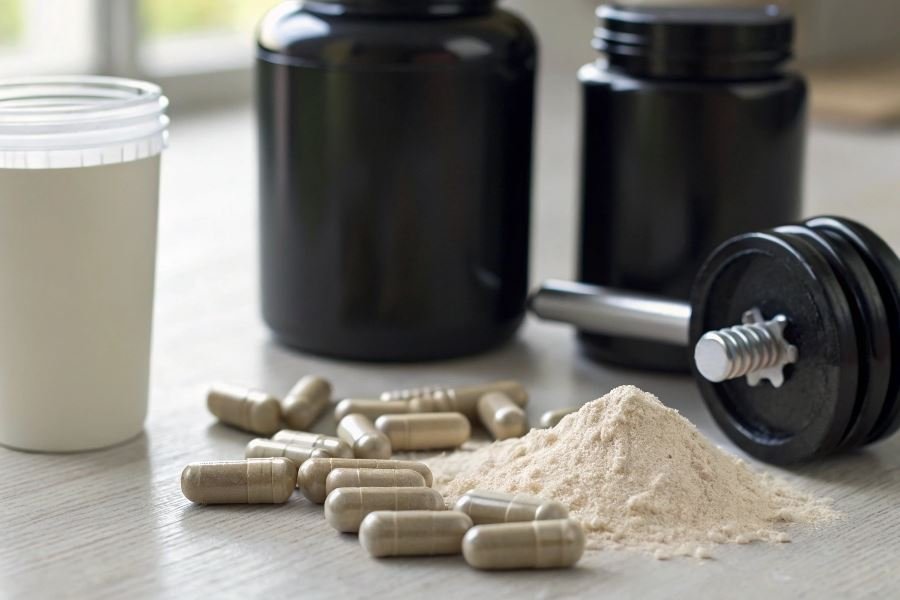
Ever wondered why some athletes bounce back from grueling workouts while others struggle for days? The secret might be hiding in those little supplement bottles labeled “BCAAs.” These powerful compounds are transforming recovery routines across America’s fitness landscape—but only when you choose the right ones.
BCAAs (Branched-Chain Amino Acids) represent three essential amino acids—leucine, isoleucine, and valine—that your body cannot produce naturally. These mighty molecules make up approximately 35% of your muscle protein and serve as both building blocks and fuel sources during intense physical activity. When your muscles scream for nutrients during that final set or mile, BCAAs answer the call.
The quality difference: Not all BCAAs are created equal
The supplement market is flooded with options, but quality varies dramatically. Premium BCAAs offer precise 2:1:1 or 4:1:1 ratios (leucine:isoleucine:valine), pharmaceutical-grade purity, and third-party testing. Meanwhile, inferior products might contain fillers, artificial sweeteners, or inconsistent amino acid profiles that compromise results.
“The difference between budget and quality BCAAs is like comparing fast food to a chef-prepared meal—both provide calories, but only one delivers the nutrition your body truly needs.”
Key indicators of superior BCAAs
When evaluating BCAA supplements, look for transparent sourcing, fermentation-derived amino acids (versus duck feathers or human hair—yes, really!), and clean formulations without unnecessary additives. The most reputable manufacturers provide detailed certificates of analysis and maintain rigorous quality control standards throughout production.
Your recovery deserves nothing less than excellence—because when it comes to BCAAs, quality doesn’t just matter. It’s everything.
The Ultimate BCAA Quality Checklist
When it comes to maximizing your training results, not all BCAAs are created equal. The supplement industry is flooded with options, making it crucial to identify the signs of quality BCAAs: what to pay attention to when choosing these amino acid powerhouses. Let’s dive into the three non-negotiable quality markers that separate elite supplements from the pretenders.
The Golden 2:1:1 Ratio
The ratio of leucine to isoleucine to valine isn’t just marketing jargon—it’s the scientific foundation of effective BCAA supplementation. Research consistently supports the 2:1:1 ratio (leucine:isoleucine:valine) as optimal for muscle protein synthesis and recovery.
Why this ratio matters: Leucine serves as the primary trigger for muscle protein synthesis through the mTOR pathway. The 2:1:1 ratio provides double the leucine while maintaining balanced amounts of isoleucine and valine for comprehensive recovery benefits.
Many budget brands cut corners with 4:1:1 or even 8:1:1 ratios, overloading on leucine while skimping on the other essential amino acids. This imbalance can actually limit overall effectiveness, as isoleucine plays a crucial role in glucose uptake during exercise, while valine helps prevent exercise-induced fatigue.
The 2:1:1 ratio isn’t just tradition—it’s backed by decades of research showing superior performance for strength training, endurance, and recovery metrics.
Third-Party Testing: Your Quality Guarantee
The supplement industry operates with surprisingly limited regulation. This makes third-party testing absolutely essential for ensuring you’re getting what you pay for.
Look specifically for these verification credentials:
| Certification | What It Verifies | Why It Matters |
|---|---|---|
| NSF Certified for Sport | Banned substance testing, label accuracy | Trusted by professional athletes |
| Informed-Choice | Batch testing for contaminants | Reduces risk of tainted supplements |
| USP Verification | Potency, purity, dissolution | Ensures product meets pharmaceutical standards |
Red flag alert: Brands that make quality claims without verification documentation are asking for your trust without earning it. Quality manufacturers proudly display their certifications directly on packaging and websites.
Ingredient Transparency: The Full Picture
Premium BCAA products have nothing to hide. The ingredient list should be comprehensive, specific, and free from questionable additives.
What to look for:
- Complete amino acid profiles with exact amounts (not proprietary blends)
- Fermentation-derived BCAAs rather than animal hair or feather sources
- Absence of artificial colors like Red #40 or Blue #1
- No artificial sweeteners such as acesulfame potassium or sucralose
Natural flavoring systems using stevia, monk fruit, or small amounts of cane sugar indicate a manufacturer committed to quality over cost-cutting. Similarly, the absence of anti-caking agents and preservatives signals a premium product.
Ingredient sourcing transparency is the newest frontier in BCAA quality. Leading brands now disclose not just what’s in their product, but where those ingredients come from—providing country of origin and manufacturing standards information.
Remember that quality BCAAs might cost more upfront, but they deliver superior results and minimize potential health concerns associated with questionable additives. Your body deserves ingredients that support performance without compromise.
Elevate Your Game: Making Smart BCAA Choices
Quality markers that truly matter
When it comes to fueling your fitness journey, not all BCAAs are created equal. The difference between mediocre and premium branched-chain amino acid supplements can significantly impact your results. The most reliable indicators of quality include pharmaceutical-grade amino acids (minimum 99% purity), a scientifically-backed 2:1:1 ratio of leucine to isoleucine and valine, and third-party testing certifications from organizations like NSF International or Informed Choice.
Additionally, premium BCAAs typically feature minimal artificial ingredients, transparent labeling that clearly states the exact amount of each amino acid, and manufacturing in FDA-registered facilities. These aren’t just marketing points—they’re the foundation of supplements that actually deliver on their promises.
The truth about quality: A 2022 independent analysis found that nearly 30% of tested BCAA supplements contained significantly less amino acid content than claimed on their labels. This is why third-party verification isn’t optional—it’s essential.
Integrating BCAAs for maximum benefit
The strategic implementation of BCAAs can transform your training outcomes when done correctly. For strength athletes, consuming 5-10g of BCAAs 30 minutes before training can help preserve muscle tissue during intense sessions. Endurance athletes benefit from similar timing but may also add intra-workout consumption during sessions lasting longer than 90 minutes.
For recovery optimization, consider this evidence-based approach:
| Training Phase | Timing | Dosage | Purpose |
|---|---|---|---|
| Pre-workout | 30 min before | 5-7g | Muscle preservation |
| Intra-workout | During (for sessions >60 min) | 3-5g | Fatigue reduction |
| Post-workout | Within 30 min after | 5-10g | Recovery acceleration |
| Rest days | Between meals | 5g | Muscle maintenance |
Consistency trumps perfect timing—establishing a regular BCAA routine that fits your schedule will yield better results than sporadic optimal dosing.
The long game of quality supplementation
Investing in premium BCAAs pays dividends beyond immediate recovery benefits. High-quality supplements support sustainable training intensity, which compounds over time. Athletes consistently using verified BCAA products report fewer training interruptions due to muscle soreness and fatigue, allowing for more productive training cycles.
The cumulative effect becomes particularly noticeable during high-volume training blocks or when pushing through plateaus. While lower-quality products might save you $15-20 per container initially, the potential cost of compromised recovery, suboptimal training adaptations, and possible contaminant exposure makes this a false economy.
Long-term advantages include:
- Sustained muscle protein synthesis during caloric deficits
- Enhanced training consistency through reduced recovery time
- Improved amino acid profile maintenance during aging
- Better nutrient partitioning for body composition goals
The most significant benefit may be peace of mind—knowing your supplement regimen supports rather than undermines your health and performance goals. When you choose quality BCAAs backed by science and verified by independent testing, you’re not just purchasing a supplement; you’re investing in your athletic potential and long-term wellbeing.