
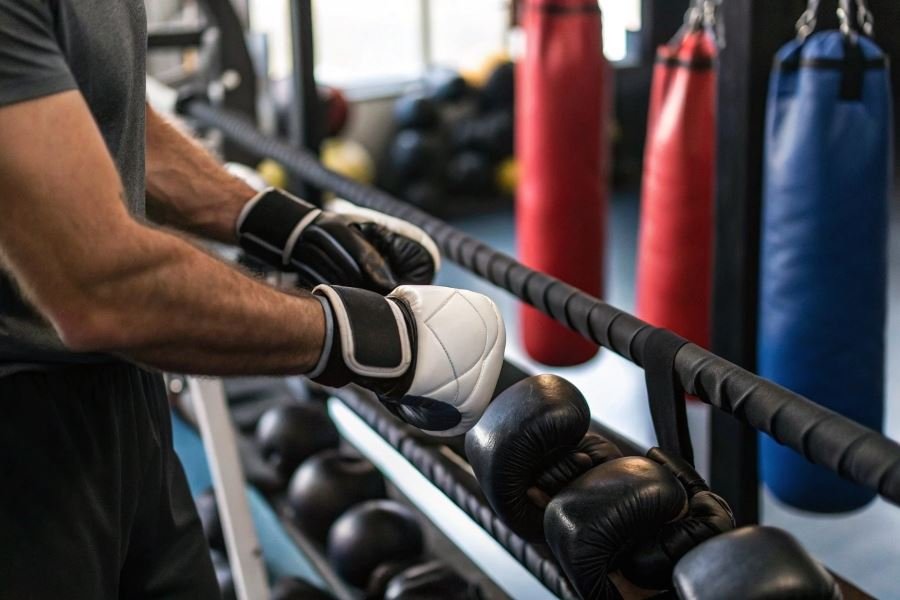
Ever thrown a punch that felt like swinging a brick? Or maybe one that barely made an impact? That’s the power of glove weight selection – a game-changer that separates effective training from wasted effort.
When selecting boxing gloves for training, weight isn’t just a number – it’s the foundation of your entire boxing experience. The right glove weight creates the perfect balance between protection and performance, allowing you to develop proper technique while minimizing injury risk. Too light, and you risk hand damage; too heavy, and your form suffers as fatigue sets in prematurely.
The weight-performance connection
Boxing gloves typically range from 8oz to 18oz, with each weight serving a distinct purpose in your training journey:
- 8-10oz gloves: Speed-focused training, competition (lighter weight classes)
- 12-14oz gloves: Balanced training, sparring for smaller individuals
- 16-18oz gloves: Heavy bag work, protective sparring, endurance building
The physics behind glove weight is fascinating – heavier gloves absorb more impact force, protecting both your hands and training partners. However, they also require more energy to throw, building shoulder endurance and power over time. This creates a progressive training effect where your punches feel lightning-fast when you switch back to lighter gloves for competition.
Remember that glove weight selection isn’t one-size-fits-all. Your body weight, training goals, and experience level all influence which weight will maximize your development while keeping your hands safe for years of training.
Glove Weight Matters: Choosing the Right Boxing Gloves for Your Training
When you step into the ring or hit the heavy bag, the weight of your boxing gloves isn’t just a number—it’s a strategic choice that directly impacts your performance, protection, and progress. Selecting the appropriate weight of boxing gloves for your training sessions can make the difference between developing proper technique and risking injury, between building endurance and burning out too quickly.
Many factors influence what weight of boxing gloves is suitable for training, including your body size, experience level, and most importantly, your training purpose. Different weights serve different functions, and understanding these distinctions will help you maximize every minute of your workout while keeping your hands and training partners safe.
Lightning-Fast: 8-10oz Gloves for Speed and Technique
The lightweight contenders in the boxing glove world—8oz and 10oz gloves—are the sprinters of boxing equipment. These nimble options offer:
- Maximum hand speed for developing lightning-quick combinations
- Enhanced feedback on punch placement and technique
- Reduced arm fatigue during technical drills
“Light gloves teach precision. When you can feel every connection, you learn to punch correctly rather than just powerfully.”
These gloves are ideal for:
- Shadowboxing sessions where speed is paramount
- Focus mitt work requiring rapid hand transitions
- Technical drills focusing on accuracy and form
However, these lightweight options provide minimal padding, making them unsuitable for heavy bag work or sparring where protection becomes essential.
The All-Rounders: 12-14oz for Balanced Training
Medium-weight gloves (12-14oz) strike the perfect balance between speed and protection, making them the versatile workhorses of boxing training. These weights offer:
- Adequate protection for regular bag work
- Sufficient speed for technical development
- Appropriate weight for controlled sparring sessions
These middle-weight options are particularly valuable for:
| Training Type | Benefits of 12-14oz Gloves |
|---|---|
| Mixed Sessions | Versatility across different training elements |
| Light Sparring | Enough padding for partner safety without excessive bulk |
| General Conditioning | Moderate resistance without overwhelming fatigue |
For most recreational boxers and fitness enthusiasts, a quality pair of 14oz Everlast or Title gloves provides the perfect all-purpose training tool.
The Heavyweights: 16-18oz for Endurance and Protection
When maximum protection and conditioning benefits are the goal, heavyweight gloves (16-18oz) become your best training partners. These substantial gloves deliver:
- Superior hand and wrist protection during intense bag work
- Built-in resistance training for shoulder and arm endurance
- Maximum padding for safe sparring sessions
The additional weight might seem minimal on paper, but during a three-minute round, those extra ounces transform into:
- Natural resistance training for your shoulders
- Increased caloric burn during workouts
- Improved stamina when you switch to lighter gloves for competition
Professional boxers regularly train with 16oz gloves, then compete in 8oz or 10oz gloves—creating a dramatic speed advantage when it matters most.
Remember that glove weight is just one component of your training equation. The quality of padding, fit, and construction all play crucial roles in both performance and protection. Invest in the best gloves you can afford at each weight class to ensure your boxing journey is both effective and injury-free.
Finding Your Perfect Boxing Glove Weight
When you step into the ring or hit the heavy bag, your gloves become an extension of yourself. Choosing the right weight isn’t just about comfort—it’s about performance, protection, and progress. Let’s dive into what truly determines your ideal boxing glove weight.
Your Body as the Blueprint
Your physical attributes play a crucial role in determining appropriate glove weight. Here’s why this matters:
Fighters with larger frames and higher body weights typically need heavier gloves to provide adequate protection for both themselves and their training partners. The physics is simple: more mass behind your punches requires more cushioning.
Size-weight correlation guide:
| Body Weight | Recommended Glove Weight |
|---|---|
| Under 120 lbs | 10-12 oz |
| 120-150 lbs | 12-14 oz |
| 150-180 lbs | 14-16 oz |
| 180+ lbs | 16-18 oz |
Hand size matters too. Those blessed with larger hands might find themselves needing to size up regardless of body weight. Nothing kills a training session faster than circulation-cutting gloves that leave your hands numb after three rounds.
Experience Level Changes Everything
The boxing journey transforms your glove needs at every stage:
Beginners benefit from heavier gloves (14-16 oz) that slow down movements slightly, allowing for proper technique development while providing maximum protection for wrists and knuckles still adapting to impact forces.
Intermediate fighters can typically work with 12-14 oz gloves as their technique improves and their bodies adapt to the rigors of training.
Advanced boxers often train with multiple weights—heavier gloves (16 oz) for endurance and defensive drills, lighter gloves (10-12 oz) for speed work, and competition-weight gloves for fight-specific preparation.
The gloves you train with today shape the fighter you’ll become tomorrow. Choose wisely.
Professional coaches often recommend beginners start with gloves 2-4 ounces heavier than what their body size suggests, gradually working down as technique improves.
Training Goals Drive Weight Selection
Your objectives in the gym should directly influence your glove selection:
Speed and reflex training calls for lighter gloves (10-12 oz) that allow for quicker hand movement and develop fast-twitch muscle fibers. These sessions emphasize neurological adaptation over power development.
Power development demands heavier gloves (16-18 oz) that increase resistance throughout your striking range of motion. The added weight transforms ordinary shadowboxing into strength training for your shoulders and arms.
Sparring sessions require standardized weights (usually 16 oz) to ensure safety for all participants. The extra padding protects both the striker and receiver from unnecessary damage during practice.
Competition preparation should include some training with gloves matching the weight you’ll use on fight night—typically 8-10 oz for professionals and amateurs, depending on weight class and sanctioning body regulations.
Your training frequency also matters. Daily boxers might prefer slightly lighter gloves to reduce cumulative strain, while those training 2-3 times weekly can handle heavier weights during their sessions.
Remember that glove weight is just one variable in your boxing equation. Material quality, padding distribution, and proper fit are equally important factors that transform good training sessions into great ones.