
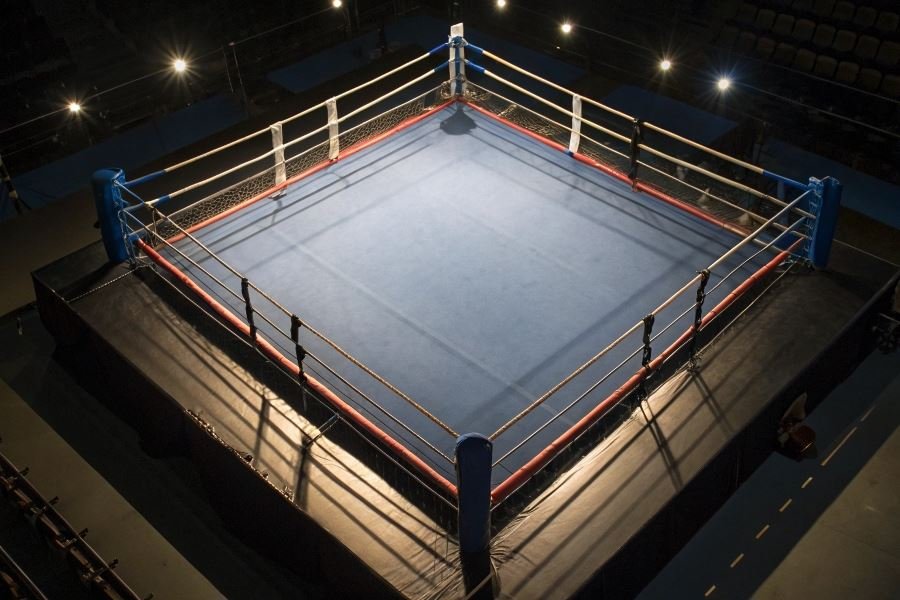
Ever wondered why Floyd Mayweather looked so comfortable dancing around opponents while Olympic boxers seem to fight in a different rhythm altogether? The answer lies not just in skill, but in the very canvas they perform on—the boxing ring itself.
The modern boxing ring has evolved dramatically since the 1700s when fighters battled on bare ground with spectators forming a human “ring” around them. By 1838, the first squared ring with ropes appeared in London, fundamentally changing how the sport was contested. Professional boxing embraced larger rings earlier, while amateur boxing standardized much later under Olympic influence.
Today’s regulatory landscape creates two distinct boxing worlds. Professional rings fall under the jurisdiction of bodies like the WBC, WBA, and local athletic commissions, while amateur rings answer to AIBA (now IBA) and national governing bodies. These organizations don’t just enforce different rules—they’ve created entirely different fighting environments.
Why these differences matter goes beyond trivia. For fighters transitioning from amateur to professional ranks, adapting to the new ring dimensions can mean the difference between victory and defeat. Coaches must adjust strategies based on available space, and even spectators experience the sport differently depending on the venue. The ring isn’t just a backdrop—it’s an active participant in the drama of boxing, shaping styles, strategies, and careers with its unforgiving boundaries.
The Squared Circle: Physical Specifications That Define the Ring
When you step into a boxing ring, you’re entering a carefully designed battleground where every inch matters. The physical specifications of boxing rings vary dramatically between professional and amateur settings, creating entirely different fighting experiences for the athletes who compete in them.
Professional vs amateur boxing rings: main differences extend far beyond simple aesthetics. These variations fundamentally alter fighting strategies, safety considerations, and even the very nature of the bout itself. From the expansive canvas of a pro ring to the more confined space of amateur competition, these differences represent the evolution of the sport at different competitive levels.
Size Matters: Dimensions That Define Combat
Professional rings typically measure between 16-20 feet (4.9-6.1 meters) on each side, measured from the inside of the ropes. The standard size for major championship bouts is often 20×20 feet. This larger battlefield favors mobile fighters who can utilize footwork and distance management.
Amateur rings are notably smaller, usually measuring 16×16 feet (4.9×4.9 meters) or sometimes even less. This compressed fighting space creates more exchanges and often rewards aggressive fighters who can cut off the ring effectively.
| Ring Type | Standard Size | Minimum Size | Maximum Size |
|---|---|---|---|
| Professional | 20×20 ft | 16×16 ft | 24×24 ft |
| Amateur | 16×16 ft | 14×14 ft | 20×20 ft |
Rope Configuration: The Boundaries of Battle
The ropes that encircle the ring create a crucial boundary that defines the fighting space and impacts safety:
Professional rings feature four ropes, positioned at approximately 18, 30, 42, and 54 inches from the canvas. These ropes are typically 1-inch thick and covered with soft material. The tension is carefully calibrated—tight enough to prevent fighters from falling through but with enough give to absorb impact.
Amateur rings traditionally used three ropes until recent standardization efforts. Modern amateur rings now typically feature four ropes as well, but often with different height configurations and sometimes less padding than their professional counterparts.
Canvas and Padding: The Foundation of Footwork
The surface beneath a boxer’s feet dramatically influences movement, power generation, and safety:
Professional rings feature canvas stretched tightly over a layer of padding that’s typically 1-inch thick. This padding sits atop a plywood base supported by metal or wooden beams. The result is a firm but slightly forgiving surface that allows for explosive movement while providing some shock absorption.
Amateur rings often utilize similar materials but with notable differences in construction quality. The padding is frequently thinner (sometimes as little as ½-inch) and the canvas may be less taut, creating a different feel underfoot.
Corner Posts: The Pillars of the Ring
The four corner posts serve as the structural foundation of any boxing ring:
Professional rings feature heavily padded corner posts that extend approximately 5 feet above the ring floor. These posts are positioned outside the ropes and designed to minimize injury if a fighter is thrown or falls against them.
Amateur setups typically have similar corner post designs but may feature less substantial padding or different configurations based on the governing body’s regulations.
These physical differences between professional and amateur rings aren’t merely technical specifications—they fundamentally shape the fighting experience, creating distinct environments that demand different skills and strategies from the athletes who compete within them.
Ring Dynamics: How Pro and Amateur Boxing Rings Shape the Fight
Fighting Style Evolution Across Ring Types
The boxing ring isn’t just a stage—it’s a strategic battlefield that fundamentally transforms how fighters approach their craft. Professional rings, with their larger 20×20 foot dimensions (compared to amateur’s typical 16×16 foot space), create a completely different tactical environment.
In the pro ring’s expanded territory, fighters with superior footwork gain a tremendous advantage. The additional 128 square feet becomes a canvas for movement specialists like Muhammad Ali, whose legendary “float like a butterfly” style exploited every inch of the professional ring. Contrast this with the compact amateur rings where fighters like Vasyl Lomachenko developed their lightning-fast combinations and inside fighting skills before transitioning to the pros.
The ropes themselves dictate strategy. Professional rings feature looser, more elastic ropes that experienced fighters use as tactical tools—bouncing off them to generate counterpunching momentum or using them to rest momentarily. Amateur rings, with their tighter, less forgiving ropes, discourage this “rope-a-dope” strategy made famous by Ali against George Foreman in the 1974 “Rumble in the Jungle.”
“The professional ring rewards the patient hunter; the amateur ring rewards the aggressive scorer.”
The canvas texture also influences fighting style. The firmer amateur canvas promotes quicker footwork and rapid direction changes, while the slightly more cushioned professional canvas encourages planted feet for power punching—a subtle difference that explains why some amateur standouts struggle to maintain their speed advantage when turning pro.
Safety Architecture in Different Ring Designs
Safety considerations between ring types reflect their different purposes. Amateur boxing prioritizes participant protection through multiple design elements:
- Padded corner posts with additional cushioning
- Higher tension in the ropes to prevent dangerous falls
- Standardized canvas resilience to reduce slip injuries
Professional rings, while meeting basic safety requirements, are engineered more for spectacle and endurance testing. The looser ropes and larger dimensions can actually increase injury risk by allowing fighters to absorb more punishment before finding refuge in clinches or corners.
| Feature | Amateur Ring | Professional Ring | Safety Impact |
|---|---|---|---|
| Corner padding | Extensive | Minimal | Higher concussion risk in pro rings |
| Ring size | 16×16 ft | 20×20 ft | More falls and rope collisions in larger rings |
| Canvas tension | Uniform, tight | Variable | Inconsistent footing in pro rings increases ankle injury risk |
| Rope elasticity | Minimal | Significant | Pro ropes can cause “slingshot” impacts |
The padding beneath the canvas tells another safety story. Amateur rings typically feature more consistent padding throughout, while professional rings sometimes have firmer centers and softer perimeters—a design that subtly encourages fighters to engage in the middle of the ring where broadcasters capture the best footage.
Transition Training for Crossing Ring Boundaries
Boxers moving between amateur and professional rings face a significant adjustment period that demands specific preparation. Fighters transitioning to professional rings should:
Expand spatial awareness training by practicing in progressively larger rings during camp. Many former amateur standouts work specifically on corner escape drills to adapt to the professional ring’s expanded dimensions.
Develop rope interaction skills through specialized drills. Former Olympic gold medalist Andre Ward famously spent months learning to use professional ropes to his advantage, incorporating “bounce drills” that taught him to use the ropes’ elasticity for counterpunching opportunities.
Conditioning must adapt as well. The larger professional ring typically requires 15-20% more movement per round. Fighters moving up should gradually increase their roadwork and incorporate more lateral movement drills to prepare for the expanded territory.
Conversely, amateurs entering the tighter Olympic or amateur rings need to compress their fighting style, focusing on:
- Shorter, more explosive combinations
- Quicker pivots in tighter spaces
- Higher punch output to impress judges under amateur scoring systems
The ring isn’t just where boxing happens—it’s an active participant that shapes every aspect of the fight. Understanding these differences doesn’t just prepare fighters for transition; it gives them the strategic edge to exploit the very architecture of their battleground.