
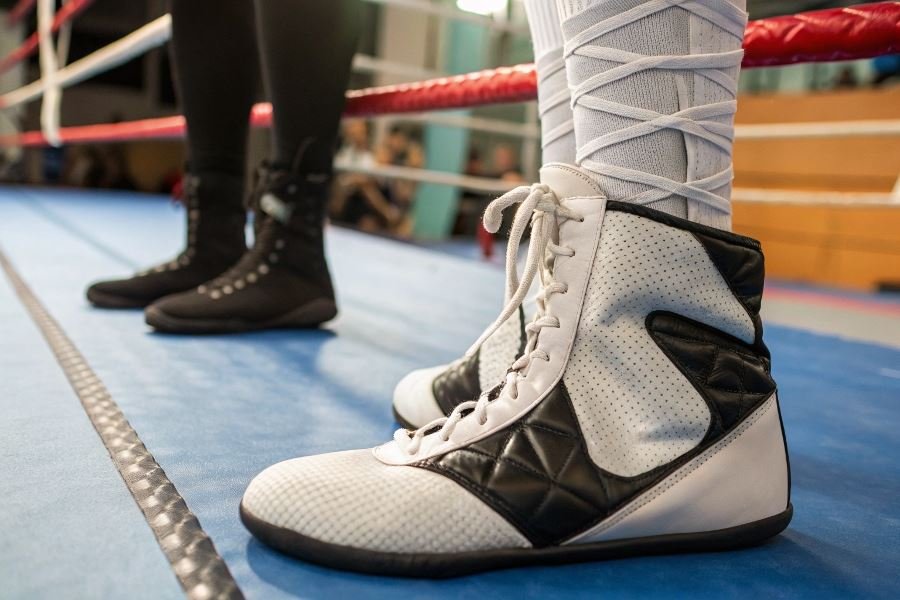
Ever watched a boxer slip at a crucial moment? That split-second loss of traction can be the difference between landing the perfect counterpunch and eating canvas. Your footwork foundation isn’t just about style—it’s about survival.
Boxing shoes aren’t simply “sneakers for punching.” They’re specialized equipment engineered for the unique demands of the sweet science. While your running shoes cushion vertical impact, boxing footwear prioritizes lateral stability, ankle support, and mat grip that could save your jaw from an unexpected meeting with someone’s fist.
The boxing shoe difference is dramatic. Traditional athletic shoes feature thick, cushioned soles designed to absorb downward force. Boxing shoes, by contrast, offer thin, flexible soles that maximize floor feel and responsiveness. This design allows fighters to pivot instantly, transfer weight efficiently, and maintain perfect balance during complex combinations.
When selecting your boxing footwear, three critical factors demand your attention:
- Support level – High-tops provide maximum ankle stability while low-tops offer greater mobility
- Sole material – Rubber compounds vary in grip level and durability
- Weight – Lighter shoes enable quicker movement but may sacrifice durability
“Your boxing shoes are the foundation of everything you do in the ring. Choose poorly, and you’re fighting with a handicap before the first bell rings.” – Legendary trainer Freddie Roach
The right boxing shoes don’t just complement your technique—they enhance it, protect you, and might just help you stay vertical when it matters most.
Essential Factors for Boxing Shoe Selection
When you step into the ring, your footwear becomes your foundation. The difference between maintaining perfect balance during a critical exchange and slipping at the worst possible moment often comes down to what’s on your feet. Let’s dive into the critical elements that separate championship-worthy boxing shoes from the pretenders.
Boxing shoes aren’t just athletic footwear—they’re specialized equipment designed for the unique demands of the sport. What to pay attention to when choosing boxing shoes involves understanding several key factors that directly impact your performance, safety, and comfort in the ring. From ankle support to sole composition, each element serves a specific purpose in your boxing journey.
Ankle Support and Height Options
The height of your boxing shoe directly correlates with the level of ankle support and mobility trade-off:
High-top designs extend well above the ankle, providing maximum stability and protection. These are ideal for fighters who prioritize defensive movement and those recovering from ankle injuries.
Mid-top options strike a balance between support and freedom, covering the ankle but allowing greater range of motion. Many professional fighters prefer this middle-ground approach.
Low-top shoes maximize mobility and speed at the cost of reduced ankle protection. These are favored by fighters who rely on quick footwork and rapid direction changes.
The height you choose should reflect your fighting style, not just what your favorite boxer wears.
Sole Grip and Material Composition
The connection between your feet and the canvas is critical:
Pivot points on quality boxing shoes allow for smooth rotational movement without sacrificing traction. Look for strategic placement that aligns with natural foot mechanics.
Material composition varies widely, with options including:
| Material | Benefits | Potential Drawbacks |
|---|---|---|
| Rubber | Excellent grip, durability | Can be heavier |
| Gum rubber | Superior traction, lightweight | May wear faster |
| Synthetic blends | Balanced performance, cost-effective | Variable quality |
The best boxing shoes from brands like Adidas and Nike feature thin, non-marking soles that provide the perfect balance of grip and pivot capability.
Weight and Mobility Considerations
Every ounce matters when you’re dancing around the ring for 12 rounds. Modern boxing shoes typically weigh between 6-14 ounces, with significant performance implications:
Lightweight models (6-8 oz) maximize speed and reduce fatigue during lengthy bouts but may sacrifice durability.
Mid-weight options (9-11 oz) balance mobility with structural support—ideal for most fighters.
Heavier designs (12+ oz) offer enhanced durability and support but can slow movement after extended periods.
The material construction plays a crucial role here—mesh panels, synthetic leather, and strategic reinforcement all contribute to the weight-to-performance ratio.
Fit and Sizing Specifics
Boxing shoes should fit differently than your everyday sneakers:
Snug but not tight is the golden rule—you want zero internal movement without restricting blood flow or causing discomfort.
Sizing variations between brands can be significant. Everlast tends to run true to size, while some Reebok models may require sizing down a half-size.
Width considerations matter tremendously—boxing involves lateral movement that standard athletic shoes aren’t designed for. Brands like Rival offer wider options for fighters with broader feet.
Remember that proper boxing shoes should feel like an extension of your body—not equipment you’re conscious of during training or competition. When they disappear from your awareness during use, you’ve found the right pair.
Sealing the Deal: Your Perfect Boxing Shoes Await
Finding your ideal boxing footwear isn’t just about what looks good—it’s about what performs when you need it most. After considering all the technical aspects, it’s time to make that final, crucial decision that could impact your performance in the ring.
Match your footwear to your fighting style
Your boxing style should dictate your footwear choice, not the other way around. Aggressive forward-moving fighters benefit from shoes with exceptional grip and stability like the Nike Machomai 2 with their wide outsole design. Counter-punchers who rely on quick footwork might prefer lightweight options such as Adidas Box Hog 3 models weighing just 8 ounces.
Training frequency also matters significantly:
- 3+ sessions weekly: Invest in premium construction that can withstand consistent use
- Occasional training: Mid-range options offer sufficient durability without breaking the bank
- Competition focus: Consider having separate pairs for training and fight nights
Remember that ankle support requirements vary dramatically between fighters. High-top designs provide maximum stability but sacrifice some mobility, while mid-cut options strike a balance that works for most boxers.
Budget considerations that make sense
Boxing shoes range dramatically in price, typically from $60 to $300+. The sweet spot for most serious enthusiasts lies between $120-180, where quality construction meets reasonable pricing.
The cheapest option is rarely the most economical in the long run.
Consider this value assessment framework:
| Price Range | Expected Lifespan | Best For | Value Rating |
|---|---|---|---|
| $60-90 | 6-12 months | Beginners, occasional training | Good starter value |
| $100-180 | 1-2 years | Regular training, amateur competition | Highest overall value |
| $180+ | 2+ years | Professional use, specialized needs | Premium investment |
Factor in replacement frequency when calculating true cost. A 150pairlastingtwoyears(75/year) offers better value than a 70pairneedingreplacementeverysixmonths(140/year).
Top performers worth your consideration
After testing dozens of models and consulting with professional fighters, these three consistently deliver exceptional performance:
-
Reebok Boxing Boot – The gold standard for versatility with its perfect balance of ankle support, lightweight construction (9.5 oz), and exceptional grip pattern. Ideal for fighters who need adaptability across different fighting styles.
-
Adidas Box Hog 3 – Unmatched in lightweight performance (8 oz) with a breathable mesh upper that prevents overheating during intense sessions. The pivot point design on the outsole facilitates fluid movement for technical boxers.
-
Nike HyperKO 2 – Premium construction with Nike’s proprietary cushioning system makes these worth the investment for serious competitors. The asymmetrical lacing system provides a secure, customized fit that prevents slippage during explosive movements.
Your final choice should reflect your honest assessment of your needs, fighting style, and budget constraints. The perfect boxing shoe isn’t necessarily the most expensive or the most popular—it’s the one that disappears from your consciousness the moment you step into the ring, allowing you to focus entirely on your performance.