
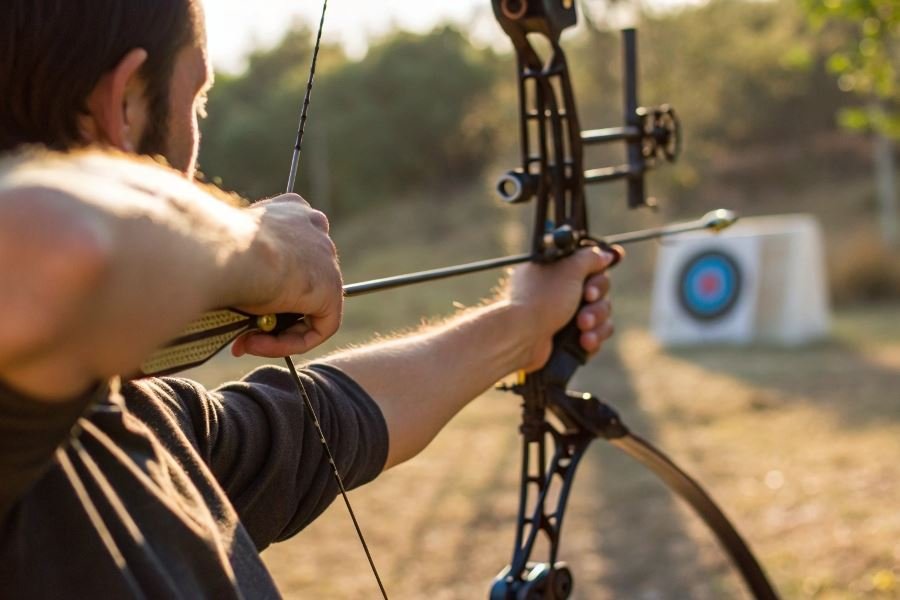
Ever stood 50 yards from a target and wondered if your crossbow has what it takes to deliver a clean, ethical shot? The difference between success and failure often comes down to understanding the raw physics behind your weapon.
When selecting a crossbow, power isn’t just about bragging rights—it’s about performance, ethics, and legality. The crossbow’s power profile determines everything from its effective range to its hunting capabilities, making it perhaps the most critical factor in your purchasing decision.
Draw weight: The foundation of crossbow power
Draw weight—measured in pounds—represents the force required to cock your crossbow. Modern hunting crossbows typically range from 125 to 200+ pounds, with each increment dramatically affecting performance.
A higher draw weight generally translates to greater arrow velocity and flatter trajectories. For example, a 175-pound draw weight crossbow might propel arrows at 350 fps (feet per second), while a 150-pound model might achieve only 320 fps under identical conditions.
The range equation: For every 25 pounds of additional draw weight, you can typically expect about 15-25 yards of additional effective range, depending on the crossbow’s efficiency.
Kinetic energy: The true measure of hunting capability
While draw weight gets the attention, kinetic energy (measured in foot-pounds) tells the real story of what happens when your arrow reaches its target.
“Velocity sells crossbows, but kinetic energy kills game.” – Common wisdom among experienced hunters
For ethical hunting, different game requires different kinetic energy thresholds:
| Game Type | Recommended Minimum Kinetic Energy |
|---|---|
| Small game | 25 ft-lbs |
| Deer | 50 ft-lbs |
| Elk/Moose | 65 ft-lbs |
| Large African game | 90+ ft-lbs |
Navigating legal requirements
Crossbow power regulations vary significantly by state and hunting season. Some jurisdictions specify minimum draw weights (often 75-125 pounds), while others regulate velocity or kinetic energy.
Before investing in a high-powered crossbow, verify your local regulations—what’s legal in Wyoming might be prohibited in Maryland. Many states have updated their crossbow regulations since 2020, creating a patchwork of requirements across the country.
Remember: with great power comes not just great responsibility, but also increased noise, recoil, and physical demands. The most powerful crossbow isn’t always the right choice for every shooter or hunting scenario.
Unleashing Crossbow Power: Match Performance to Your Hunting Style
When selecting your next crossbow, understanding power dynamics isn’t just helpful—it’s essential. The perfect balance of speed, weight, and power stroke can mean the difference between a clean ethical harvest and a disappointing day in the field.
Let’s dive into what truly matters when evaluating crossbow power. When examining the power of the crossbow, what to pay attention to when choosing becomes clear once you understand how these machines translate stored energy into downrange performance. Unlike compound bows, crossbows offer mechanical advantages that can deliver impressive results when properly matched to your hunting scenario.
Speed Ratings: Beyond the Marketing Hype
Manufacturers love touting blazing fast FPS (feet per second) numbers, but what do they actually mean for you?
Most modern crossbows advertise speeds between 300-470 FPS. However, these ratings come with fine print—they’re typically measured using the lightest possible arrows under perfect conditions. Real-world performance often differs by 15-30 FPS.
Why speed matters:
- Flatter trajectory for longer shots
- Increased kinetic energy for better penetration
- Less time for game to react (the “jump the string” phenomenon)
But remember—raw speed isn’t everything. A 350 FPS crossbow with proper arrow weight will outperform a 400 FPS model shooting arrows too light for hunting.
The most ethical hunters prioritize terminal performance over speed bragging rights.
Power-to-Weight Ratio: Finding Your Sweet Spot
| Crossbow Type | Typical Weight | Speed Range | Best For |
|---|---|---|---|
| Ultralight | 5-7 lbs | 330-380 FPS | Mobile hunting, long treks |
| Standard | 7-9 lbs | 350-420 FPS | All-purpose, tree stands |
| High-Performance | 9+ lbs | 400-470 FPS | Maximum power, stationary hunts |
The Ravin R29X demonstrates exceptional power-to-weight engineering at just 6.75 pounds while delivering 450 FPS. Meanwhile, the TenPoint Nitro 505 prioritizes raw power at 505 FPS but weighs in at 7.9 pounds.
For whitetail hunting from a blind, that extra pound might be irrelevant. For spot-and-stalk western hunts covering miles of terrain, every ounce counts.
Power Stroke: The Engine Behind the Arrow
Power stroke—the distance the string travels from cocked to released position—is perhaps the most overlooked yet critical factor in crossbow performance.
Longer power strokes deliver:
- More stored energy potential
- Smoother acceleration
- Less stress on components
- Quieter shots
Modern crossbows feature power strokes ranging from 9-17 inches. The Excalibur Assassin 400TD utilizes a 13.5″ power stroke to achieve 400 FPS with remarkable efficiency, while maintaining a compact frame when disassembled.
Think of power stroke like engine displacement in cars—larger isn’t always better if it compromises other aspects of performance. A 14″ power stroke crossbow might outperform a 16″ model if it’s engineered with superior cams, rails, and string technology.
The ideal crossbow balances these three factors—speed, weight, and power stroke—to match your specific hunting needs. Don’t get seduced by marketing claims about any single specification. Instead, consider how these elements work together to deliver the performance that matters most for your hunting style.
Mastering Your Crossbow Power Decision
When you’re staring down the sight of a potential crossbow purchase, the final power decision can feel overwhelming. But this is where champions separate themselves from casual shooters. Let’s dive into how to make that perfect power choice that will have you hitting bullseyes for years to come.
Balance Power With Physical Reality
The raw thrill of a 200+ pound draw weight crossbow sending arrows downrange at 400+ FPS is undeniable. But power without control is just noise. Your ideal crossbow should match your physical capabilities, not just your ambitions.
Consider this reality check:
- Higher draw weights (175+ pounds) require significant upper body strength or a cocking device
- Heavier crossbows (8+ pounds) become exhausting during all-day hunts
- Recoil increases proportionally with power, affecting accuracy for some shooters
The most powerful crossbow in your arsenal is the one you can shoot accurately and comfortably all day long.
Many experienced hunters find that mid-range power crossbows (150-175 pound draw weights) deliver the perfect balance between knockdown power and usability. The TenPoint Havoc 440 exemplifies this sweet spot with manageable weight and excellent power delivery.
High Power Equals High Maintenance
That 400+ FPS speed demon requires more than just muscle to cock—it demands disciplined maintenance. High-powered crossbows create additional stress on:
| Component | Maintenance Need | Replacement Frequency |
|---|---|---|
| Strings/Cables | Waxing after 15-20 shots | Every 1-2 seasons |
| Rail | Lubrication before each session | N/A |
| Limbs | Regular inspection for cracks | As needed |
| Cocking mechanism | Cleaning and lubrication | Parts every 2-3 years |
The Ravin R29X delivers blistering speed but requires meticulous maintenance to maintain that performance. By contrast, workhorse models like the Barnett Whitetail Hunter offer excellent reliability with less intensive care.
Remember: The time you spend maintaining your crossbow is time not spent hunting or shooting. Factor this reality into your power decision.
Future-Proof Your Crossbow Investment
A quality crossbow isn’t just a purchase—it’s an investment in your sporting future. When evaluating power specifications, consider:
-
Adaptability: Can the crossbow be de-cocked safely without firing? Models like the Excalibur Assassin feature this capability.
-
Longevity: Higher-powered crossbows often reach their performance limits sooner. Mid-range models typically maintain consistent accuracy longer.
-
Versatility: Will you use this exclusively for big game, or do you need something for multiple applications? The CenterPoint Sniper Elite offers versatile performance across hunting scenarios.
The best crossbow purchase isn’t necessarily the most powerful—it’s the one that will still meet your needs three seasons from now.
Your ideal power choice should align with your shooting goals, physical capabilities, and maintenance willingness. By balancing these factors thoughtfully, you’ll select a crossbow that delivers satisfaction long after the initial thrill of that first shot fades.