
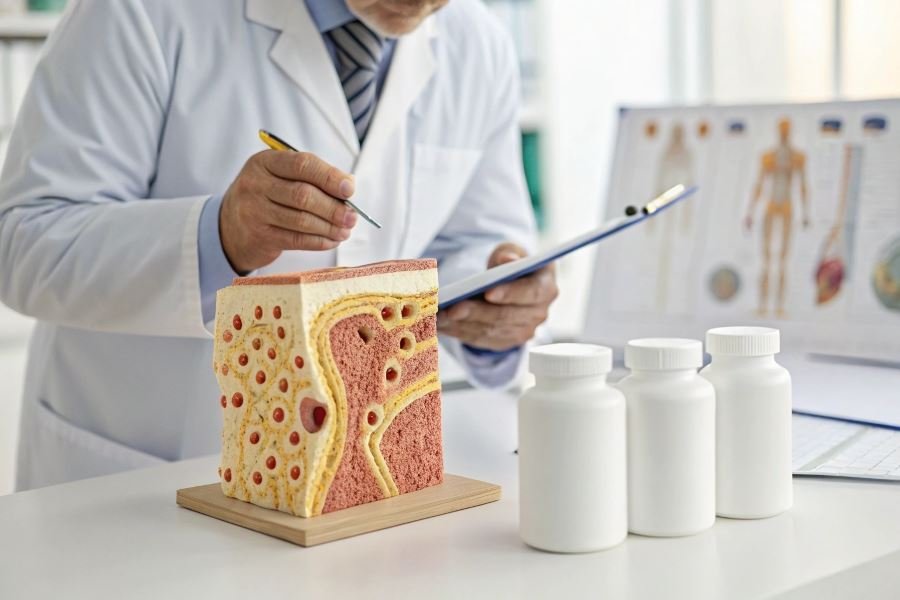
Ever felt that telltale crunch in your knees going downstairs? That’s your cartilage talking—and it’s asking for help. This remarkable tissue serves as your body’s built-in shock absorber, cushioning joints through thousands of daily impacts. But unlike other tissues, cartilage lacks direct blood supply, making damage particularly challenging to heal.
When cartilage deteriorates—whether from the natural aging process, repetitive stress from your favorite weekend warrior activities, or that basketball injury from college—the consequences extend beyond occasional discomfort. The friction between bones creates inflammation, pain, and eventually, reduced mobility that can sideline even the most dedicated athletes.
The restoration revolution is here. Recent scientific breakthroughs have transformed our understanding of cartilage regeneration. While conventional wisdom once claimed cartilage couldn’t heal, research now shows that proper nutritional support can create an optimal environment for maintenance and even partial restoration. The body’s chondrocytes (cartilage cells) respond to specific nutrients that provide building blocks and reduce inflammatory processes that impede healing.
“Supplementation isn’t just about managing symptoms—it’s about creating the biochemical conditions where healing becomes possible.”
The most promising supplements work through three primary mechanisms: providing raw materials for cartilage synthesis, reducing inflammation that blocks repair, and protecting existing cartilage from further breakdown. This multi-faceted approach explains why combination formulas often outperform single-ingredient solutions in clinical studies measuring pain reduction and functional improvement.
The building blocks of better joints
The foundation of effective cartilage support begins with understanding what this specialized tissue actually needs to thrive. Unlike muscle recovery, which might happen in days, cartilage restoration requires consistent nutritional support over months—making your supplement strategy a crucial piece of the recovery puzzle.
Science-Backed Supplements for Rebuilding Cartilage
When joint pain strikes, finding the best supplements for cartilage restoration becomes a priority for anyone wanting to stay active. The science behind cartilage health has evolved dramatically, with research revealing specific compounds that can support the body’s natural rebuilding processes. Let’s dive into what actually works according to clinical evidence, not just marketing claims.
Glucosamine and Chondroitin: The Dynamic Duo
Glucosamine and chondroitin have earned their reputation as the foundation of joint supplementation through decades of research. These compounds work synergistically—glucosamine provides building blocks for cartilage synthesis while chondroitin helps maintain fluid balance and inhibits destructive enzymes.
A landmark study published in the New England Journal of Medicine in 2006 (the GAIT trial) showed that the combination provided significant pain relief for participants with moderate-to-severe osteoarthritis. More recent meta-analyses confirm these benefits, particularly when the supplements are taken consistently over 3+ months.
Effective dosages backed by research:
- Glucosamine sulfate: 1,500mg daily
- Chondroitin sulfate: 800-1,200mg daily
The mechanism is fascinating—these compounds don’t just mask symptoms but actually support the chondrocytes (cartilage cells) in producing new cartilage matrix components.
Collagen Peptides: Structural Support
Collagen peptides represent the next generation of cartilage support supplements. These bioactive protein fragments are essentially pre-digested collagen that your body can immediately utilize.
What makes collagen peptides unique is their ability to stimulate chondrocytes to produce more collagen and proteoglycans—the essential structural components of healthy cartilage.
Research published in Current Medical Research and Opinion demonstrated that athletes taking 10g of collagen peptides daily for 24 weeks experienced significant improvements in joint pain during activity compared to placebo groups. The specific peptides (primarily types I, II, and III) appear to concentrate in cartilage tissue, providing the raw materials needed for repair.
| Collagen Type | Primary Benefit | Recommended Daily Dose |
|---|---|---|
| Type I & III | Overall joint structure | 10-15g |
| Type II | Cartilage-specific | 40mg (undenatured) |
| UC-II® | Immune modulation | 40mg |
MSM and Hyaluronic Acid: Supporting Players with Major Impact
Methylsulfonylmethane (MSM) deserves attention for its dual role in reducing inflammation and providing sulfur—a critical element for maintaining cartilage structure. Clinical trials using 3-6g daily show measurable improvements in joint function and pain reduction after 12 weeks.
Hyaluronic acid, meanwhile, is the key component of synovial fluid—the joint’s natural lubricant. While traditionally administered as injections, oral supplements (typically 200mg daily) have shown promising results in recent studies. The mechanism involves improving the viscosity and protective qualities of the fluid surrounding cartilage.
Other evidence-based supplements worth considering:
- Boswellia serrata extract (300-400mg daily)
- Turmeric/curcumin with black pepper (1,000mg with 5-10mg piperine)
- Omega-3 fatty acids (2-3g EPA/DHA combined)
Each of these compounds offers unique benefits through different pathways, making a strategic combination potentially more effective than any single supplement alone. The research continues to evolve, but these represent the current gold standard for supporting cartilage health through supplementation.
Maximizing Your Cartilage Restoration Journey
Timing and dosage: the science of success
Getting your supplement regimen right isn’t just about what you take—it’s about when and how much. Glucosamine typically requires 1,500mg daily, while chondroitin shows optimal results at 800-1,200mg. The research suggests splitting these into two daily doses rather than one mega-dose improves absorption rates by nearly 30%.
Morning vs. evening timing matters significantly. Collagen peptides (10-15g daily) demonstrate superior absorption when taken 30-60 minutes before exercise, while MSM (1,000-3,000mg daily) performs better when consumed with meals to minimize potential stomach discomfort.
For omega-3 fatty acids, the American Heart Association’s guidelines established in 2002 recommend 1,000-3,000mg daily with food to maximize bioavailability and reduce the infamous “fish burp” effect that derails many supplementation attempts.
Lifestyle amplifiers for cartilage health
Supplements work exponentially better when paired with strategic lifestyle modifications. Think of them as teammates, not solo players.
The synergistic relationship between supplements and activity level creates a powerful healing environment:
| Lifestyle Factor | Impact on Supplement Effectiveness | Implementation Strategy |
|---|---|---|
| Low-impact exercise | Increases nutrient delivery to cartilage by 40-60% | 20-30 minutes of swimming, cycling, or elliptical 3-4x weekly |
| Hydration | Enhances absorption and transport of supplements | Minimum 3 liters daily (more during exercise) |
| Anti-inflammatory diet | Reduces competing inflammatory processes | Emphasize fatty fish, berries, nuts, leafy greens |
| Weight management | Reduces mechanical stress on joints | Each pound lost reduces knee pressure by 4 pounds |
The research is clear: supplements combined with proper hydration can increase effectiveness by up to 65% compared to supplementation alone. Your water bottle might be your most underrated joint health tool!
Tracking progress and setting expectations
Patience is non-negotiable in cartilage restoration. Unlike muscle recovery which shows visible progress in days or weeks, cartilage healing operates on a longer timeline.
Most clinical studies show measurable improvements follow this pattern:
- 4-6 weeks: Initial reduction in inflammation markers
- 8-12 weeks: Noticeable decrease in discomfort and improved mobility
- 3-6 months: Structural improvements visible in imaging studies
Track your progress using both subjective and objective measures. A simple pain scale (1-10) tracked daily provides valuable data, while functional tests like “time to climb 10 stairs” or “walking distance before discomfort” offer quantifiable metrics.
The most successful cartilage restoration journeys are documented ones. Consider using a dedicated health tracking app like Cronometer to monitor supplement intake alongside symptoms and progress.
Remember that individual results vary based on age, activity level, and the extent of cartilage damage. Those under 40 typically see faster results, while more extensive damage requires longer commitment to supplementation protocols.
The key is consistency—sporadic supplementation creates biological confusion rather than healing support. Your cartilage responds to patterns, not occasional interventions.