
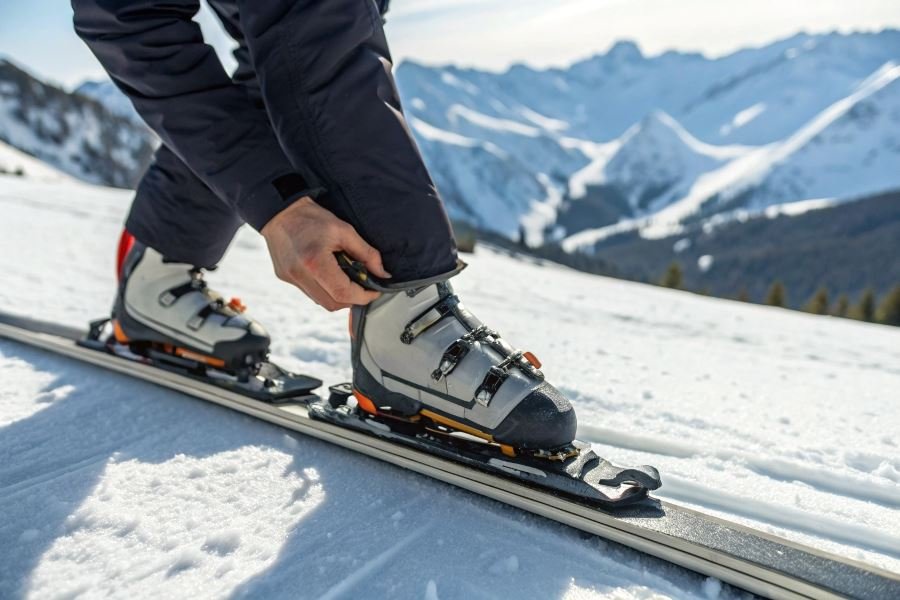
Ever watched a professional carver slice through pristine corduroy at 50mph and wondered how their skis stay attached—until they need to release? That magic happens at the binding—the unsung hero of your ski setup that deserves far more attention than it typically receives.
Bindings aren’t just clamps that hold your boots to your skis. They’re sophisticated safety systems that simultaneously need to grip with unwavering strength during high-edge angle turns while instantly releasing during falls. For carving enthusiasts, this paradox becomes even more critical as the extreme forces generated during deep carves demand bindings that can handle intense lateral pressure without pre-releasing.
The binding-skiing style connection
Your binding selection should mirror your carving approach. Aggressive carvers who push high speeds and extreme edge angles need bindings with higher DIN settings and wider platforms for enhanced power transmission. Meanwhile, recreational carvers might prioritize bindings with more elastic travel, offering forgiveness without sacrificing precision.
Technology that transforms your carving experience
Modern carving bindings feature game-changing innovations like:
- Multi-directional release systems that respond to twisting falls in ways traditional bindings can’t detect
- Adjustable toe heights allowing perfect boot-binding interface for maximum energy transfer
- Anti-friction devices that ensure consistent release regardless of snow conditions
The right binding creates that magical connection where your ski becomes a natural extension of your body—responding instantly to every subtle shift in weight and pressure. Choose wisely, and you’ll unlock a new dimension of carving performance.
Technical Essentials for Carving Ski Bindings
When carving turns with precision becomes your skiing obsession, the binding selection process transforms from a mundane task into a critical performance decision. The connection between your boots and skis isn’t just hardware—it’s the neural pathway that translates your intentions into edge-carving reality.
Selecting the right bindings for carving skis requires understanding several technical criteria that directly impact your performance and safety on the slopes. The binding serves as both your security system and power transfer mechanism, making proper selection crucial for skiers looking to perfect those satisfying carved turns that leave clean railroad tracks in the snow.
DIN Settings: Your Safety Signature
The DIN value (Deutsche Industrie Norm) represents the calibrated release force needed to eject your boot from the binding during a fall. This isn’t just a number—it’s your personalized safety signature on the mountain.
| Skier Type | Typical DIN Range | Characteristics |
|---|---|---|
| Beginner | 2-6 | Conservative, safety-oriented release |
| Intermediate | 5-10 | Balanced release/retention |
| Advanced/Expert | 8-16 | Higher retention for aggressive carving |
“I see too many skiers using inappropriate DIN settings,” says Franz Mueller, former World Cup technician. “An aggressive carver needs sufficient retention to prevent pre-release during high-edge angles, but never at the expense of safety.”
Modern bindings from manufacturers like Marker and Tyrolia feature multi-directional release mechanisms that can distinguish between harmful twisting forces and the natural lateral pressures created during aggressive carving.
Boot-Binding-Ski Compatibility Matrix
Compatibility isn’t optional—it’s essential. Today’s carving skis often feature specific mounting patterns and dimensional requirements.
The interface between your boot sole and binding must be precisely matched. Alpine boots with standard ISO 5355 soles require different bindings than GripWalk or WTR (Walk-To-Ride) soles. Using incompatible combinations compromises both performance and safety.
Carving skis typically have waist widths between 65-85mm, requiring bindings with appropriate toe and heel pieces that won’t create boot overhang or insufficient leverage. Salomon STH2 bindings, for example, feature adjustable toe heights to accommodate different boot sole types while maintaining optimal leverage for carving.
Weight Considerations and Performance Impact
The binding weight equation is more complex than simply “lighter is better.” For carving performance:
- Heavier bindings (900g+) often provide superior vibration dampening and stability at speed—critical for hard-snow carving
- Mid-weight options (700-900g) balance responsiveness with stability
- Ultralight bindings (<700g) may sacrifice some power transmission and dampening
The binding’s mass distribution affects ski flex pattern. Bindings with concentrated mass points can create “dead spots” in the ski’s flex, while designs like the Look Pivot distribute forces more evenly along the ski’s length.
Advanced carvers should consider bindings with:
- Elastic travel in both toe and heel pieces to maintain contact during ski flexion
- Metal-to-metal contact points for direct power transfer
- Adjustable ramp angles to fine-tune forward pressure
The binding’s standing height (distance between boot sole and ski top) also impacts leverage—lower stack heights generally improve edge control and feedback during aggressive carving maneuvers.
When selecting bindings for your carving skis, remember that this critical interface determines not just safety but the very character of your carved turns. Choose wisely, and those perfect arcs will follow.
The Power Trio: Binding Features That Transform Your Carving Game
When you’re slicing through corduroy at high speeds, the connection between your boots and skis isn’t just important—it’s everything. The right bindings don’t merely hold you to your skis; they actively enhance your carving performance through sophisticated engineering that many skiers overlook.
Elastic Travel: The Secret Weapon for Edge Control
Elastic travel might sound like technical jargon, but it’s the difference between harsh, skittering turns and butter-smooth carves that hold even on bulletproof ice. This feature allows your binding to move laterally and vertically while maintaining consistent pressure on your edges.
Why elastic travel matters: When carving aggressively, your skis encounter variable forces that can break edge contact. Quality bindings from manufacturers like Marker or Tyrolia offer between 30-45mm of elastic travel, absorbing these forces while keeping your edges engaged with the snow.
The magic happens when you’re pushing through high-G turns—your bindings flex slightly instead of releasing, maintaining that crucial edge pressure that defines true carving.
Modern elastic systems have evolved dramatically since the rigid bindings of the 1990s. Today’s designs incorporate sophisticated spring mechanisms and specialized polymers that respond differently based on the force applied, giving you confidence to drive harder into each turn.
Power Transmission Through Toe and Heel Design
The architecture of your binding’s toe and heel pieces fundamentally determines how effectively your movements translate to ski performance.
Toe Piece Engineering
Advanced toe pieces feature:
- Wider platforms that distribute pressure across more of the boot sole
- Multi-directional release mechanisms that distinguish between harmful twisting forces and intentional lateral pressure
- Metal-to-metal contact points that eliminate power-robbing flex
Look Pivot bindings are renowned for their turntable toe design that delivers exceptional lateral power transmission while maintaining consistent release values throughout the turn.
Heel Construction
The heel piece is where much of your downward force gets converted to forward drive. Premium carving bindings incorporate:
- Elevated AFDs (Anti-Friction Devices) that allow clean boot release while maximizing power transfer
- Oversize platforms that stabilize the rear of the boot
- Adjustable heel heights that can fine-tune your forward pressure
Stance Adjustments for Your Personal Carving Style
The most sophisticated binding systems recognize that carving technique varies dramatically between skiers.
| Adjustment Type | Performance Impact | Typical Range |
|---|---|---|
| Forward Pressure | Controls responsiveness and rebound | 3-5 settings |
| Lateral Toe Position | Affects leverage and edge angle | +/- 5mm |
| Ramp Angle | Influences body position and turn initiation | 0-4° |
Finding your sweet spot: Experiment with different stance settings in controlled conditions. Many advanced skiers find that minor adjustments—sometimes as little as 1mm—can dramatically improve their carving performance.
The Salomon STH2 binding system offers tool-free adjustment capabilities that let you fine-tune your stance even between runs, allowing for adaptation to changing snow conditions or different carving objectives.
When your bindings are properly adjusted to your personal technique, you’ll experience that rare sensation where the skis feel like natural extensions of your feet—responding instantly to subtle shifts in pressure and angle, exactly what you need for those perfect railroad-track turns.