
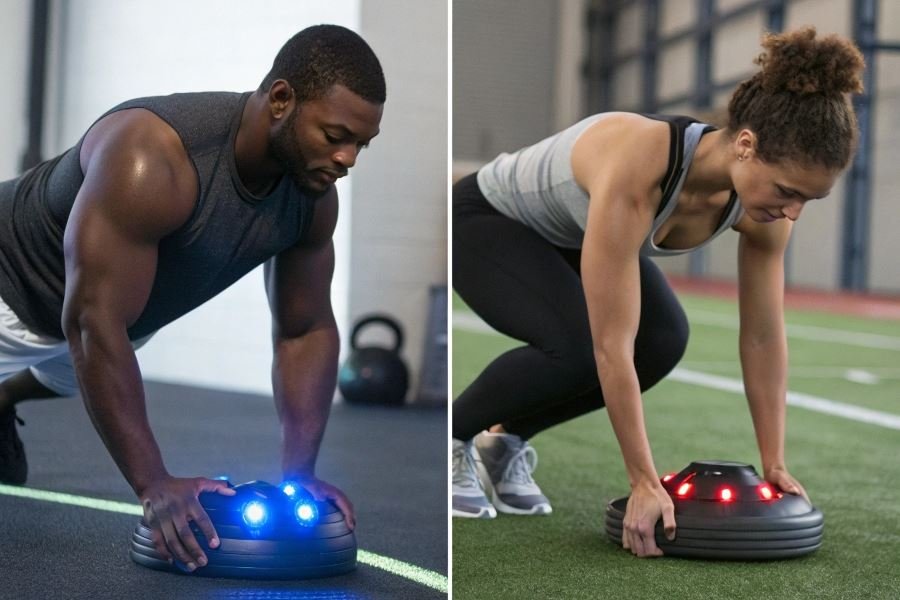
0.15 seconds. That’s all it takes for an NFL quarterback to decide whether to throw or tuck the ball—the difference between a touchdown and a sack. How do elite athletes develop these lightning-fast reflexes? The answer lies in specialized training equipment designed specifically for reaction development.
Reaction development simulators are specialized training devices engineered to measure, challenge, and ultimately improve an individual’s response time to visual, auditory, or tactile stimuli. Whether you’re a professional athlete looking to gain a competitive edge or someone recovering from a neurological injury, these tools have become indispensable in modern training regimens.
The journey of reaction simulators mirrors the evolution of sports science itself. What began as simple mechanical contraptions in the 1970s—think spring-loaded targets and pendulum-based timing systems—has transformed into sophisticated electronic platforms with millisecond precision. The watershed moment came in the early 2000s when digital technology allowed for unprecedented customization and data collection capabilities.
Electronic simulators leverage sensors, LED displays, and computer algorithms to create unpredictable patterns that demand split-second decisions. Their mechanical counterparts, while typically more affordable and durable, operate on physical principles—using gravity, springs, or manual mechanisms to challenge reaction speed.
Key differences at a glance:
| Feature | Electronic Simulators | Mechanical Simulators |
|---|---|---|
| Precision | Millisecond accuracy | Generally less precise |
| Adaptability | Programmable difficulty | Fixed or limited settings |
| Data tracking | Comprehensive analytics | Minimal or manual tracking |
| Portability | Often requires power source | Typically more portable |
| Durability | Sensitive to impacts/moisture | Generally more robust |
The choice between these technologies isn’t merely about preference—it’s about matching the right tool to specific training objectives and environments. The electronic vs. mechanical debate continues to shape how athletes train, how therapists rehabilitate, and how coaches maximize human potential.
The Ultimate Showdown: Electronic vs Mechanical Reaction Trainers
When milliseconds make the difference between victory and defeat, your choice of reaction training equipment matters more than you might think. The battle between electronic and mechanical simulators for reaction development has intensified as technology advances, giving athletes and coaches more options than ever before.
Performance metrics that matter
Electronic simulators have revolutionized reaction training with precision that mechanical counterparts simply can’t match. When comparing electronic and mechanical simulators for reaction development, the numbers tell a compelling story. Electronic systems typically measure reactions with accuracy down to 1/1000th of a second, while mechanical options often cap at 1/100th second precision. This 10x difference might seem minimal, but at elite levels, it’s everything.
Response consistency is where electronic systems truly shine. The Blazepod flash reflex system, for example, delivers identical stimuli every single time, eliminating the variability inherent in mechanical systems like reaction balls that bounce differently depending on surface conditions.
Cost considerations and long-term value
| Simulator Type | Initial Investment | 5-Year Cost | Data Features |
|---|---|---|---|
| Premium Electronic | $300-1,200 | $350-1,300 | Comprehensive |
| Basic Electronic | $100-300 | $150-400 | Limited |
| Mechanical | $20-150 | $100-300 | None |
While mechanical options like reaction balls and paddle trainers typically cost between $20-150, electronic systems range from $100 for basic models to $1,200 for professional setups like the Fitlight Trainer. However, the initial price doesn’t tell the whole story.
The true value emerges when considering operational lifespan and capabilities. Many coaches report mechanical systems requiring replacement every 1-2 seasons of heavy use, while quality electronic systems often come with 3-5 year warranties and last significantly longer.
Durability and maintenance realities
Mechanical simulators win on simplicity—fewer components mean fewer failure points. A reaction ball needs virtually no maintenance beyond occasional cleaning. Contrast this with electronic systems requiring battery changes, software updates, and protection from moisture.
However, durability testing reveals surprising results. The JAWKU Speed and similar electronic trainers are built to withstand thousands of training hours and hundreds of drops from reasonable heights. Meanwhile, mechanical reaction sticks can warp or crack after a single season of intense use.
Training versatility that evolves with you
Electronic systems offer unmatched adaptability. Most allow users to:
- Create custom drills targeting specific weaknesses
- Progressively increase difficulty as skills improve
- Simulate sport-specific scenarios impossible with mechanical tools
Mechanical options provide fewer variations but excel in simplicity. They’re ready instantly—no setup, no charging, no configuration. This “grab and go” quality makes them ideal for spontaneous training sessions.
Data tracking capabilities
The most significant advantage electronic systems hold is their ability to track progress over time. Systems like Reflexion don’t just measure reactions—they analyze patterns, identify weaknesses, and suggest targeted improvements.
This data-driven approach transforms random practice into deliberate improvement.
Mechanical systems offer no inherent tracking capabilities, requiring manual recording of results—a process prone to inconsistency and often abandoned over time.
For serious athletes looking to squeeze every advantage from their training regimen, the data capabilities alone often justify the premium price of electronic systems, turning reaction training from subjective practice into objective science.
Making the Right Call: Choosing Your Reaction Training Simulator
Matching Simulators to Your Training Goals
Selecting the perfect reaction training simulator isn’t just about grabbing the shiniest tech—it’s about aligning with your specific athletic needs. The decision framework starts with honest self-assessment: are you training for split-second decisions on the football field or developing consistent reaction patterns for tennis returns?
For beginners, mechanical simulators offer that crucial foundation. The Fitlight Trainer system provides tactile feedback that helps novices develop muscle memory without overwhelming them with data. Meanwhile, intermediate athletes often benefit from hybrid systems that gradually introduce electronic elements while maintaining physical interaction points.
Elite performers require elite tools. Advanced electronic simulators like the Blazepod flash training system deliver the millisecond precision and comprehensive data analysis needed to find those microscopic improvements that separate champions from contenders.
The best simulator isn’t the most expensive one—it’s the one that bridges the gap between your current abilities and your performance goals.
Your training environment matters too. Home users with limited space might find portable electronic options like the JAWKU Speed more practical, while training facilities can implement comprehensive setups combining both mechanical and electronic elements for progressive skill development.
Tomorrow’s Reaction Tech Today
The reaction training landscape is evolving at breakneck speed. Neural-adaptive simulators represent the cutting edge—systems that actually learn your response patterns and intelligently adjust difficulty based on your performance curve.
Immersive VR training environments are making the leap from gaming novelty to serious training tool. The STRIVR platform already helps NFL quarterbacks process defensive schemes faster by creating thousands of virtual repetitions without physical wear and tear.
Wearable reaction tech is perhaps the most exciting frontier. Embedded sensors in athletic apparel will soon deliver real-time haptic cues, creating “smart uniforms” that can trigger reaction drills during actual practice sessions—blurring the line between training and competition.
Biometric integration is transforming how we understand reaction development. New systems don’t just measure how fast you react—they track pupil dilation, heart rate variability, and even cortisol levels to identify optimal training windows and prevent cognitive fatigue.
Sport-Specific Recommendations
For combat sports practitioners, mechanical systems like the Nexersys strike trainer remain superior for developing reaction-counteraction sequences that require physical impact feedback.
Team sport athletes benefit most from electronic systems with multi-user capabilities. Basketball players can use the DribbleUp smart basketball system to develop court vision and passing reaction times simultaneously.
Racquet sports demand precision timing above all else. The Slinger Bag with programmable ball delivery patterns creates the variable stimulus needed for tennis players to develop anticipatory reactions.
For rehabilitation scenarios, start with simple mechanical systems focusing on gross motor reactions before progressing to fine-tuned electronic options. This progression respects neurological recovery patterns while maintaining engagement through achievable challenges.
The ultimate recommendation? Hybrid training. Alternating between mechanical and electronic simulators creates complementary adaptations that neither system can develop alone. This balanced approach builds both the instinctive reactions needed under pressure and the analytical decision-making that elevates good athletes to greatness.