
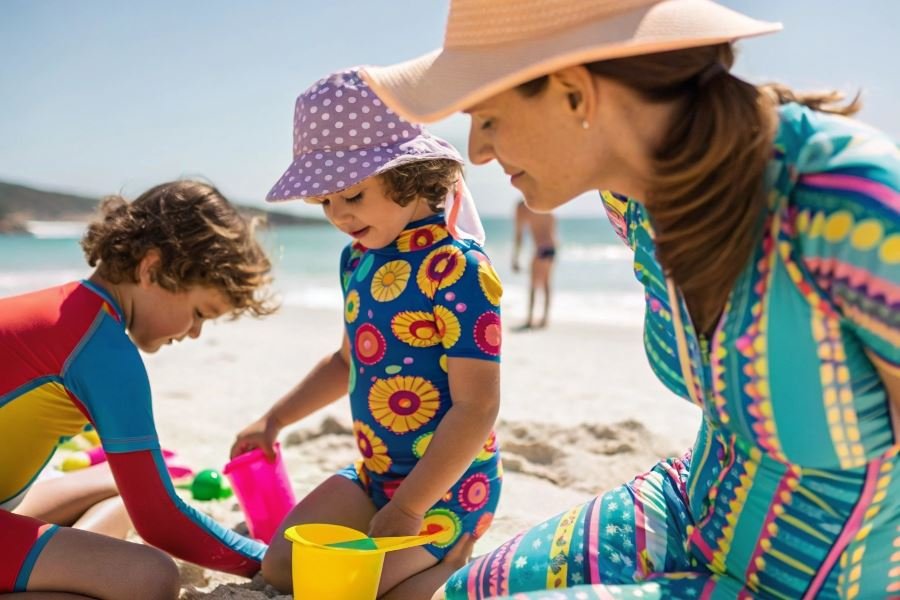
Ever watched a child tug uncomfortably at their swimsuit while trying to enjoy the pool? That moment captures exactly why swimwear materials aren’t just a detail—they’re everything.
When it comes to children’s swimwear, the fabric choice makes the difference between a day of aquatic adventures and a session of constant adjustments and complaints. The most popular materials for children’s swimsuits have evolved dramatically, with innovations focusing on the perfect balance of comfort, protection, and durability. Modern options like nylon-spandex blends and polyester microfibers have revolutionized how kids experience water play, offering stretch, quick-drying properties, and impressive longevity.
Comfort isn’t optional when selecting swimwear for active kids. Materials need to move with their bodies, whether they’re perfecting cannonballs or building elaborate sandcastles. The right fabric prevents chafing and irritation during those marathon swim sessions that only end when you practically drag them out of the water.
Durability factors heavily into the equation too. Children’s swimwear faces harsh conditions—chlorine, salt water, sand, sunscreen, and the occasional ice cream spill. Premium materials resist fading and maintain elasticity despite these challenges.
Perhaps most critically, the right materials contribute directly to safety. UV-protective fabrics can block up to 98% of harmful rays, while quick-drying materials help prevent the discomfort and potential health issues associated with sitting in wet clothing.
The perfect children’s swimsuit material doesn’t just perform well—it creates the foundation for confidence, comfort, and carefree water adventures.
Splash Into Comfort: Materials That Make Kids’ Swimwear Shine
When it comes to children’s beach and pool adventures, the fabric of their swimwear matters just as much as the style. The most popular materials for children’s swimsuits have evolved dramatically over the years, with manufacturers now focusing on durability, comfort, and quick-drying properties that stand up to chlorine, salt water, and endless summer fun.
Today’s parents are increasingly savvy about what goes into their kids’ swimwear, recognizing that the right material can make the difference between a day of comfortable play and uncomfortable chafing. Let’s dive into the top three fabric options dominating the children’s swimwear market and why they’ve earned their place in pools and beaches across America.
Polyester Power: Durability Meets Affordability
Polyester-based materials reign supreme in children’s swimwear for good reason. This synthetic fabric offers exceptional chlorine resistance—a crucial factor for frequent pool users. Unlike natural fibers, polyester maintains its shape and color even after hundreds of swimming sessions.
Key benefits of polyester swimwear include:
- Exceptional durability (outlasts most other fabrics by 2-3x)
- Superior color retention even in chlorinated pools
- Quick-drying properties
- Affordable price point (typically $15-30 for basic styles)
- Low maintenance care requirements
However, polyester isn’t without limitations. In its pure form, it lacks the stretch kids need for active water play. That’s why manufacturers typically blend it with elastane or spandex to create the perfect balance of durability and flexibility.
“Polyester’s resistance to chlorine degradation makes it the workhorse of children’s swimwear, especially for families with regular pool access.”
Nylon Blends: The Silky Smooth Performer
Nylon brings a luxurious feel to children’s swimwear while delivering impressive performance characteristics. Originally developed as a silk alternative, nylon offers natural-feeling softness that many children with sensitive skin prefer.
Nylon blends in swimwear typically feature:
| Characteristic | Performance Rating | Notes |
|---|---|---|
| Softness | ★★★★★ | Feels gentler against skin than polyester |
| Stretch | ★★★★☆ | Excellent when blended with elastane |
| Durability | ★★★☆☆ | Less chlorine-resistant than polyester |
| Drying Time | ★★★★☆ | Dries quickly but not as fast as polyester |
| UV Resistance | ★★★☆☆ | Requires additional treatments for sun protection |
The primary drawback of nylon is its vulnerability to chlorine and sunlight degradation. However, modern manufacturing techniques have improved these weaknesses, making nylon blends increasingly popular for occasional swimmers and beach-goers.
Lycra and Spandex: The Stretch Superstars
While rarely used as the primary material, Lycra (a brand name for spandex) is the secret ingredient that transforms rigid fabrics into comfortable, movement-friendly swimwear. Most quality children’s swimsuits contain between 10-20% Lycra or spandex components.
This remarkable fiber can stretch up to 500% its original length while maintaining the ability to snap back to its original shape. For active children who need freedom of movement while swimming, diving, or playing beach games, this elasticity is essential.
The magic of Lycra in children’s swimwear:
- Provides 4-way stretch for unrestricted movement
- Helps swimwear maintain shape after repeated use
- Creates a snug but comfortable fit that stays in place
- Improves the comfort of both polyester and nylon bases
- Enhances durability by reducing fabric stress points
The combination of these three materials—polyester for durability, nylon for softness, and Lycra for stretch—creates the perfect trifecta for children’s swimwear that performs in all conditions while keeping young swimmers comfortable all day long.
Making the Perfect Choice: Children’s Swimsuit Materials
Material matchmaking for every need
Selecting the right swimsuit material for your child isn’t just about style—it’s about performance, comfort, and durability. Different activities and environments demand different fabric properties. Let’s break down how the most popular materials stack up against specific needs:
| Material | UV Protection | Chlorine Resistance | Quick-Drying | Durability | Best For |
|---|---|---|---|---|---|
| Nylon/Lycra | Good | Moderate | Excellent | Good | Recreational swimming |
| Polyester | Excellent | Excellent | Good | Excellent | Competitive swimming |
| Neoprene | Excellent | Excellent | Poor | Excellent | Cold water/surfing |
| Recycled PET | Good | Good | Good | Good | Eco-conscious families |
Polyester blends shine for competitive swimmers and frequent pool users. Their chlorine resistance is unmatched, maintaining elasticity and color even after hundreds of pool sessions. Meanwhile, nylon-spandex combinations offer superior comfort and stretch for beach days and casual swimming.
For children with sensitive skin, recycled PET fabrics have made remarkable advances, now offering softness comparable to traditional materials while reducing environmental impact. These fabrics have improved dramatically since their introduction to swimwear markets in the early 2010s.
The right material choice depends on where and how often your child swims—pool chemicals demand different properties than saltwater or freshwater environments.
Extending swimwear lifespan
Even the highest quality swimwear needs proper care to last through multiple seasons. These maintenance practices can triple the lifespan of your child’s swimsuit:
- Immediate rinse after use – Fresh water removes chlorine, salt, and sand that break down fibers
- Hand wash with mild soap – Machine washing creates friction that damages elastic fibers
- Skip the dryer – Air dry in shade to prevent UV damage and preserve elasticity
- Rotate between suits – Elastic needs 24+ hours to fully recover its shape
Swimwear that sits in chlorinated water for extended periods can degrade up to 5 times faster than properly rinsed suits.
Avoid fabric softeners completely—they coat fibers and reduce the material’s ability to repel water. For stubborn sunscreen stains, a paste of baking soda and water applied before washing can work wonders without damaging delicate fabrics.
Tomorrow’s swimwear innovations
The children’s swimwear industry is experiencing a technological revolution that’s changing what we expect from these garments:
Adaptive UV protection materials are emerging that increase their sun-blocking properties when UV exposure intensifies. These smart fabrics, developed through nanotechnology, represent the next frontier in children’s sun protection.
Biodegradable elastics are addressing the environmental concerns of traditional swimwear. Brands like Speedo are investing heavily in materials that maintain performance while reducing environmental impact.
Antimicrobial treatments that prevent odor and extend garment life are becoming standard rather than premium features. These treatments are now being engineered to withstand 100+ washes without diminishing effectiveness.
The most exciting development may be temperature-regulating fabrics that help maintain optimal body temperature regardless of water conditions. These materials use phase-change technology originally developed for space exploration, bringing aerospace innovation to children’s swimwear.
By 2025, we expect to see completely customizable swimwear becoming mainstream, with materials that adapt to different water conditions and activities automatically.