
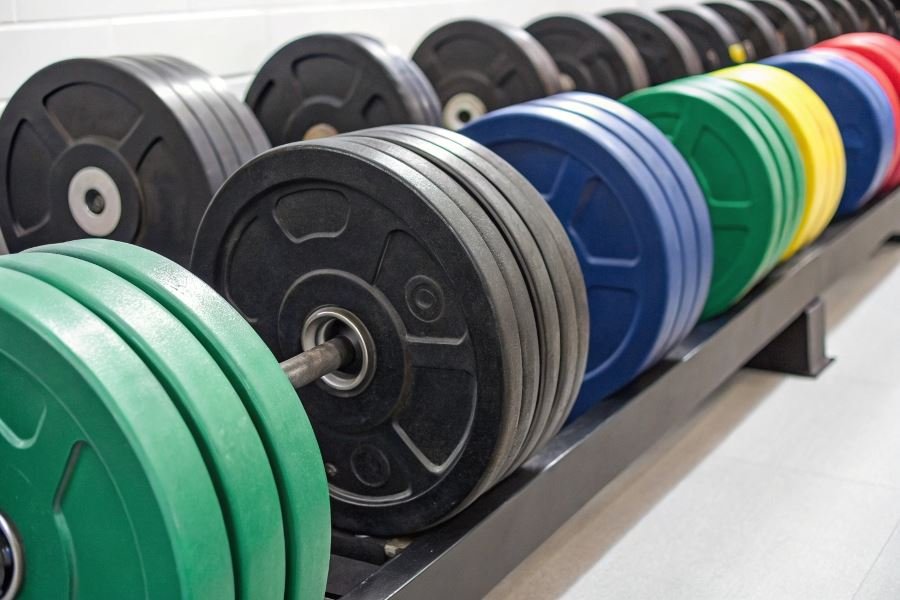
Ever stood in front of a rack of weights feeling completely overwhelmed? You’re not alone. That first step into barbell training can feel like trying to decode a foreign language written in iron and steel. But here’s the truth: selecting the right starting weights isn’t just about avoiding embarrassment—it’s the cornerstone of your entire strength journey.
The weight plates you choose today will determine whether you’re building proper form or developing bad habits that could plague you for years. According to the National Strength and Conditioning Association, nearly 65% of lifting injuries stem from improper loading—either too heavy too soon or imbalanced progression.
When approaching the barbell for the first time, you’ll encounter two main standards: Olympic weights (measured in kilograms but labeled in pounds in the US) and standard weights (purely in pounds). Olympic bars typically weigh 45 pounds (20kg) for men and 35 pounds (15kg) for women, while standard bars vary between 15-25 pounds.
Before grabbing any plates, honestly assess your current fitness level. Can you perform the movement with just the bar? Perfect form with minimal weight beats shaky form with impressive numbers every single time. Remember that strength training is a marathon, not a sprint—your body needs time to adapt to new stresses.
The weight selection hierarchy
- Master technique with minimal weight
- Build consistency with manageable loads
- Progress gradually as form solidifies
Your first weight selection isn’t permanent—it’s simply your starting point on a journey that will transform not just your body, but your relationship with physical challenge itself.
Finding Your Perfect Starting Weight
Starting your barbell journey can feel like navigating uncharted territory. The weight room’s intimidating landscape becomes much friendlier when you understand how to select appropriate weights for your barbell training. Beginners often struggle with determining where to begin when choosing weights for a barbell, but with a few key principles, you’ll be loading plates with confidence in no time.
Your Body as the Baseline
Your own physical attributes provide the most important context for weight selection. A 120-pound person and a 220-pound person should rarely start with identical weights, regardless of gender or fitness background.
The strength-to-weight ratio principle serves as your compass here. Most novice lifters can safely begin with:
- Bench press: 45-65% of bodyweight
- Squat: 75-85% of bodyweight
- Deadlift: 85-95% of bodyweight
These percentages represent total weight (including the bar) and assume no previous strength training experience.
For example, a 150-pound beginner might start with:
- Bench: 75-100 pounds
- Squat: 115-130 pounds
- Deadlift: 130-145 pounds
Aligning Weights with Your Goals
The weights you select should directly reflect your training objectives. Different goals demand different approaches:
| Training Goal | Rep Range | Weight Selection (% of 1RM) | Rest Period |
|---|---|---|---|
| Strength | 1-6 | 80-95% | 3-5 min |
| Hypertrophy | 8-12 | 65-80% | 1-2 min |
| Endurance | 15+ | 50-65% | 30-60 sec |
For strength development, you’ll need heavier weights and fewer repetitions. If muscle growth (hypertrophy) is your priority, moderate weights with higher volume work best. Endurance-focused training requires lighter weights with higher repetitions.
The Progressive Overload Pathway
Progressive overload is non-negotiable for continued improvement. This fundamental principle means gradually increasing the demands placed on your musculoskeletal system.
For beginners, implement progressive overload through:
-
The 2-for-2 rule: When you can perform 2 additional reps beyond your target for 2 consecutive workouts, increase weight by 5-10 pounds for lower body exercises or 2.5-5 pounds for upper body movements.
-
Microloading: Using fractional plates (0.25-1 pound) allows for smaller jumps when standard 2.5-pound increments feel too large.
-
Volume before intensity: Add an extra set at your current weight before increasing the load.
“The weight that feels impossible today will feel like a warm-up in six months if you follow progressive overload principles consistently.”
Starting Too Light vs. Too Heavy
The most common beginner mistake is ego-lifting—choosing weights that compromise form. Remember:
- Perfect form with lighter weights builds more strength than poor form with heavy weights
- Initial sessions should feel “too easy” rather than overwhelming
- Muscle soreness is not an indicator of an effective workout
- Record your starting weights to track progress objectively
Your first month should focus on movement patterns and neural adaptations rather than maximal loads. This foundation-building phase pays dividends through injury prevention and faster long-term progress.
By considering your body composition, aligning weights with specific goals, and implementing progressive overload strategically, you’ll navigate the beginning of your strength journey with confidence and purpose.
Barbell Weight Selection: Your Path to Strength Mastery
Starting your strength training journey with a barbell is like learning to drive—you don’t begin with a Formula 1 car. The weight you choose can make the difference between steady progress and frustrating setbacks. Let’s dive into the science and art of selecting the perfect weights for your barbell training.
Starting Points That Won’t Break You
Your first weights should challenge you without compromising form. Here’s what research and experience suggest for common exercises:
| Exercise | Men (Beginners) | Women (Beginners) |
|---|---|---|
| Bench Press | 45-65 lbs (bar only or with light plates) | 35-45 lbs (lighter bar or empty standard bar) |
| Squat | 65-95 lbs | 45-65 lbs |
| Deadlift | 95-135 lbs | 65-85 lbs |
| Overhead Press | 45-55 lbs | 35-45 lbs |
| Barbell Row | 65-85 lbs | 45-55 lbs |
Remember, these aren’t targets—they’re starting points. The perfect weight allows you to complete 8-12 reps with proper form while feeling challenged on the final 2-3 repetitions.
The best starting weight isn’t the one that impresses others—it’s the one that builds your foundation without breaking it.
Reading Your Body’s Weight Signals
Your body speaks a clear language about weight appropriateness. Listen for these signals:
Too Heavy When:
- Form breaks down before completing 5 reps
- You hold your breath excessively
- Movement speed slows dramatically mid-set
- Recovery takes more than 48-72 hours
- Joint pain (not muscle soreness) appears
Too Light When:
- You can easily complete 15+ reps
- No muscle fatigue by set completion
- You could immediately perform another set
- No noticeable pump or muscle engagement
Just Right When:
- Last 2-3 reps are challenging but doable
- Form remains solid throughout
- Moderate muscle fatigue follows
- Recovery occurs within 24-48 hours
Progressive Overload: The Long Game
Strength development isn’t a sprint—it’s a methodical marathon. Implement these progression strategies for continued improvement:
- The 2-for-2 Rule: When you can perform 2 additional reps beyond your target for 2 consecutive workouts, increase weight by:
- 5-10 lbs for large muscle group exercises (squats, deadlifts)
- 2.5-5 lbs for smaller muscle group movements (presses, curls)
-
Percentage-Based Progression: Add 5-10% to your working weight every 3-4 weeks, then deload by 10-15% for one week before continuing.
-
Volume Before Weight: Increase sets and reps before adding weight—try 3×8, then 3×10, then 3×12, then increase weight and reset to 3×8.
-
Microloading: For plateaus, use fractional plates (0.25-1 lb) to make smaller jumps when standard 2.5 lb increments become too difficult.
The most successful progression isn’t linear but undulating—periods of pushing followed by strategic deloads. Track your lifts meticulously, noting not just weight but also quality of movement and recovery time.
Your strength journey is uniquely yours. The weights that work for someone else might not be right for you. Trust the process, respect your body’s feedback, and remember that consistency trumps intensity every time.