
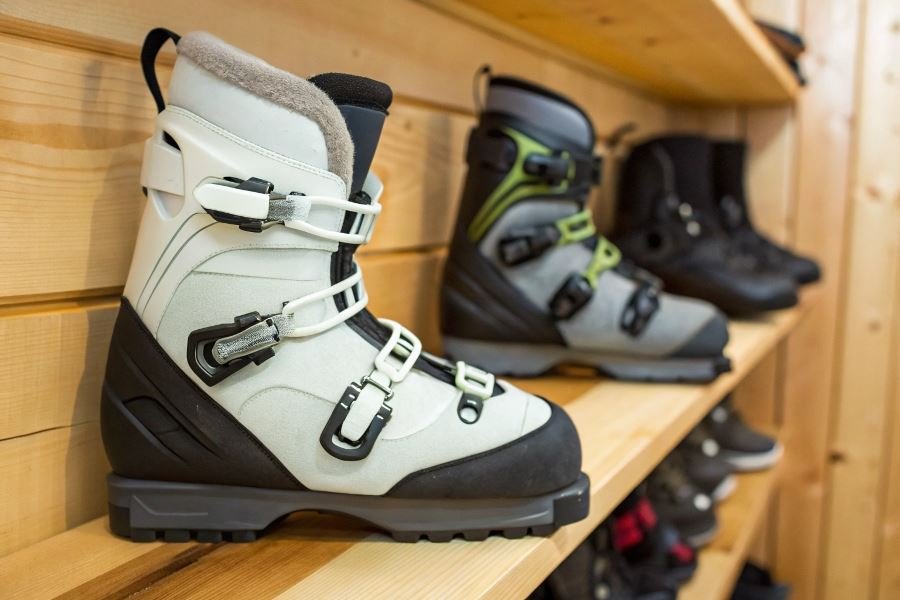
Ever wondered why some beginners glide effortlessly down the slopes while others struggle? The secret often lies not in natural talent, but in what’s strapped to their feet.
Finding the perfect pair of ski boots as a beginner is like discovering the right foundation for a house—everything else builds upon it. When your boots fit properly, they transform from mere footwear into precision instruments that connect you directly to your skis and the mountain beneath you.
The power of proper fit
The difference between well-fitted and poorly-fitted ski boots isn’t just comfort—it’s the difference between progression and frustration. Boots that fit correctly transfer energy efficiently from your legs to your skis, allowing for responsive turns and better control. Too loose, and you’ll waste energy with every movement; too tight, and you’ll be distracted by pain rather than focusing on technique.
Your boots, your performance
Think of ski boots as the interpreter between your intentions and your skis’ actions. When you lean forward, your boots tell your skis to engage. When you shift weight, your boots communicate that change to your equipment. This direct connection means that boot performance directly influences:
- Edge control: How precisely you can carve turns
- Balance: Your ability to maintain stability at various speeds
- Energy transfer: How efficiently your movements translate to ski action
Key selection factors for beginners
When choosing your first pair, focus on these critical elements:
- Flex rating: Beginners typically need softer flex (50-70 for women, 60-80 for men)
- Last width: The measurement across the widest part of the foot (wider for comfort, narrower for performance)
- Proper sizing: Often tighter than your street shoes, but without pressure points
- Intended terrain: Different boots suit different skiing environments
Remember that the perfect boots will feel slightly uncomfortable in the shop but magical on the slopes. They’re not just equipment—they’re your most important investment in skiing success.
The Foundation of Your Skiing Journey: Choosing the Perfect Boots
Finding the right ski boots as a beginner is arguably the most crucial equipment decision you’ll make. While skis get all the glory, boots are where power transfer happens—they’re the critical interface between your body and those beautiful planks strapped to your feet. The process of selecting ski boots for a beginner requires understanding several key factors that will dramatically impact your comfort, performance, and progression on the slopes.
Flex Rating: Your Boot’s Backbone
The flex rating of a ski boot indicates how much resistance it provides when you lean forward. Think of it as your boot’s personality—soft and forgiving or stiff and demanding. For beginners, this number is absolutely critical.
Beginner-friendly flex ratings typically range from 60-80 for women and 70-90 for men. These softer flexes forgive mistakes and reduce leg fatigue while you’re learning. If you’re athletic or heavier, you might start with a slightly higher flex (80-90 for women, 90-100 for men).
“The right flex feels supportive but not restrictive—like a firm handshake rather than a vise grip.”
Your body type significantly influences ideal flex. A 200-pound athletic beginner needs more support (higher flex) than a 120-pound novice. Similarly, taller skiers generally benefit from stiffer boots due to increased leverage.
Mondopoint Sizing: The Universal Boot Language
Ski boot sizing follows the Mondopoint system—measured in centimeters and representing your foot’s length. This universal standard eliminates confusion across brands like Salomon, Nordica, or Atomic.
To find your Mondopoint size:
- Measure your foot in centimeters from heel to toe
- Round to the nearest half size
- Try on boots in this size and a half size smaller
Most beginners make the critical mistake of choosing boots that are too large. Properly fitted ski boots should feel snug everywhere—almost uncomfortably tight when new. They’ll pack out approximately one-third of a size after several days of skiing.
| Foot Length (cm) | Mondopoint Size | US Men’s Size | US Women’s Size |
|---|---|---|---|
| 25.0 | 25.0 | 7 | 8 |
| 26.5 | 26.5 | 8.5 | 9.5 |
| 28.0 | 28.0 | 10 | 11 |
Width matters equally. Boots come in different “lasts” (internal width measurements):
- Narrow: 97-98mm
- Medium: 99-101mm
- Wide: 102-106mm
Boot Types: Different Tools for Different Terrain
Ski boots are designed with specific skiing styles and terrain in mind. For beginners, understanding these categories helps narrow your choices:
All-Mountain Boots offer the versatility beginners need, balancing comfort and performance. They handle groomed runs and occasional off-piste adventures with equal aplomb. Most beginners should start here.
Front-Side Boots focus on performance for groomed terrain. They’re stiffer and more precise—better suited for athletic beginners who progress quickly or those coming from other board sports.
Freeride/Backcountry Boots feature walk modes and lighter materials. While tempting for their comfort, they often lack the consistent forward flex beginners need to develop proper technique.
The boot shell construction also varies significantly. Three-piece shells (like Full Tilt or Dalbello) offer a smoother, more progressive flex that many beginners find forgiving. Two-piece overlap shells provide more precise power transfer but can feel more abrupt when flexing forward.
Remember that your first ski boots should match your current ability while allowing room for progression. A properly fitted boot from a qualified boot fitter will dramatically accelerate your learning curve and make every day on the mountain more enjoyable.
Finding Your Perfect Fit: The Beginner’s Guide to Ski Boot Selection
The Magic of Professional Boot Fitting
Walking into a professional boot fitting session might seem intimidating, but it’s the single most important step in your skiing journey. Professional fitters don’t just measure your foot—they analyze your entire biomechanics. At specialty shops like Surefoot or Bootdoctors, experts examine your foot shape, arch height, ankle flexibility, and even your skiing style.
A proper fitting typically takes 45-60 minutes and involves:
- Detailed foot measurements (length, width, instep height)
- Stance analysis
- Shell fit assessment (the “shell test”)
- Custom footbed evaluation
Why this matters: Poorly fitted boots can transform an exhilarating day on the slopes into a painful ordeal. Professional fitters can identify potential pressure points before they become blister factories, ensuring your first skiing experiences are memorable for the right reasons.
The difference between a professional boot fitting and grabbing whatever’s on sale is like comparing a tailored suit to a one-size-fits-all poncho.
Testing Before Committing
Once potential boots are identified, the real evaluation begins. Wear the boots in the shop for at least 20-30 minutes. Many shops have inclined platforms that simulate skiing positions—use them!
When testing boots, pay attention to these comfort indicators:
| Area to Check | What to Feel | Red Flags |
|---|---|---|
| Toe Box | Slight touch when standing straight | Cramping or complete looseness |
| Heel | Locked in place | Heel lift when flexing forward |
| Ankle | Snug but not painful | Pressure points or numbness |
| Shin | Even pressure | Sharp pain when flexing |
| Instep | Secure hold | Tingling or loss of circulation |
The ideal fit feels snug everywhere with no pressure points. Remember that boots will pack out slightly with use, so they should feel borderline tight—but never painful—when new.
Pro tip: Bring the socks you’ll actually ski in. Those thick cotton tube socks won’t cut it on the mountain, and they’ll throw off your fitting too.
Making the Investment
Quality ski boots typically range from $300 to $900, with most beginner-friendly options hovering around 400−500. While the price tag might cause sticker shock, consider this a long-term investment in both performance and comfort.
Factors affecting price include:
- Shell construction materials
- Liner quality and customization options
- Number of buckles and adjustment features
- Walk modes and other convenience features
Budget-conscious options: Last season’s models often see discounts of 30-40%, offering excellent value without compromising quality. Shops like REI and Evo typically run end-of-season sales with significant markdowns.
The value equation: A $450 boot that fits perfectly will deliver infinitely more enjoyment than a $250 boot that causes pain. Moreover, properly fitted boots improve your technique faster, potentially saving money on extra lessons needed to compensate for equipment limitations.
Remember that additional customization—like custom footbeds (80 − 150)orbootheaters(200-250)—might increase your initial investment but can dramatically improve comfort and performance, especially for those with circulation issues or unique foot shapes.
The right boots aren’t just equipment; they’re the foundation of your entire skiing experience. Invest wisely, and they’ll reward you with years of comfortable, confident skiing.