
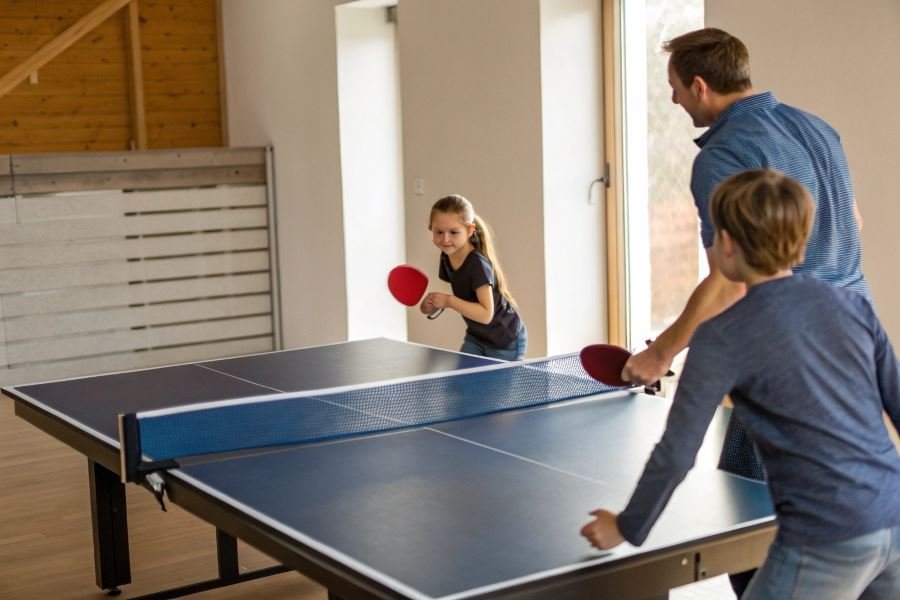
Ever watched a championship point get decided by a net cord shot? That fraction-of-a-millimeter difference between victory and defeat often comes down to one overlooked hero of table tennis: the net assembly. While players obsess over paddle rubber and ball quality, the humble net silently determines the integrity of every rally.
Professional table tennis demands precision at every level. A regulation net stands exactly 15.25cm high across its entire 183cm length—measurements that Olympic officials verify with laser-like scrutiny before major competitions. But what separates a $20 recreational net from the $150 professional setups used at the World Championships?
The difference lies in three critical areas: tension consistency, post stability, and material quality. A professional-grade net maintains uniform tension across its entire width, preventing those frustrating “dead spots” where the ball behaves unpredictably. The posts must grip the table firmly without damaging the surface, while providing micro-adjustability for perfect height calibration.
Material quality becomes evident during intensive play. Premium nets use tightly woven polyethylene mesh that maintains its shape even after thousands of impacts. This consistency allows players to develop muscle memory for net shots—a critical advantage when matches are decided by millimeters.
The truth is undeniable: your net choice directly impacts your performance ceiling. A professional-grade net doesn’t just regulate gameplay—it elevates it, allowing techniques like the delicate “drop shot” to become reliable weapons rather than hopeful gambles.
The Anatomy of Elite Table Tennis Nets
When you’re locked in a fierce rally at match point, the last thing you need is a subpar net disrupting your game. Professional table tennis nets are precision instruments that demand careful consideration. Let’s dive into what separates championship-worthy nets from amateur equipment.
Premium Materials Define Performance
The material composition of a table tennis net directly impacts its performance and longevity. Professional table tennis nets: what to pay attention to begins with the fabric quality. Tournament-grade nets typically feature tightly woven polyethylene or nylon mesh that maintains tension without sagging. The International Table Tennis Federation (ITTF) standards require nets to be 15.25cm (6 inches) high with a dark color (usually navy blue or black) to maximize ball visibility.
Material durability indicators:
- Thread count above 200 for optimal ball response
- UV-resistant treatment for outdoor usage
- Reinforced edges to prevent fraying after thousands of impacts
The best nets from brands like Butterfly and JOOLA use materials that maintain consistent tension even after years of competitive play. Their premium nets feature double-stitched borders that prevent the dreaded mid-tournament collapse.
Tension Systems That Won’t Let You Down
A professional net’s tension adjustment mechanism is its mechanical heart. The difference between amateur and professional setups becomes immediately apparent when you examine how the net maintains its taught position.
The finest tension systems offer micrometric adjustment capabilities, allowing players to achieve ITTF-perfect 15.25cm height across the entire playing surface.
Tension Mechanism Comparison
| Mechanism Type | Tension Stability | Ease of Adjustment | Tournament Approval |
|---|---|---|---|
| Screw Clamp | High | Moderate | Yes |
| Spring-Loaded | Very High | Easy | Yes |
| Quick-Release | Moderate | Very Easy | Limited |
| Fixed Post | Low | None | No |
Spring-loaded mechanisms from Stiga provide consistent tension while absorbing the occasional impact from powerful smashes. The premium Donic nets feature precision-engineered clamps that won’t slip during intense play, eliminating the frustration of mid-match adjustments.
Attachment Systems That Mean Business
The connection between net and table determines overall stability. Professional systems use three primary attachment methods:
- Clip-on clamps – Quick to install but may shift during aggressive play
- Screw-tightened posts – Tournament standard offering maximum stability
- Integrated systems – Built into premium tables for seamless setup
The height regulation system must allow for precise adjustments to meet the 15.25cm ITTF standard. Top-tier nets include built-in measuring tools to ensure perfect height without guesswork.
Advanced attachment systems feature rubber-coated contact points that protect your table’s surface while providing slip-resistant grip during those table-rocking smashes.
When selecting a professional net, examine how the posts connect to your specific table type. Tables with varying thicknesses require adjustable clamps that can accommodate dimensions from 12mm to 30mm without compromising stability.
The difference between a good game and a great one often comes down to equipment reliability. With these professional net considerations in mind, you’ll be equipped to make a championship-worthy choice that performs when every point counts.
Making the Perfect Professional Net Selection
Choosing a professional table tennis net isn’t just about spending money—it’s about investing in your game. After examining construction, measurements, and features, it’s time to pull everything together and make that final decision that could impact thousands of future rallies.
Quality meets performance at the right price
The relationship between price and performance in table tennis nets follows a fascinating curve. While entry-level professional nets start around $50, tournament-grade options from brands like Butterfly or JOOLA can command $150-200.
What’s crucial to understand is where diminishing returns begin. The sweet spot typically falls between $80-120, where you’ll find:
- ITTF-approved construction with proper tension mechanisms
- Durable materials that withstand regular tournament play
- Consistent net height and tension across the entire playing surface
The difference between a $60 net and a $100 net is immediately noticeable to serious players. The difference between a $100 net and a $200 net? Often subtle improvements only detectable in championship environments.
For club players competing regularly, the mid-tier professional nets deliver exceptional value. Reserve top-tier options for dedicated training facilities or competition venues.
Extending your net investment through maintenance
Professional nets aren’t disposable items—they’re equipment investments that require care. Proper maintenance not only extends lifespan but preserves performance characteristics.
Regular inspection of tension mechanisms prevents unexpected failures during critical matches.
Maintenance priorities should include:
| Maintenance Task | Frequency | Benefit |
|---|---|---|
| Dust removal | After each session | Prevents abrasive wear |
| Tension check | Weekly | Maintains consistent bounce |
| Hardware inspection | Monthly | Prevents clamp failure |
| Complete disassembly | Quarterly | Extends overall lifespan |
Most professional nets include replacement parts availability—a significant advantage over recreational models. Donic and Stiga particularly excel in providing comprehensive spare parts catalogs for their professional net systems.
Environment-specific recommendations
Different playing environments demand different net solutions:
Club Environment: Opt for nets with robust clamps and reinforced side straps. The Killerspin Aurora offers exceptional stability for multi-table club settings where nets are frequently adjusted.
Tournament Setting: Choose nets with quick-release mechanisms and precise tension adjustment. The Nittaku Absolute excels here with its micrometer-style tension dial.
Training Facility: Durability becomes paramount. The DHS P145 features reinforced metal components and weather-resistant netting ideal for high-volume usage.
Home Professional Setup: Balance portability with performance. The STIGA Premium Clipper offers tournament-grade features with storage-friendly design.
Remember that environmental factors like humidity can affect net tension. Facilities in coastal or high-humidity regions should prioritize corrosion-resistant hardware and synthetic netting materials.
Your net selection ultimately reflects your playing priorities. Focus on the features that directly impact your specific playing environment, and you’ll find the perfect balance between performance and investment that keeps your game at its peak for years to come.