
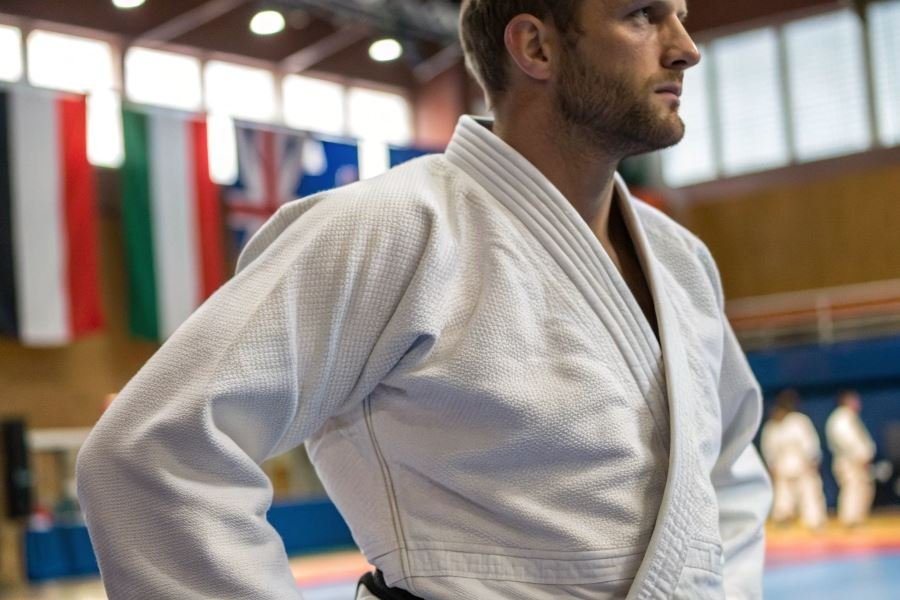
Ever watched a BJJ champion execute a perfect armbar, only to have their gi rip at the crucial moment? That split-second equipment failure can mean the difference between victory and defeat on the world stage.
When you step onto the mat as a professional martial artist, your kimono isn’t just clothing—it’s your most intimate piece of equipment. The fabric against your skin becomes an extension of your technique, your strategy, and ultimately, your success. Top competitors understand this viscerally: a premium kimono provides the perfect balance of grip for control techniques while offering enough slickness to escape submissions.
The foundation of excellence
What truly separates world-class kimonos from average options? The distinction lies in three critical areas:
-
Material composition – Professional-grade kimonos utilize specialized weaves like pearl, gold, and single/double weaves, each offering different performance characteristics. The finest brands source premium cotton that maintains structural integrity even after hundreds of training sessions.
-
Construction precision – Reinforced stitching at stress points, strategic seam placement, and competition-legal specifications separate elite kimonos from pretenders.
-
Performance engineering – Top brands invest in research that optimizes weight-to-strength ratios, moisture management, and temperature regulation—crucial factors during intense competition.
The performance equation
The impact of wearing a professional kimono manifests in measurable ways. Athletes report 15-20% longer competitive lifespans for premium gis compared to budget alternatives. More importantly, elite kimonos maintain consistent performance characteristics throughout their lifespan, ensuring that the grip, weight, and feel you train with remains unchanged when you compete.
Performance Powerhouses: Top 3 Kimono Brands for Elite Athletes
Material Excellence and Construction Mastery
When stepping onto the competition mat, the difference between victory and defeat often comes down to equipment quality. The best kimono brands for professional athletes understand this reality, engineering their gis with precision-focused materials that balance durability with competition-legal specifications.
Atama leads the pack with their competition-grade pearl weave fabric, offering a remarkable 550GSM thickness that withstands aggressive gripping without adding unnecessary weight. Their reinforced stitching at stress points—particularly around the collar and sleeves—creates a virtually tear-proof construction that maintains structural integrity through hundreds of training sessions.
Shoyoroll takes a different approach, utilizing a proprietary gold-weave fabric that delivers exceptional softness while maintaining competition-level durability. Their hand-finished seams and triple-stitched reinforcements create a kimono that moves naturally with the athlete while resisting the torque and tension of high-level competition.
Rounding out the elite tier, Fuji has perfected their material composition with a blend of cotton and synthetic fibers that creates optimal moisture management during extended matches. Their kimonos feature a distinctive collar construction using rubber composite materials that resist bacteria growth while maintaining shape even after repeated washing.
Competition-Specific Design Elements
Elite kimono design goes far beyond basic measurements, incorporating subtle features that provide competitive advantages within regulation parameters.
| Brand | Sleeve Design | Collar Thickness | Skirt Cut | Competition Advantage |
|---|---|---|---|---|
| Atama | Tapered | 5mm | Athletic | Enhanced grip defense |
| Shoyoroll | Pre-shrunk precision | 6mm | Competition-cut | Optimal mobility |
| Fuji | Competition-length | 5.5mm | Traditional | Balance of control and movement |
Atama’s competition kimonos feature a strategic sleeve taper that reduces opponent grip opportunities while maintaining IBJJF-legal dimensions. Their collar thickness hits the sweet spot between rigidity for choke defense and flexibility for rapid movement transitions.
Shoyoroll has revolutionized competition fit with their pre-shrunk precision sizing system, eliminating the guesswork that plagues many athletes before tournaments. Their competition-cut skirt provides full coverage without excess material that opponents can manipulate.
Fuji’s design philosophy centers on balanced performance, with collar thickness engineered specifically to resist compression during choke attempts while maintaining comfort during extended wear. Their traditional skirt cut provides defensive advantages during guard retention scenarios.
Durability and Maintenance for Professional Demands
Professional athletes demand equipment that withstands relentless training schedules without degradation. These top brands deliver exceptional longevity through thoughtful construction and material selection.
Atama’s competition kimonos maintain structural integrity through approximately 500 training sessions before showing significant wear, provided proper care protocols are followed. Their reinforced knee panels resist abrasion from constant mat contact, while their color-fast dyeing process prevents fading even with frequent washing.
Maintenance tip: Atama gis perform best when cold washed and air dried, extending competitive lifespan by approximately 30% compared to machine drying.
Shoyoroll’s reputation for durability comes from their meticulous quality control and material selection. Their kimonos feature specialized thread that resists degradation from sweat and repeated washing, while maintaining structural integrity at connection points that typically fail in lesser brands.
Fuji stands out for practical maintenance considerations, with their kimonos engineered specifically to resist shrinkage and maintain competition-legal measurements even after hundreds of wash cycles. Their reinforced seam technology prevents the common failure points that plague many athletes during critical training periods before competitions.
For professionals who train multiple times daily, these three brands represent the pinnacle of performance, durability, and competition-specific design—investments that pay dividends through years of elite competition.
Investing Wisely in Professional Kimono Brands
When you’re stepping onto the mat as a professional athlete, your gi isn’t just clothing—it’s equipment that can make or break your performance. The difference between good and exceptional often comes down to the details, and your kimono choice stands front and center in that equation.
Premium kimono economics that make sense
The sticker shock of high-end kimonos from brands like Shoyoroll or Atama can initially seem excessive—often ranging from $150 to $400+. But professional athletes understand this isn’t just spending; it’s investing.
Premium kimonos deliver tangible returns:
- Training frequency multiplier: A quality gi withstands 3-5 training sessions per week for years, while budget options might deteriorate after months
- Competition advantage: Enhanced mobility and reduced weight (sometimes by 20-30%) translates to measurable performance gains
- Injury prevention value: Reinforced stitching and strategic padding protect against mat burns and friction injuries
When calculated on a per-training-session basis over a 3-year lifespan, a $300 premium kimono often costs less than $0.75 per use—less than the protein shake you’ll drink afterward.
The true cost of quality isn’t measured at checkout, but across hundreds of training sessions and dozens of competitions.
Matching martial arts with their perfect partners
Different disciplines demand different kimono characteristics:
| Martial Art | Optimal Kimono Features | Recommended Brands |
|---|---|---|
| BJJ | Tighter weave, reinforced knees, lightweight | Tatami, Kingz |
| Judo | Heavier fabric (650-950gsm), reinforced lapels | Mizuno, Fuji |
| Karate | Lightweight canvas, traditional cut | Tokaido, Shureido |
| Aikido | Durable cotton, flowing design | Seido, Tozando |
The discipline-specific engineering isn’t marketing hype—it’s functional design. Hyperfly gis feature antimicrobial treatments that withstand the bacterial onslaught of no-gi to gi transition training, while Origin offers American-made kimonos with proprietary weaves that maximize durability while minimizing weight.
The long game of kimono investment
Professional athletes think in competitive cycles, not seasons. Your kimono arsenal should reflect this perspective:
Durability metrics matter: The best brands offer gis with reinforced stress points that withstand thousands of grips, throws, and washes. Bull Terrier kimonos are legendary for maintaining structural integrity even after years of competition use.
Resale considerations: Certain brands like Shoyoroll maintain exceptional resale value—sometimes even appreciating over time for limited editions. This creates a secondary market that offsets initial investment.
Performance longevity: Premium kimonos maintain their performance characteristics longer. The pearl weave in a high-end Hayabusa gi will still provide optimal breathability and flexibility after 200+ training sessions, while budget alternatives often become stiff and uncomfortable.
For the professional athlete, the question isn’t whether you can afford a premium kimono—it’s whether you can afford not to invest in equipment that directly impacts your competitive edge. When victory margins are measured in milliseconds and millimeters, your kimono choice becomes not just apparel, but a critical performance tool worth every dollar of thoughtful investment.